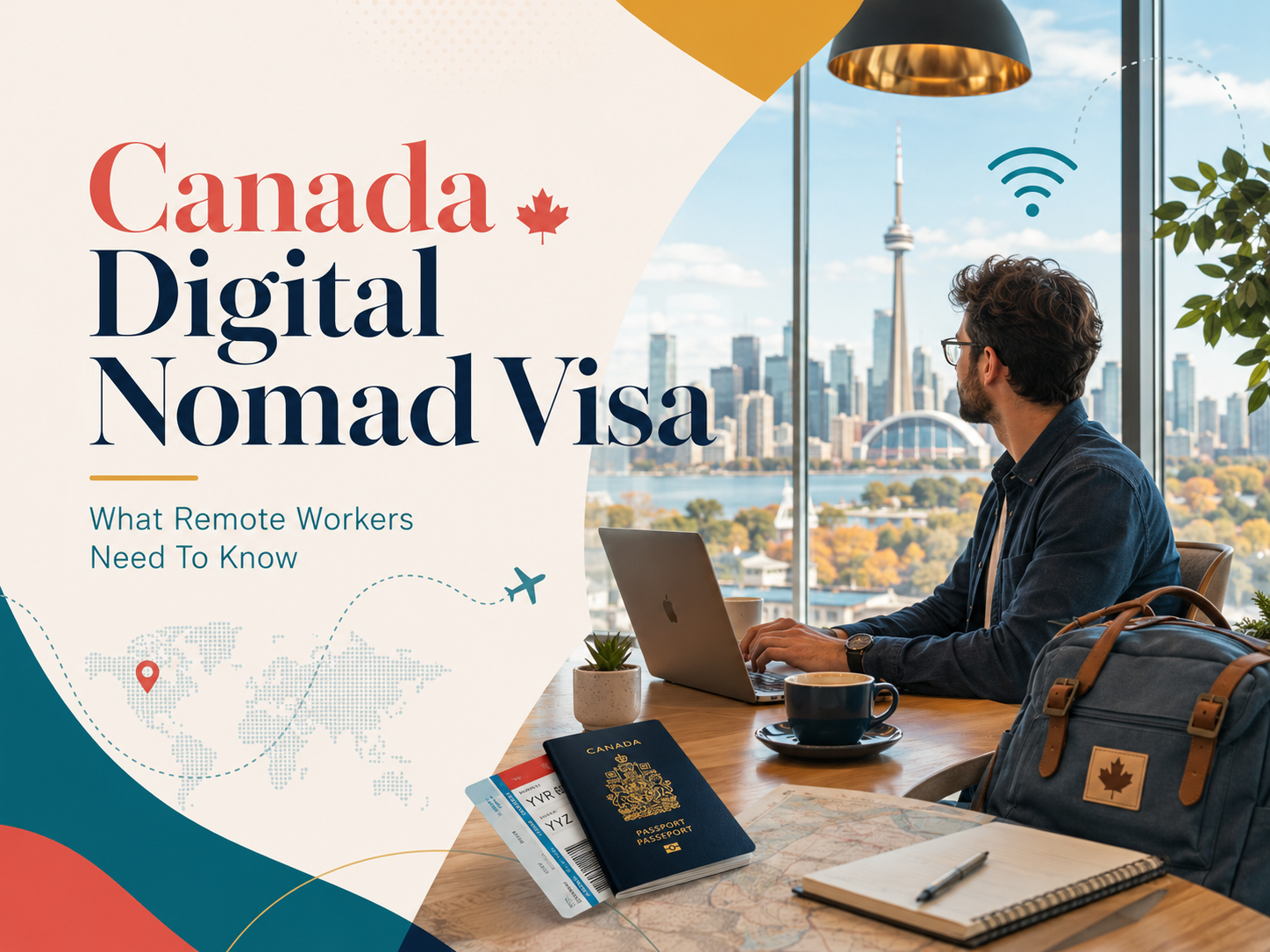


For years, digital nomads have searched for the perfect balance of comfort, stability, and opportunity. Many drifted toward warm beaches, low living costs, and easy tourist visas. But the global landscape has changed. Remote professionals now care just as much about healthcare, safety, strong digital infrastructure, and predictable immigration policies as they do about weather and scenery.
That shift has brought a surprising new destination into focus: Canada.
With its reliable internet, organised cities, strong social systems, and an openly talent-friendly approach, Canada has become one of the most appealing places for remote workers who want more than a temporary escape. And even though Canada does not offer an official digital nomad visa, its existing rules create a clear and workable path for many remote professionals to live and work there legally.
This guide takes a closer look at how that system works, why interest has grown so quickly, and what nomads need to know before they pack their bags.
Digital nomads once moved from city to city chasing sunshine or cheap rent. But today’s remote workforce is older, more experienced, and more selective. Many work full-time for global companies. Others run businesses or manage international teams. They want a base where life is stable, predictable, and well-supported.
Canada fits that description better than most countries offering traditional “digital nomad visas.”
Strong public infrastructure, safe neighbourhoods, multicultural cities, and the promise of universal healthcare (for residents) make it appealing. Add in clean air, natural landscapes, and a generally welcoming culture, and it is easy to see why Canada is becoming a top seasonal home for remote workers.
But what really sets Canada apart is a simple rule: remote workers can stay in the country for up to six months while working for foreign employers, without needing a work permit.
Canada does not issue a visa specifically labelled for digital nomads. Instead, remote workers enter Canada on standard visitor status, which allows them to stay for up to six months as long as they follow a few clear conditions.
Their income must come entirely from outside Canada, they must not work for Canadian companies, and they cannot enter the local labour market. As long as the work remains offshore, a visitor is free to continue performing their remote duties while living temporarily in Canada.
There is nothing complicated about the rule. Immigration officers mainly want to ensure that the traveller is not seeking local employment and that they plan to leave once their allowed stay ends.
Visitor status does not turn into permanent residence, but it gives nomads a chance to experience life in Canada without jumping through unnecessary hoops.
Remote workers entering Canada should be prepared to show clear documentation. This usually includes proof of employment or self-employment, financial statements showing they can support themselves, and either a return ticket or onward travel plan. Accommodation details can also help.
For travellers from visa-exempt countries, entry typically requires only an Electronic Travel Authorization. For others, a visitor visa must be approved in advance. Once approved, the rules for remote work are essentially identical.
The key is transparency. If a remote worker honestly explains that they are employed abroad and only intend to work for foreign clients, the process is usually straightforward.
Remote workers have considerable freedom within the visitor framework, but there are firm boundaries.
They may live anywhere in Canada, from large cities to smaller towns, and they may continue all remote duties linked to foreign employers. However, they cannot accept paid work from Canadians, cannot freelance for local clients, and cannot establish a Canadian business that serves local customers without a proper work permit.
Thinking of visitor status as a trial period helps. It is ideal for those who want to test Canada as a temporary base without making long-term commitments.
Once settled, most remote workers find Canada easy to enjoy. Major cities such as Vancouver, Toronto, and Montreal offer fast internet, modern coworking spaces, diverse communities, and excellent public transit. Each offers its own personality: Vancouver is coastal and relaxed, Toronto is busy and global, and Montreal is creative and more affordable.
Living costs are higher than in many traditional nomad destinations, but the trade-off is improved safety, cleaner environments, and a high quality of life. Rent, food, transportation, and leisure costs vary by city, but most nomads find that the stability and access to resources justify the expense.
Visitors are not covered by public healthcare, so private insurance is necessary. Still, medical facilities are modern, and emergency care is accessible.
A remote worker does not automatically become a Canadian tax resident by staying in the country. But tax residency can be triggered if someone stays too long or builds long-term ties, such as securing lengthy leases or enrolling children in school.
This is why many nomads keep their stays under six months and maintain clear ties to their home country. When in doubt, professional guidance can prevent unwanted tax complications.
Long-Term Stays: What If Six Months Isn’t Enough?
Some visitors fall in love with Canada’s lifestyle and want to stay longer. For them, Canada offers pathways such as Express Entry, open work permits, or the Start-Up Visa program. Skilled workers, especially in technology, design, finance, and digital industries, may qualify for permanent immigration programs.
Although remote experience can count, it must be well-documented and aligned with Canada’s classification of skilled work.
Canada offers something rare in the digital-nomad world: a flexible, simple, and clearly defined way to live in the country temporarily while working remotely. The system is not meant to replace traditional immigration pathways, but it provides remote professionals with an accessible, comfortable base for up to six months.
The boundaries are clear, the rules are transparent, and the lifestyle benefits are undeniable. For nomads seeking stability without sacrificing freedom, Canada has quietly become one of the most appealing destinations of 2025.
Having an ‘Identity Verified’ badge or being ‘Identity Verified’ simply indicates that an individual has submitted information to complete our identity verification process or we have conducted internal verification using various authorized websites. While this process includes safeguards, it does not guarantee that the person is who they claim to be.
If you encounter any issues with this profile, please report them here. While all consultants who are verified have RCIC ID, we may not have the latest data in terms of their renewal/cancellation/discontinuation of their RCIC ID.
╳The “Verified Consultants” profiles on Immiperts.com are independently compiled using publicly available information from multiple sources, including the official CICC Public Register, consultants’ own websites, other public directories, and social media.
Immiperts.com is a completely independent platform and is not affiliated with, endorsed by, or connected to the College of Immigration and Citizenship Consultants (CICC), IRCC, or any immigration consultant.
All information is collected manually and is for educational and informational purposes only. Consultants may claim, update, or request removal of their profile by contacting us at hello@immiperts.com.
Users are strongly advised to always verify the latest authorization status directly on the official CICC Public Register at college-ic.ca.