



Canada’s immigration system began 2026 with a mix of faster and slower processing times, as new updates revealed progress in some areas while delays continued in others.
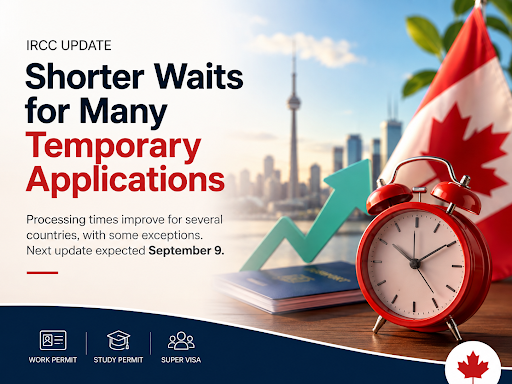
Canada’s immigration system opened the year with fresh updates on how long applicants now wait for decisions. Immigration, Refugees and Citizenship Canada released new processing timelines on January 21, 2026, covering citizenship, permanent residence, temporary visas, and passports.
Officials now base these timelines on how long 80 percent of applicants actually waited, instead of older targets that often missed the mark. The department updates permanent residence and citizenship figures every month, while it refreshes temporary visas and PR cards every week.
Citizenship grants continue to take about 13 months, with no change from last month. More people now wait in the queue, but the overall timeline remains stable.
Citizenship certificates now take about 10 months, which marks a one-month increase. This change is relevant for people who need proof of citizenship for travel, passports, or government services. Other citizenship-related requests, such as record searches and renunciation, show no movement in wait times.
Permanent resident cards slowed down slightly in January. New cards now take about 61 days, while renewals take around 35 days. Both timelines increased by a few days compared to late December, with new cards showing the bigger delay.
Spousal sponsorship outside Quebec remains steady at 14 months. Inside Canada, applicants now wait about 21 months, which marks a small increase.
Quebec continues to show much longer timelines across family categories. Parents and grandparents sponsored outside Quebec now wait about 37 months, a modest improvement. Quebec cases still take significantly longer because of added provincial steps.
Applications based on humanitarian grounds still face the longest waits, with timelines exceeding 10 years both inside and outside Quebec.
Protected persons outside Quebec saw a major improvement, with processing times dropping to about 17 months. Quebec cases moved in the opposite direction and remain among the slowest in the system.
The Canadian Experience Class improved to six months, offering faster outcomes for many workers already in Canada. Federal skilled worker and Express Entry provincial cases both moved to seven months.
Non-Express Entry provincial programs improved to 13 months, though many files remain in the system. Some programs, including self-employed and start-up pathways, still show waits of more than 10 years.
Visitor visas, study permits, and work permits continue to show different timelines depending on where applicants apply. Some countries saw modest delays, while others experienced faster decisions. In-Canada work permits now take more than seven months, while seasonal farm permits remain among the fastest.
Passport services stayed stable and predictable across all service levels.
These timelines can change quickly due to application volumes, staffing shifts, and security checks. Applicants should treat the estimates as planning tools, not guarantees. Complete paperwork and regular monitoring remain key for anyone planning to apply in 2026.









Having an ‘Identity Verified’ badge or being ‘Identity Verified’ simply indicates that an individual has submitted information to complete our identity verification process or we have conducted internal verification using various authorized websites. While this process includes safeguards, it does not guarantee that the person is who they claim to be.
If you encounter any issues with this profile, please report them here. While all consultants who are verified have RCIC ID, we may not have the latest data in terms of their renewal/cancellation/discontinuation of their RCIC ID.
╳The “Verified Consultants” profiles on Immiperts.com are independently compiled using publicly available information from multiple sources, including the official CICC Public Register, consultants’ own websites, other public directories, and social media.
Immiperts.com is a completely independent platform and is not affiliated with, endorsed by, or connected to the College of Immigration and Citizenship Consultants (CICC), IRCC, or any immigration consultant.
All information is collected manually and is for educational and informational purposes only. Consultants may claim, update, or request removal of their profile by contacting us at hello@immiperts.com.
Users are strongly advised to always verify the latest authorization status directly on the official CICC Public Register at college-ic.ca.