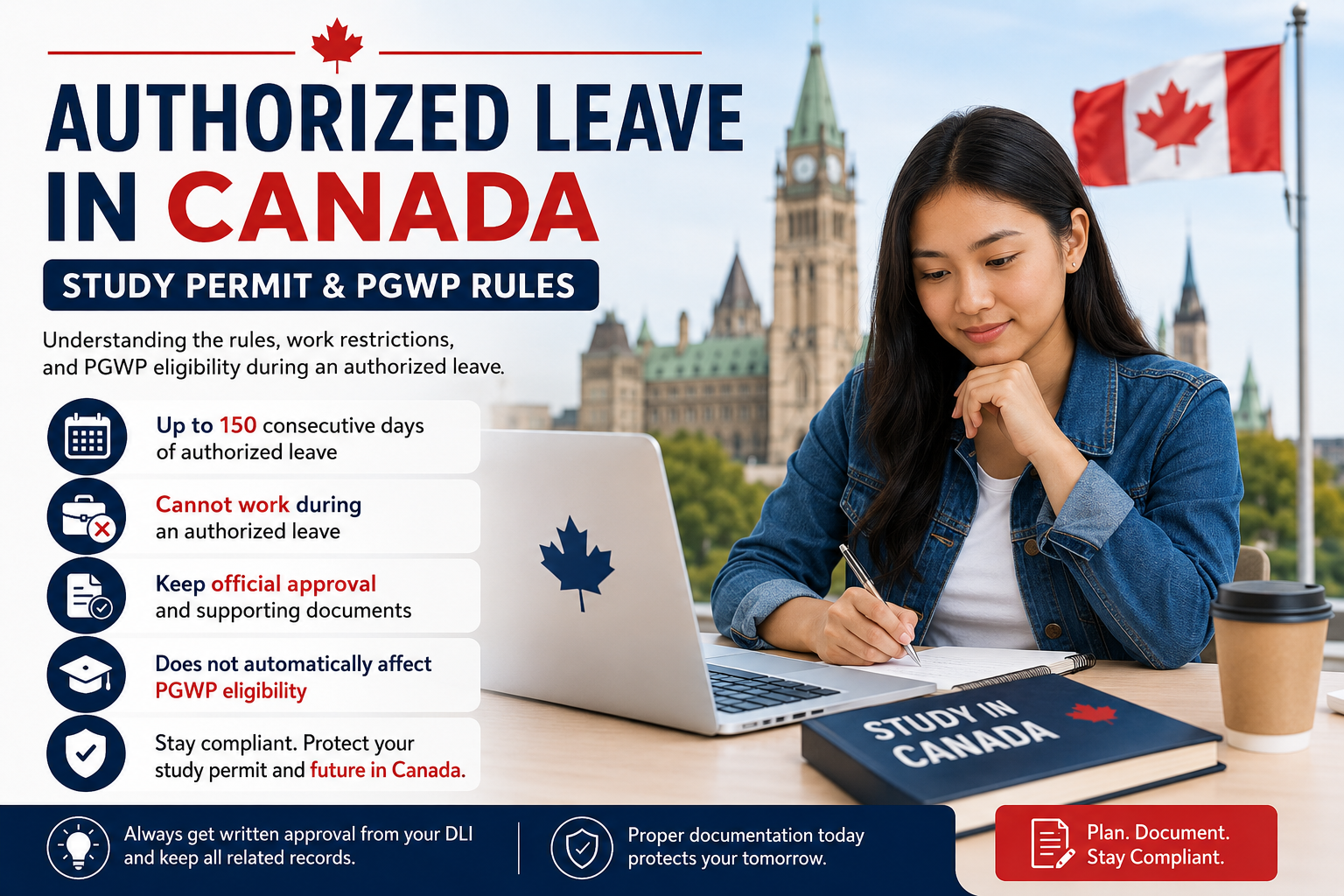

Canada gives international students the opportunity to work while completing their studies. This helps students manage living costs, gain work experience and build confidence in a new country. However, students must understand the rules clearly before starting any job.
This guide explains how international students can earn money on campus, off campus and even remotely — in simple and clear terms.
Yes. Most international students with a valid study permit can work while studying. Your study permit must clearly state that you are allowed to work in Canada. You must also remain enrolled full-time at a designated learning institution.
Before starting any job, you must apply for a Social Insurance Number (SIN). Without a SIN, you cannot legally work in Canada.
Students can work on campus without applying for a separate work permit. On-campus jobs may include working at:
One major benefit of on-campus work is flexibility. There is generally no strict weekly hour limit as long as you remain a full-time student and meet eligibility requirements.
These jobs are convenient because they are located within the campus. This helps students balance studies and work more easily.
International students can also work off campus while studying. You do not need a separate work permit if your study permit allows you to work.
During regular academic sessions, students can work up to 24 hours per week off campus. During scheduled breaks, such as summer or winter holidays, students can work full-time.
Common off-campus jobs include:
Working off campus helps students earn more income and gain experience in the Canadian job market.
Many students now choose to work online. Remote work may include:
If you work remotely for an employer outside Canada who has no business presence in Canada, those hours typically do not count toward the 24-hour weekly limit. However, if you work remotely for a Canadian company, those hours count as off-campus work.
Students should always track their work hours carefully to avoid exceeding limits.
Some academic programs require internships or co-op placements. In such cases, students may need a co-op work permit in addition to their study permit.
These placements often provide valuable real-world experience related to your field of study. Many students use co-op opportunities to build professional networks and improve their chances of finding full-time jobs after graduation.
Failing to follow work rules can affect your immigration status in Canada.
Working while studying in Canada offers both financial support and practical experience. With proper planning and a clear understanding of the rules, international students can successfully balance education and employment.
Knowing your options helps you make smarter choices and avoid mistakes.
1. I am in my first semester. Can I start working immediately?
Yes, if your study permit allows work and you have received your SIN, you can start working once your program officially begins.
2. What happens if I work more than 24 hours per week during classes?
Working beyond the allowed hours may affect your immigration status and future applications. Always stay within the permitted limit.
3. Can I work two part-time jobs at the same time?
Yes, you can work multiple jobs, but your combined weekly hours must not exceed the allowed limit during academic sessions.
4. Do I need to inform immigration authorities before starting a job?
No separate approval is required if your study permit allows work, but you must follow all work conditions.
5. Can I continue working after finishing my final exams?
You may work full-time only if you meet the conditions during scheduled breaks or after applying for a post-graduation work permit, if eligible.
Having an ‘Identity Verified’ badge or being ‘Identity Verified’ simply indicates that an individual has submitted information to complete our identity verification process or we have conducted internal verification using various authorized websites. While this process includes safeguards, it does not guarantee that the person is who they claim to be.
If you encounter any issues with this profile, please report them here. While all consultants who are verified have RCIC ID, we may not have the latest data in terms of their renewal/cancellation/discontinuation of their RCIC ID.
╳The “Verified Consultants” profiles on Immiperts.com are independently compiled using publicly available information from multiple sources, including the official CICC Public Register, consultants’ own websites, other public directories, and social media.
Immiperts.com is a completely independent platform and is not affiliated with, endorsed by, or connected to the College of Immigration and Citizenship Consultants (CICC), IRCC, or any immigration consultant.
All information is collected manually and is for educational and informational purposes only. Consultants may claim, update, or request removal of their profile by contacting us at hello@immiperts.com.
Users are strongly advised to always verify the latest authorization status directly on the official CICC Public Register at college-ic.ca.