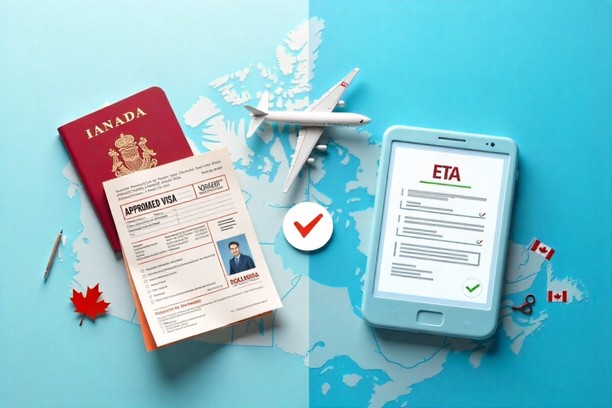



Planning a trip to Canada can feel overwhelming, especially when you're trying to figure out whether you need a Canada Visitor Visa or an Electronic Travel Authorization (ETA). The confusion between these two travel documents often leaves travelers stressed, unsure if they’re eligible to enter Canada or risking a denied boarding at the airport. Understanding the differences between a Canada Visitor Visa and an ETA is crucial to ensuring a smooth travel experience without last-minute surprises.
A Canada Visitor Visa, also known as a Temporary Resident Visa (TRV), is a document that allows citizens from certain countries to enter Canada for tourism, family visits, or business purposes for up to six months. This visa is required for travelers from countries that are not visa-exempt, such as India, China, or Nigeria. You’ll need to apply for it through a Canadian embassy, consulate, or online, providing documents like your passport, proof of funds, and travel itinerary.
You need a Visitor Visa if you’re from a country that isn’t on Canada’s visa-exempt list. The application process involves submitting detailed personal information, including your travel history and purpose of visit. Processing times can take weeks, so it’s wise to apply well in advance. For example, in 2024, processing times for a Visitor Visa averaged 20-40 days, depending on the country of application.
An Electronic Travel Authorization (ETA) is a simpler, online entry requirement for citizens of visa-exempt countries, like the UK, Australia, or Japan, who are traveling to Canada by air. It’s linked to your passport and valid for up to five years or until your passport expires. Applying for an ETA is quick—often approved within minutes—and costs CAD $7. However, it’s only for short visits, typically up to six months, and doesn’t allow you to work or study in Canada.
If you’re from a visa-exempt country and arriving by air, you’ll need an ETA. Travelers entering Canada by land or sea don’t require an ETA, but they may still need other documentation. Always check your eligibility on the official Government of Canada website to avoid surprises at the border.
Understanding the differences between these two options can save you time and hassle. Here’s a breakdown:
Many travelers face issues like applying for the wrong document or missing deadlines. For instance, someone from a visa-required country might assume they only need an ETA, leading to denied entry. To avoid this, double-check your country’s requirements on Canada’s official immigration website. Another common mistake is not providing enough documentation for a Visitor Visa, such as proof of ties to your home country, which can lead to rejections.
Choosing the right document ensures you can board your flight and enter Canada without issues. A Visitor Visa or ETA isn’t just a formality—it’s a legal requirement that border officers check. For example, in 2023, over 10,000 travelers were denied entry to Canada due to improper documentation, according to Immigration, Refugees and Citizenship Canada (IRCC) data. Knowing the difference helps you plan confidently.
Whether you need a Canada Visitor Visa or an ETA depends on your nationality, travel method, and purpose of visit. By understanding these requirements, you can avoid the stress of last-minute rejections and focus on enjoying your trip. Always verify your eligibility and apply early to ensure a hassle-free journey to Canada.
Having an 'Identity Verified' badge or being 'Identity Verified' simply indicates that an individual has submitted information to complete our identity verification process or we have conducted internal verification using various authorized websites. While this process includes safeguards, it does not guarantee that the person is who they claim to be.
If you encounter any issues with this profile, please report them here. While all consultants who are verified have RCIC ID, we may not have the latest data in terms of their renewal/cancellation/discontinuation of their RCIC ID.
The "Verified Consultants" profiles are created using publicly available information, including data from the IRCC website, official consultant sites, other listing platforms, and social media. Immiperts.com is an independent platform, not affiliated with IRCC or any registered immigration consultants. To update, claim, or remove your profile, please contact us at [email protected].
╳