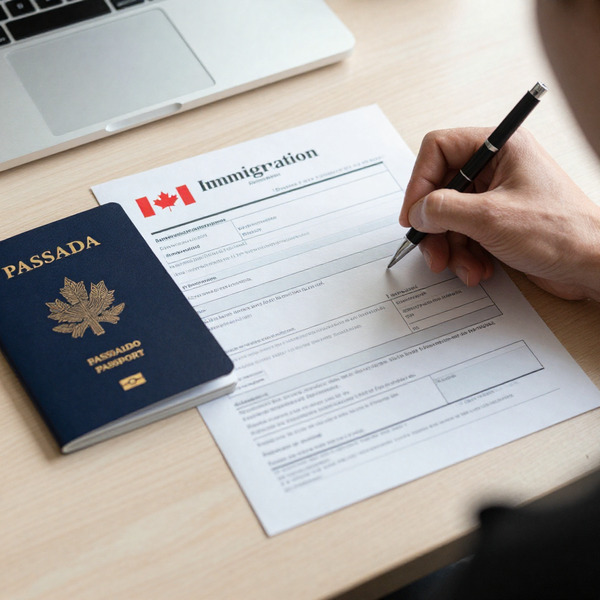



Applying for Canadian immigration is one of the biggest decisions many people ever make. Because the process can be expensive, countless applicants try to complete everything on their own. At first, this seems reasonable—fill out forms, upload documents, and wait. But the risks of self-representation are far deeper than they appear on the surface.
Every year, many applicants lose their chance because of simple mistakes, misunderstood rules, or missing details. Some even receive a five-year ban they never intended to trigger. Understanding why this happens—and how to avoid it—can make the difference between approval and disappointment.
Self-filing sounds easy until the details start piling up. Canada has complex immigration laws, strict timelines, and precise documentation rules. Officers examine every piece of information and compare it across multiple forms, past applications, and even international records.
Even responsible applicants make errors they don’t realize carry serious consequences.
Canada’s approval statistics show a sharp difference between self-filed applications and professionally prepared ones. Applicants who hire licensed immigration lawyers often achieve much stronger outcomes than those who file alone.
Studies of past applications reveal that:
The numbers point to a simple truth: representation matters because immigration is fundamentally a legal process, not a basic paperwork exercise.
Canada has strict rules under immigration law. Even small mistakes—such as an incorrect date or a forgotten visa refusal—can count as misrepresentation.
The consequences include:
Most people who make these mistakes never intend to mislead anyone—they simply misunderstand what must be disclosed.
Canada offers over 100 immigration pathways, each with its own criteria. Rules change often, and not all updates reach the public quickly.
Self-represented applicants often:
Any of these can lead to an automatic refusal, no matter how strong the applicant may be.
When IRCC doubts an applicant’s information or intent, the officer sends a Procedural Fairness Letter. These letters require structured legal arguments, case references, and well-organized evidence.
Many self-represented applicants don’t understand how to respond, which results in refusal.
A strong PFL response can save a file—but only when handled carefully.
Immigration law involves far more than gathering documents. Licensed professionals know how to:
Their work focuses not only on completing forms, but also on understanding how officers interpret information.
Canada only recognizes assistance from:
These professionals receive specific training and are accountable to regulatory bodies. Their responsibility is to protect your rights, reduce risks, and guide your application through a complex system.
Filing alone may seem faster and cheaper, but the hidden risks make it a costly gamble for many applicants. Higher refusal rates, legal complications, and the chance of a five-year ban show how serious the consequences can be.
Canada’s immigration system grows more complex every year. Getting expert help is not just about improving paperwork—it's about protecting your future and ensuring your application stands on solid ground from the start.
Having an 'Identity Verified' badge or being 'Identity Verified' simply indicates that an individual has submitted information to complete our identity verification process or we have conducted internal verification using various authorized websites. While this process includes safeguards, it does not guarantee that the person is who they claim to be.
If you encounter any issues with this profile, please report them here. While all consultants who are verified have RCIC ID, we may not have the latest data in terms of their renewal/cancellation/discontinuation of their RCIC ID.
The "Verified Consultants" profiles are created using publicly available information, including data from the IRCC website, official consultant sites, other listing platforms, and social media. Immiperts.com is an independent platform, not affiliated with IRCC or any registered immigration consultants. To update, claim, or remove your profile, please contact us at [email protected].
╳