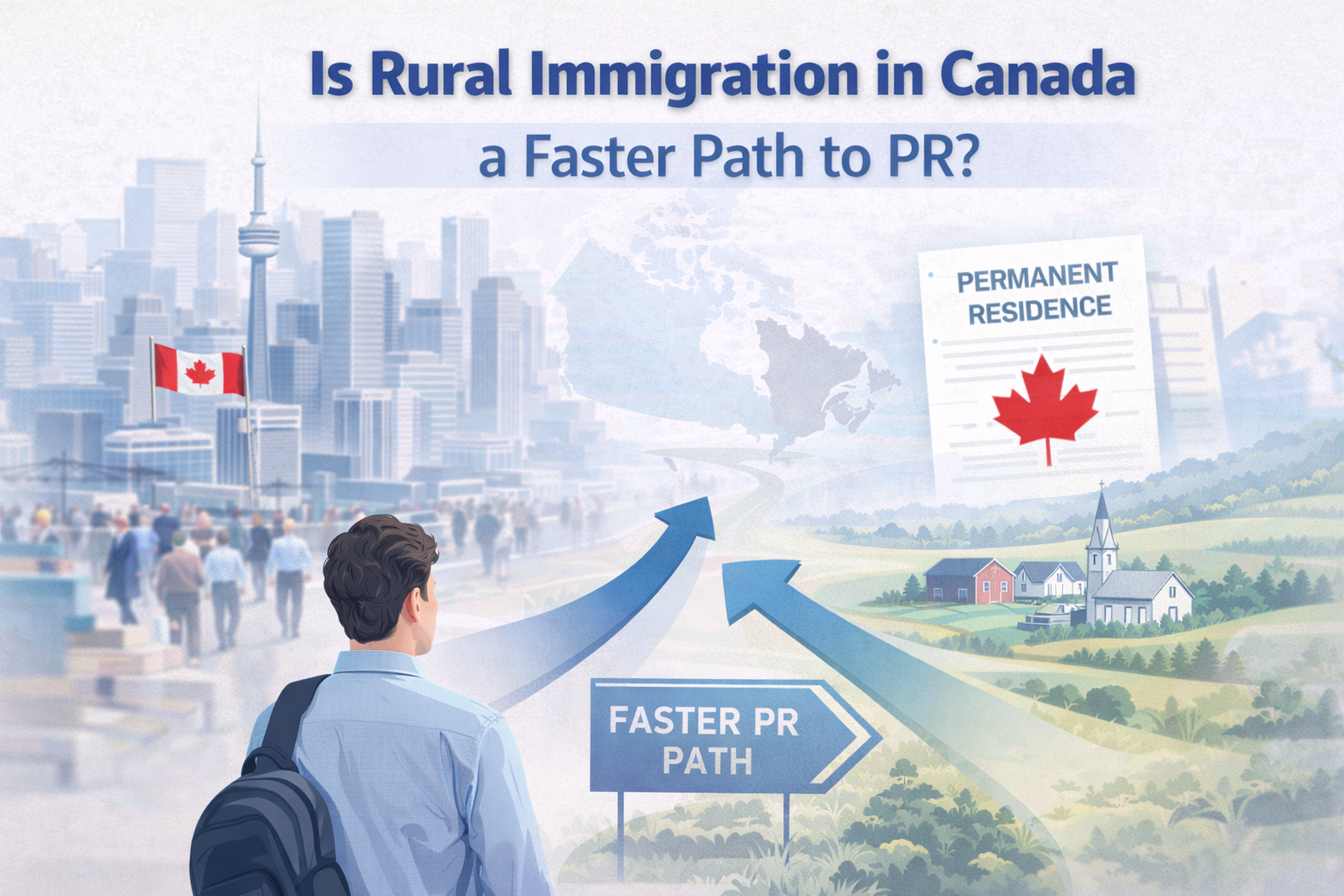


Canada's small towns and rural regions are short on workers, short on residents, and in many cases, short on time. Meanwhile skilled immigrants are stuck in long queues for the same oversubscribed urban programs.
If you are genuinely open to settling outside Toronto, Vancouver, or Calgary — that flexibility is worth something in the immigration system. More than most people know.
Canada's population growth piles into a handful of cities while smaller communities age and shrink. The government recognized this as a real economic problem and built immigration pathways to direct settlement toward places that actually need people.
These programs trade a lower immigration threshold for a genuine commitment to settle somewhere specific.
The RNIP is one of the most community-driven immigration programs Canada has built.
Participating smaller communities can directly recommend immigrants for permanent residence based on their own local labor needs. You need a genuine job offer from an employer in the community and a real intention to live there.
A high CRS score is not the deciding factor. The community recommendation is.
Participating communities are spread across Ontario, British Columbia, Alberta, Saskatchewan, Manitoba, and the Northwest Territories.
New Brunswick, Nova Scotia, Prince Edward Island, and Newfoundland and Labrador have been dealing with population decline for years. The Atlantic Immigration Program is the direct response.
Designated employers in these provinces can hire international workers with a simpler process than standard hiring routes require. A job offer from a designated employer opens a direct path to permanent residence.
Demand is real across healthcare, construction, hospitality, and food processing.
Several provinces have built rural-specific streams into their provincial nominee programs.
British Columbia has a Rural and Small Town stream for workers employed in qualifying communities outside the major urban centers.
Saskatchewan's nominee program reflects the province's largely non-urban economy, with active recruitment in agriculture, trades, and healthcare.
Manitoba gives preference to applicants with connections to communities outside Winnipeg, and has pathways that reward workers already settled in smaller towns.
Ontario runs a regional pilot targeting smaller cities and towns that have very different labor needs than the Greater Toronto Area.
This pathway is specifically for workers in meat processing, greenhouse and mushroom production, and other agricultural subsectors — industries that are almost entirely based in rural areas.
You need at least one year of non-seasonal work experience in a qualifying role and a valid job offer. Language and education requirements are modest.
For workers already in Canada on temporary permits in these sectors, this is one of the clearest routes to permanent residence available.
Caregivers and personal support workers are in acute demand in rural and remote communities where aging populations have few local options.
Workers who build qualifying experience under Canada's caregiver programs can apply for permanent residence. Rural employers in this space often find it easier to retain immigrant workers than urban employers do — competition for workers is simply lower.
Lower housing costs, tighter communities, and a faster immigration path are real advantages.
But smaller communities also mean fewer amenities, more limited professional networks, and sometimes less cultural diversity. Most rural programs require genuine intention to stay — this is not a backdoor strategy to eventually move to Toronto.
That said, many immigrants who started in rural communities have ended up choosing to stay. The quality of life surprised them.
Federal funding supports settlement services in smaller communities, but the depth of those services varies a lot by location.
Before committing to a specific community, check what is actually available there — language support, settlement workers, community organizations. Some RNIP communities have built strong newcomer infrastructure. Others are still developing it.
1. Do I have to stay in the rural community permanently after getting PR?
Once you have permanent residence you are free to move anywhere in Canada. But these programs expect genuine intent to settle, not a short-term workaround.
2. Can my family come with me under rural immigration programs?
Yes. Most pathways allow you to include your spouse and dependent children in the application.
3. What if my occupation is not in demand in the community I want?
Each community sets its own labor needs. If your occupation does not fit one community, check other participating communities — needs vary from town to town.
4. Are rural pilot programs more likely to change or get cancelled?
Yes. Smaller pilots change more frequently than national programs. Always verify current status directly on the IRCC website before applying.
5. I don't have much experience. Does willingness to live rurally help my chances?
Willingness helps but is not enough on its own. Rural programs still have work experience and language requirements — they are just generally lower than national programs.
Having an 'Identity Verified' badge or being 'Identity Verified' simply indicates that an individual has submitted information to complete our identity verification process or we have conducted internal verification using various authorized websites. While this process includes safeguards, it does not guarantee that the person is who they claim to be.
If you encounter any issues with this profile, please report them here. While all consultants who are verified have RCIC ID, we may not have the latest data in terms of their renewal/cancellation/discontinuation of their RCIC ID.
The "Verified Consultants" profiles are created using publicly available information, including data from the IRCC website, official consultant sites, other listing platforms, and social media. Immiperts.com is an independent platform, not affiliated with IRCC or any registered immigration consultants. To update, claim, or remove your profile, please contact us at [email protected].
╳