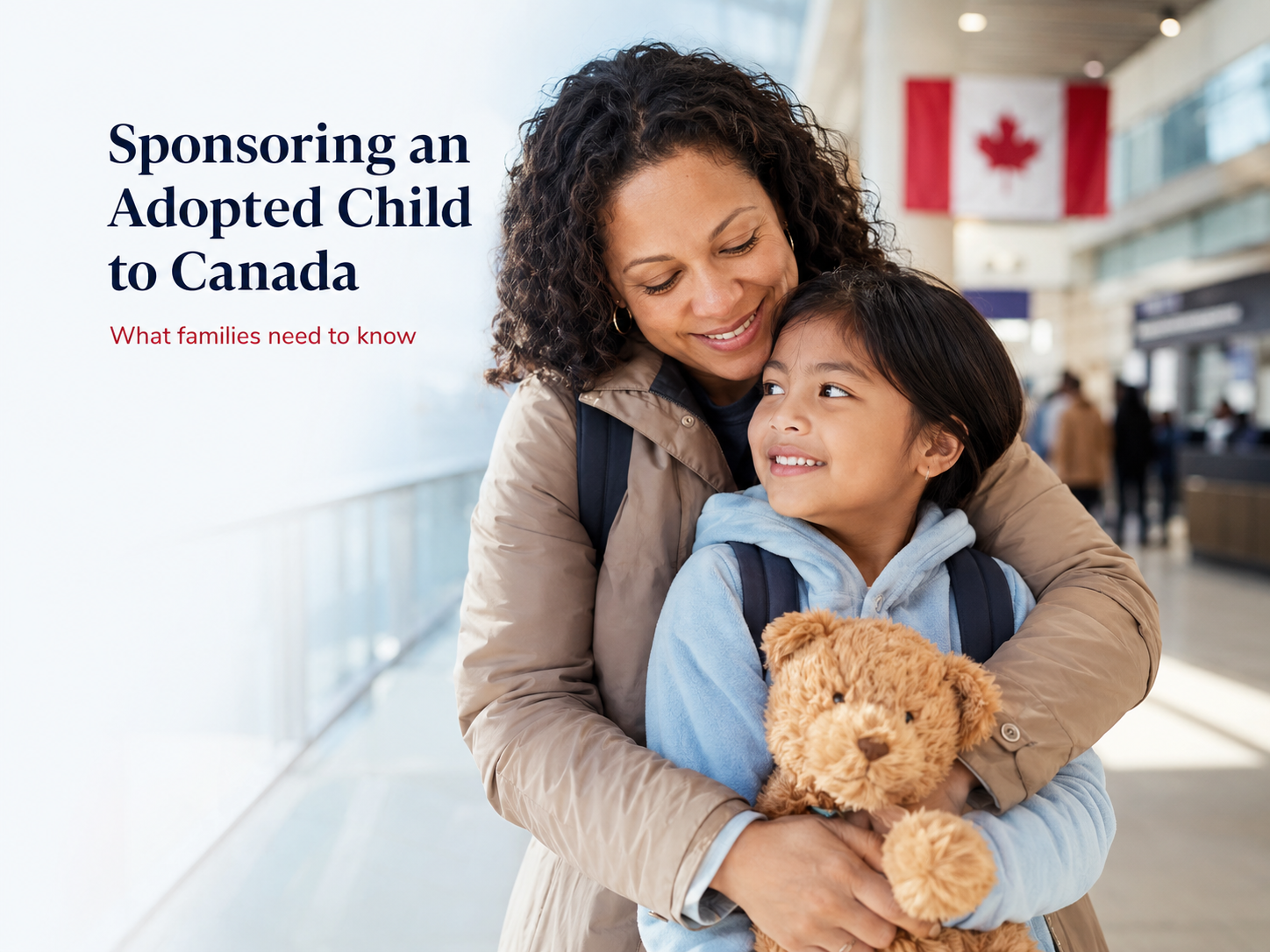


Bringing an adopted child home to Canada should feel like the final step in a long journey. Yet for many families, it becomes the beginning of another difficult process filled with legal checks, immigration forms, consent requirements, and unexpected delays.
A completed adoption does not automatically give a child the right to enter or live permanently in Canada. Families must follow the correct sponsorship, adoption, and immigration steps to avoid refusals, long separations, or problems recognizing the adoption under Canadian law.
To bring an adopted child from another country, families normally complete:
Your province or territory manages the adoption. The federal government manages immigration or citizenship. Both usually must be completed before the child moves to Canada permanently.
Permanent resident parents generally sponsor the child for permanent residence. Some Canadian citizens may instead apply directly for the child’s citizenship.
The correct route depends on the parents’ citizenship, where the adoption was completed and whether a Canadian parent can pass citizenship to the child. Check IRCC’s process guidance before applying.
A sponsor must generally:
You may not qualify if you receive social assistance for a reason other than disability, are bankrupt, owe money from an earlier sponsorship, are under a removal order, are in prison or have certain criminal convictions.
There is usually no minimum income requirement when the adopted child has no children of their own. You must still provide food, housing, clothing, daily needs and health costs not publicly covered.
Foreign adoption papers alone are not enough. The adoption must:
For Hague Convention cases, authorities in the child’s country and the Canadian province or territory must approve the adoption. Other cases still need safeguards against trafficking, unlawful placement and improper payments.
Begin with your provincial or territorial adoption authority. It will explain home-study rules, country restrictions and recognition rules. Provinces and territories are responsible for the adoption process, while IRCC handles immigration or citizenship.
The adoption may be completed abroad or finalized in Canada after a probationary period. Sponsorship can sometimes begin before a child is identified, but authorities must be updated after matching.
The immigration process includes:
Applications are normally filed through the Permanent Residence Portal. A parent or guardian can sign for a child under 18.
Documents may include identity records, adoption or placement papers, provincial approval, home-study records, biological-parent consent, photographs, translations and proof of the sponsor’s Canadian status.
Requirements vary by country. Each adopted child needs a separate application, including siblings adopted together.
As of August 2026, the federal sponsorship and processing fee is $180 per adopted child. These applications are exempt from the right of permanent residence fee.
Children older than 14 normally provide fingerprints and a photograph. The biometric fee is $85, and IRCC generally allows 30 days after issuing instructions.
The child must undergo an immigration medical examination with an approved panel physician. IRCC may request an interview, updated records or police certificates for applicants aged 18 or older.
Processing times vary by country and complexity. The adoption process has a separate timeline and may take several years.
After approval, the child becomes a permanent resident through the arrival process. The sponsor’s support commitment generally lasts 10 years or until the child turns 25, whichever comes first.
Check for:
Medical follow-ups, document verification, security concerns and consultations with other offices can also extend processing. Families should check whether Canada or their province has suspended or restricted adoptions from the child’s country.
Quebec residents must also complete a provincial undertaking with Quebec’s immigration ministry.
Follow the right order: speak with your adoption authority, choose the correct immigration or citizenship route, complete the legal approvals and submit a complete application.
Never rely only on an overseas adoption order or informal family arrangement. Canadian officials must confirm that the adoption is legal, genuine, ethical and focused on the child’s welfare.
Sometimes. IRCC permits early sponsorship in certain situations, including cases finalized later in Canada. Ask your provincial or territorial authority when you may apply.
Yes. Permanent residents can use the immigration process if they and the adoption meet all requirements. Eligible Canadian citizens may have a direct citizenship option.
Usually not if the adopted child has no children of their own. You must still sign an undertaking and support the child’s basic needs.
IRCC says processing varies by country and complexity. The separate adoption process can add considerable time, and some intercountry cases may take several years.
A temporary resident application may be possible, but approval is not guaranteed. Visitor status does not replace sponsorship or permanent residence.
Having an ‘Identity Verified’ badge or being ‘Identity Verified’ simply indicates that an individual has submitted information to complete our identity verification process or we have conducted internal verification using various authorized websites. While this process includes safeguards, it does not guarantee that the person is who they claim to be.
If you encounter any issues with this profile, please report them here. While all consultants who are verified have RCIC ID, we may not have the latest data in terms of their renewal/cancellation/discontinuation of their RCIC ID.
╳The “Verified Consultants” profiles on Immiperts.com are independently compiled using publicly available information from multiple sources, including the official CICC Public Register, consultants’ own websites, other public directories, and social media.
Immiperts.com is a completely independent platform and is not affiliated with, endorsed by, or connected to the College of Immigration and Citizenship Consultants (CICC), IRCC, or any immigration consultant.
All information is collected manually and is for educational and informational purposes only. Consultants may claim, update, or request removal of their profile by contacting us at hello@immiperts.com.
Users are strongly advised to always verify the latest authorization status directly on the official CICC Public Register at college-ic.ca.