
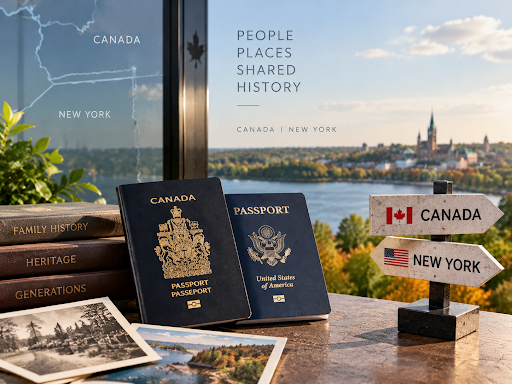


A 2025 law has allowed many Americans with Canadian ancestry to claim citizenship through their family connections.
For generations, many residents in northern New York carried Canadian roots without realizing those connections could lead to citizenship. A change in Canadian law that came into effect in December 2025 has opened a path for people who can prove a direct family link to a Canadian ancestor.
The change has particularly affected counties near the Quebec border, where Canadian and French Canadian ancestry remains common.
In Clinton County, New York, 6,988 residents reported Canadian or French Canadian ancestry in the U.S. Census. With a population of 78,493, that means about one in every 11 residents has reported such roots.
Franklin County follows with about one in 14 residents reporting Canadian ancestry, while St. Lawrence County has about one in 17. These three counties rank among the highest in New York State for Canadian ancestry.
However, experts say census numbers likely underestimate the number of people who may qualify for Canadian citizenship. Census records depend on how individuals describe their heritage, while citizenship eligibility depends on proving a documented family connection.
Over time, many families lost visible signs of their Canadian background. Surnames changed as generations moved and adapted to new communities.
For example, French names such as Leblanc became White, Charpentier became Carpenter, and La Rivière became Rivers. Some families also carried “dit names,” a naming tradition common in Quebec records, where a second family name was often added or later dropped.
Historians say these changes mean many people may have Canadian ancestry without recognizing it.
Patrick Lacroix, director of the Acadian Archives at the University of Maine at Fort Kent, found that many residents in northern New York had roots connected to Quebec rather than France.
Across ten counties between the Quebec border and New York’s Capital Region, nearly 34,942 residents report Canadian or French Canadian ancestry.
Many Quebec families moved south through established waterways, travelling along the Richelieu River, Lake Champlain and the Hudson River routes.
By 1860, Canadian-born residents made up a significant portion of several communities. In Clinton County, more than one-quarter of residents were Canadian. Towns such as Plattsburgh and Champlain each had more than 2,000 Canadian residents.
The connection continued for generations. By 1930, Clinton, Franklin and St. Lawrence counties still had more than 5,000 French Canadians each.
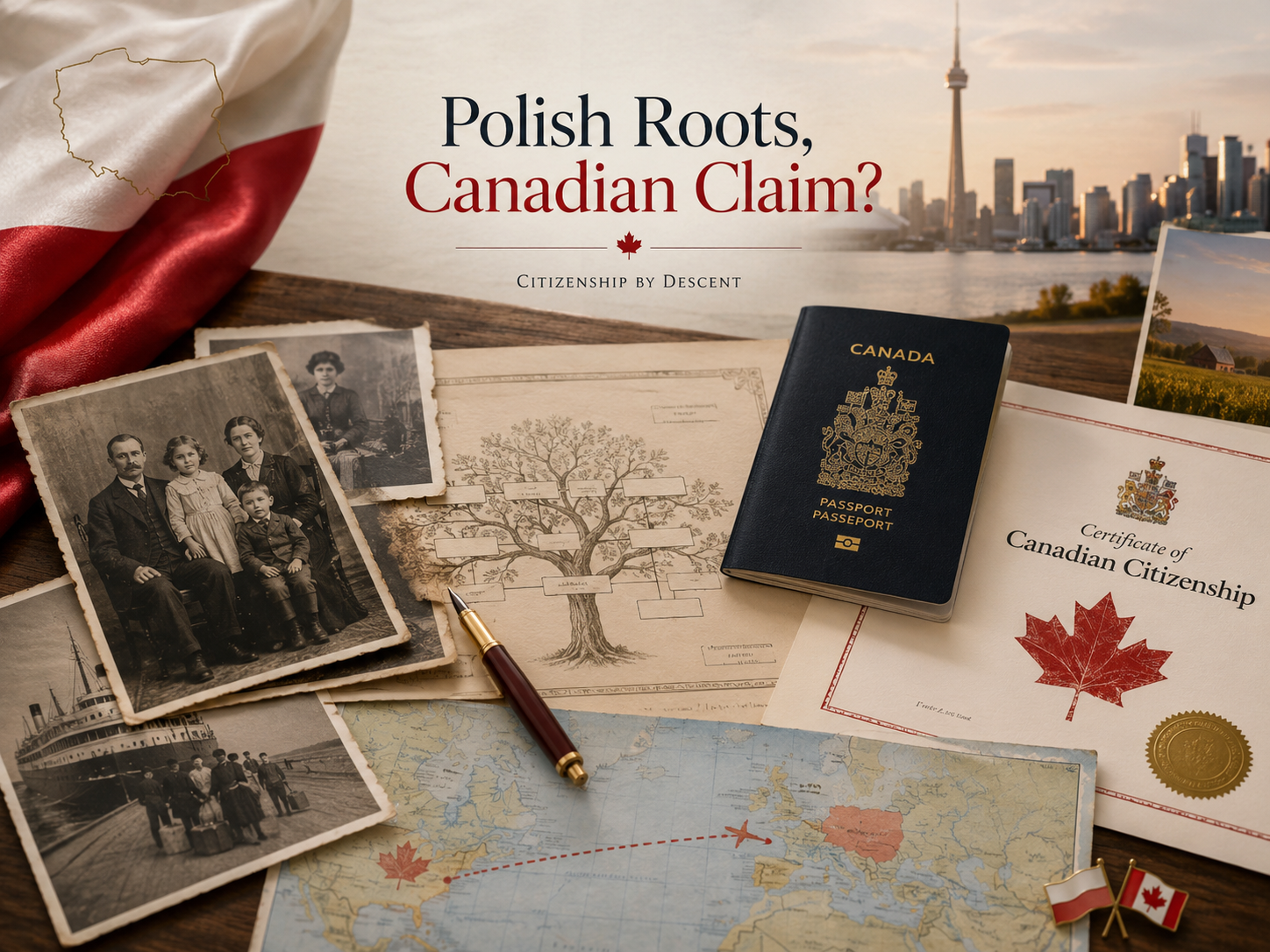
Bill C-3 came into effect on December 15, 2025, removing the previous limit on citizenship by descent.
Before the change, Canadian citizenship generally stopped after the first generation born outside Canada. The new law allows citizenship to pass through unlimited generations if applicants can prove their family connection.
Applicants do not need to complete a language test, meet residency requirements or take an oath. Canada and the United States both allow dual citizenship.
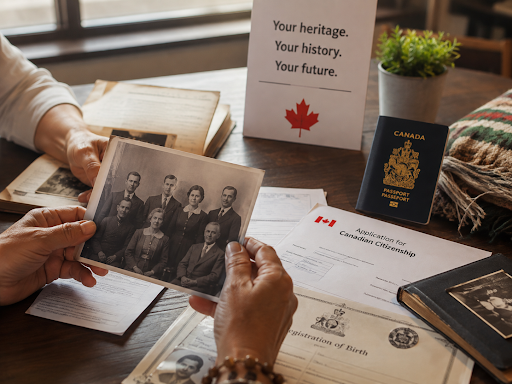
People applying for citizenship must provide documents connecting them to a Canadian ancestor. Birth certificates, marriage records, baptism records and death certificates can help establish the family relationship.
The process can be challenging because many records come from older Quebec archives. Since the law changed, requests for Quebec vital records have increased sharply.
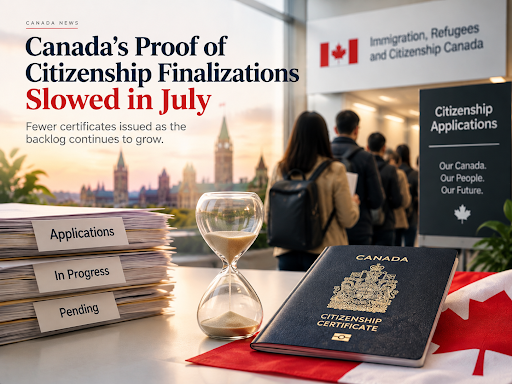
As of September 2026, Immigration, Refugees and Citizenship Canada reported a processing time of about 33 months for proof of citizenship applications, with approximately 136,000 applications waiting.






Having an ‘Identity Verified’ badge or being ‘Identity Verified’ simply indicates that an individual has submitted information to complete our identity verification process or we have conducted internal verification using various authorized websites. While this process includes safeguards, it does not guarantee that the person is who they claim to be.
If you encounter any issues with this profile, please report them here. While all consultants who are verified have RCIC ID, we may not have the latest data in terms of their renewal/cancellation/discontinuation of their RCIC ID.
╳The “Verified Consultants” profiles on Immiperts.com are independently compiled using publicly available information from multiple sources, including the official CICC Public Register, consultants’ own websites, other public directories, and social media.
Immiperts.com is a completely independent platform and is not affiliated with, endorsed by, or connected to the College of Immigration and Citizenship Consultants (CICC), IRCC, or any immigration consultant.
All information is collected manually and is for educational and informational purposes only. Consultants may claim, update, or request removal of their profile by contacting us at hello@immiperts.com.
Users are strongly advised to always verify the latest authorization status directly on the official CICC Public Register at college-ic.ca.