



Canada has introduced a new law that gives many people in New England with French-Canadian roots the chance to be recognized as citizens.
In parts of New England, old neighbourhoods still carry echoes of a Canadian past. In places like Lewiston, Maine, families with French roots have lived for generations, even as their traditions slowly faded. Now, a new law in Canada has brought that history back into focus.
Since December 2025, many people in the region may already hold Canadian citizenship without realizing it. The change has sparked fresh interest in family histories across the northeastern United States.
Several states in New England have deep ties to French-speaking Canadians. In Maine, about one in five residents has French ancestry. In some areas, that number rises even higher. Nearby states such as New Hampshire and Vermont show similar patterns, while Massachusetts has hundreds of thousands of residents with French-Canadian backgrounds.
These connections date back more than a century. Between 1840 and 1930, nearly 900,000 people left Quebec and moved south in search of work.
Many of these newcomers settled in mill towns across the region. They built close-knit communities known as “Little Canadas.” These areas included French-language schools, churches, newspapers, and hospitals. People could live their entire lives in these communities while speaking only French.
Over time, these neighbourhoods thrived and created a strong cultural identity. Families held tightly to their traditions and passed them down through generations.
As industries changed, these communities began to shrink. Textile mills closed or moved, and younger generations moved away. Families started to blend into wider American society.
Names changed, languages faded, and many traditions disappeared. Within a few generations, many families lost touch with their Canadian roots, even though those roots never truly disappeared.
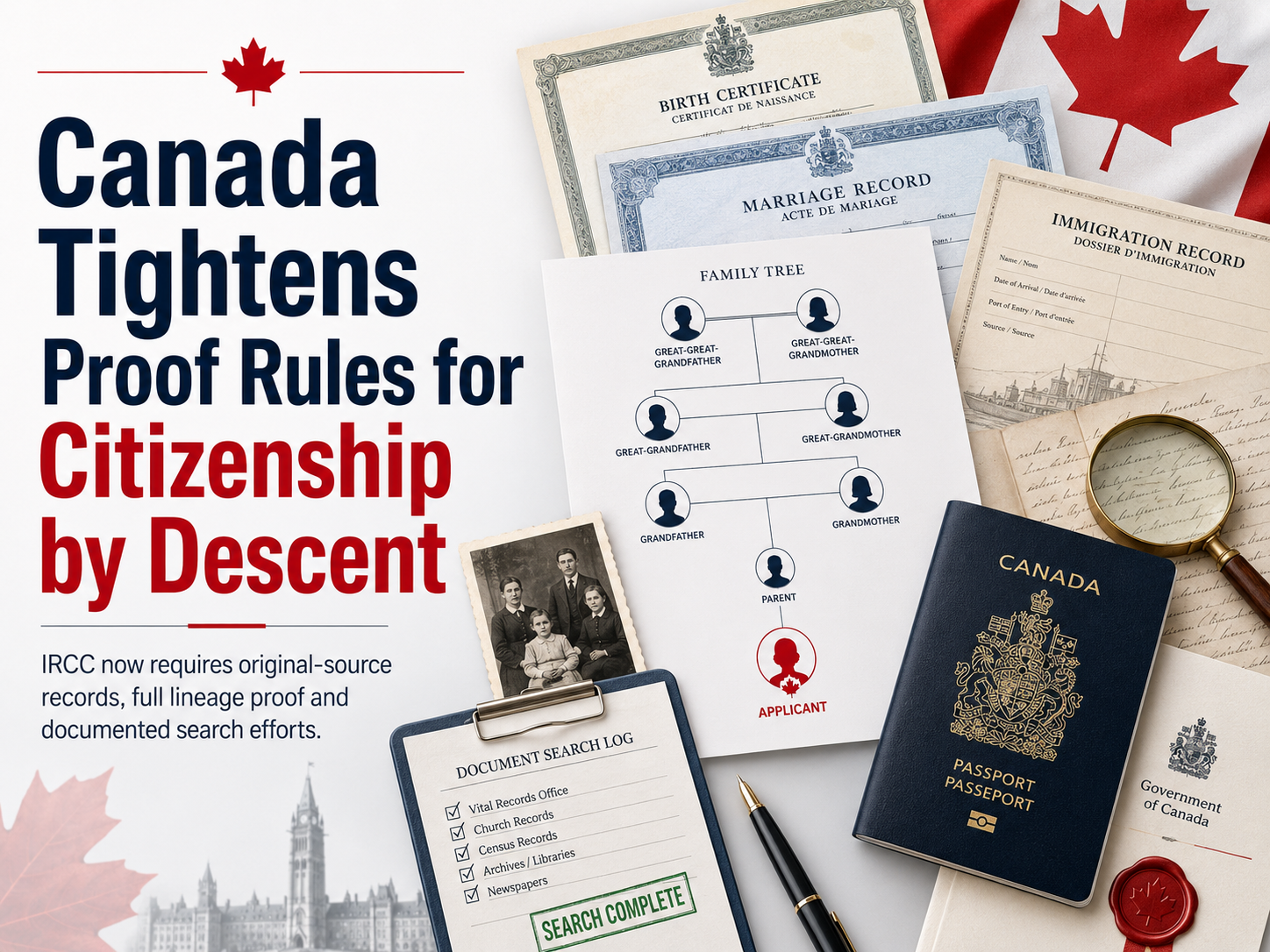
The new law, known as Bill C-3, has changed how citizenship by descent works. Before this update, only one generation born outside Canada could claim citizenship. That rule excluded many families whose ancestors had left Canada long ago.
Now, anyone born before December 15, 2025, can qualify if they can trace a direct line to a Canadian ancestor. The number of generations no longer matters.
People who qualify do not need to take language tests, live in Canada, or pass an exam. They only need to prove their family connection. Once confirmed, they receive official recognition of citizenship.
This change has led many people to explore their ancestry. Some look for clues in family names, old records, or stories passed down over time. Others search for documents that connect them to relatives from Quebec.
Interest has grown quickly. Requests for historical records have increased sharply, and many families now work together to trace their shared roots.
For many, this discovery means more than gaining citizenship. It offers a chance to reconnect with a lost part of their identity. Families who once set aside their language and traditions now find new reasons to revisit them.
The law has shown that even after generations, those ties remain intact.



Having an ‘Identity Verified’ badge or being ‘Identity Verified’ simply indicates that an individual has submitted information to complete our identity verification process or we have conducted internal verification using various authorized websites. While this process includes safeguards, it does not guarantee that the person is who they claim to be.
If you encounter any issues with this profile, please report them here. While all consultants who are verified have RCIC ID, we may not have the latest data in terms of their renewal/cancellation/discontinuation of their RCIC ID.
╳The “Verified Consultants” profiles on Immiperts.com are independently compiled using publicly available information from multiple sources, including the official CICC Public Register, consultants’ own websites, other public directories, and social media.
Immiperts.com is a completely independent platform and is not affiliated with, endorsed by, or connected to the College of Immigration and Citizenship Consultants (CICC), IRCC, or any immigration consultant.
All information is collected manually and is for educational and informational purposes only. Consultants may claim, update, or request removal of their profile by contacting us at hello@immiperts.com.
Users are strongly advised to always verify the latest authorization status directly on the official CICC Public Register at college-ic.ca.