


A citizenship law change may help many Americans with Canadian ancestry apply for proof of citizenship.
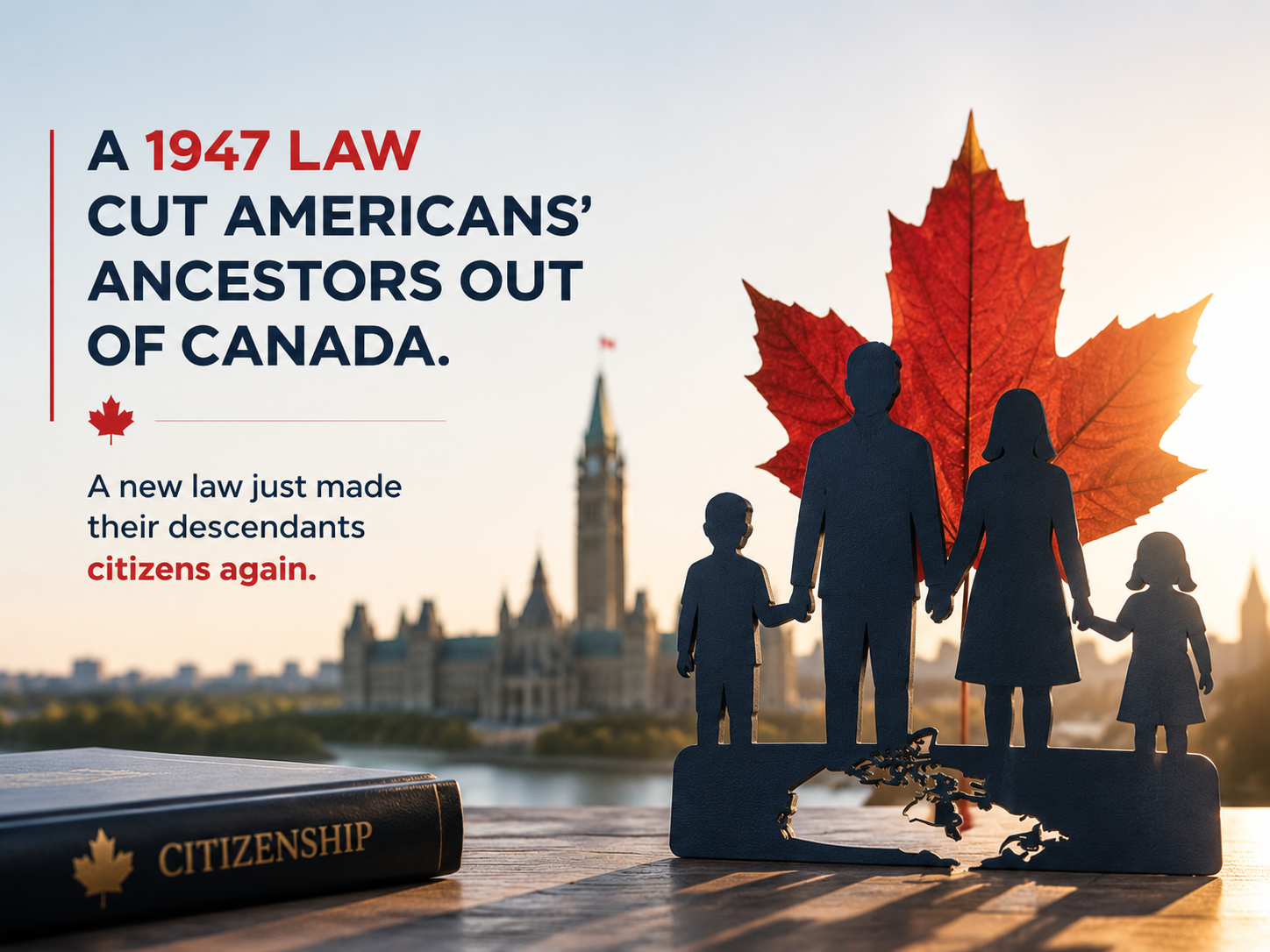
Millions of Americans may now have a stronger claim to Canadian citizenship after Canada changed its citizenship law in December 2025.
The update is especially important for people in New England, where many families have long-standing ties to Canada, particularly Quebec. In states such as New Hampshire, Vermont, Maine, Rhode Island and Massachusetts, Canadian ancestry is more common than in most other parts of the United States.
On December 15, 2025, Canada removed the first-generation limit for citizenship by descent. This means some people with a Canadian ancestor may now be eligible to apply for proof of Canadian citizenship, even if they were born outside Canada.
Once a person receives a proof of citizenship certificate, they can apply for a Canadian passport.
The change could affect millions of Americans, especially those whose families came from Canada generations ago. Many may not even know they have Canadian roots.
Much of this history comes from the movement of nearly one million French Canadians from Quebec to the Northeastern United States between 1840 and 1930. This migration is often called the “Great Hemorrhage.”
Many French Canadians crossed into nearby states for work, especially in textile mills and industrial towns. Over time, their descendants became part of local communities while still carrying Canadian family lines.
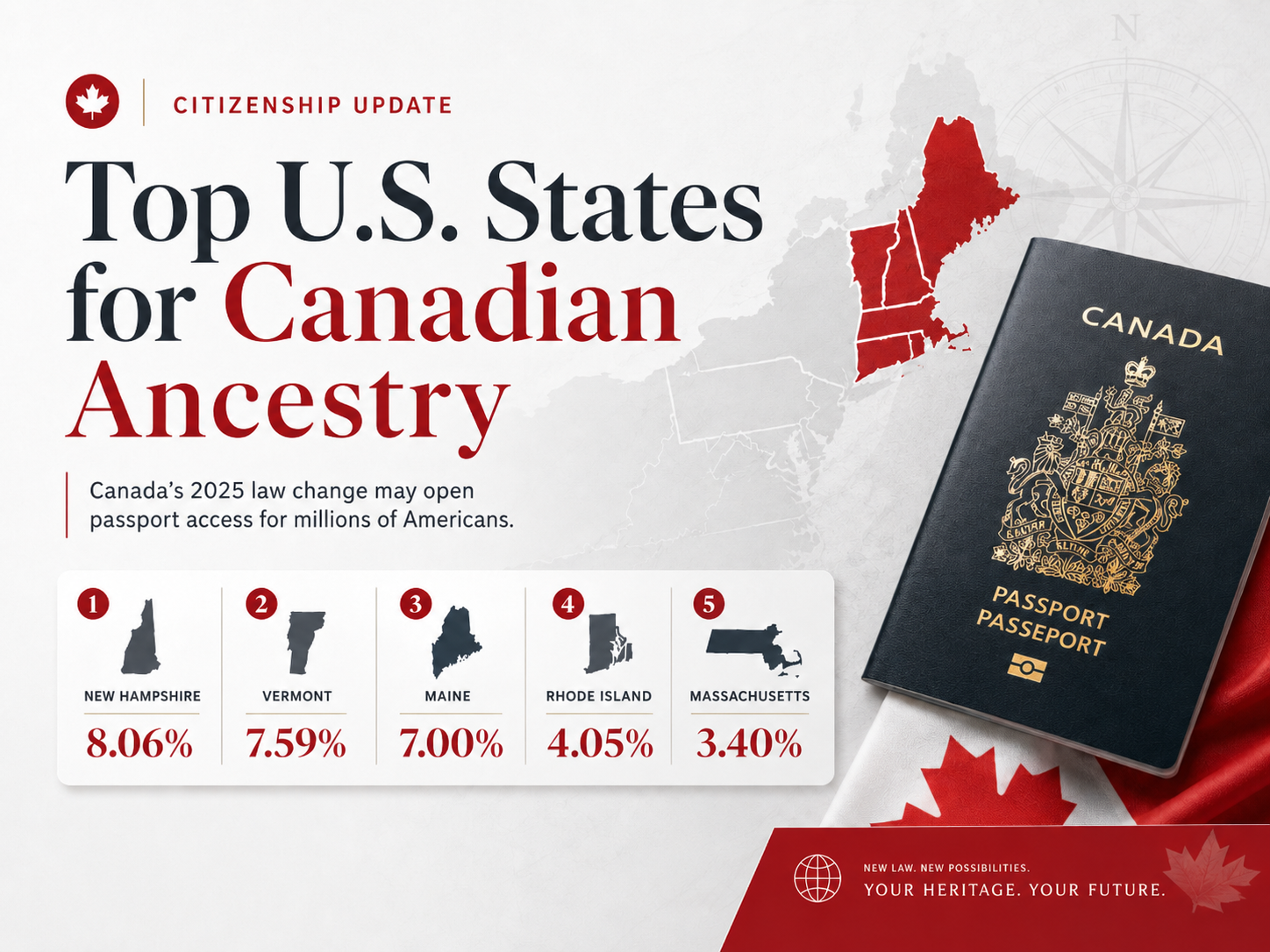
According to 2024 U.S. Census Bureau data based on self-reported Canadian ancestry, New Hampshire ranks first at 8.06 per cent. Vermont follows at 7.59 per cent, Maine at 7.00 per cent, Rhode Island at 4.05 per cent and Massachusetts at 3.40 per cent.
Experts suggest the real number may be much higher because many Americans do not know their full family background.
New Hampshire may have one of the strongest links. The article notes that nearly one in three residents could potentially qualify as dual Canadian-U.S. citizens. Manchester became a major centre for French-Canadian workers, with about 23,000 French Canadians living there by 1910.
Vermont also has deep French-Canadian roots. Ed McGuire, former president of the Vermont Genealogy Library, has estimated that around 30 per cent of Vermont residents may have French-Canadian ancestry.
Maine shares a long border with Quebec and was another major destination. Lewiston became especially known for its Franco-American community. By 1920, Franco-Americans made up nearly half of Lewiston’s population, and one neighbourhood is still remembered as “Little Canada.”
Rhode Island ranks fourth by self-reported Canadian ancestry. Woonsocket, in northern Rhode Island, had a large French-Canadian population by 1900 and is still known for its strong French-American heritage.
Massachusetts also played a major role in French-Canadian migration. By 1990, it had the largest Franco-American population in the United States, according to the New England Historical Society.
Some family names may offer clues. French names, or names changed into English over time, can help people begin tracing their ancestry.
People who believe they qualify must apply for proof of Canadian citizenship before seeking a passport. This process requires official records, including birth, marriage and death certificates, connecting each generation back to a Canadian-born ancestor.
As of the article’s publication, proof of citizenship applications were taking about one year. A Canadian passport application usually takes another 10 to 20 business days after the certificate is received.
Many Americans are applying not because they plan to move immediately, but because they want a Canadian passport as a backup option during uncertain times.









Having an ‘Identity Verified’ badge or being ‘Identity Verified’ simply indicates that an individual has submitted information to complete our identity verification process or we have conducted internal verification using various authorized websites. While this process includes safeguards, it does not guarantee that the person is who they claim to be.
If you encounter any issues with this profile, please report them here. While all consultants who are verified have RCIC ID, we may not have the latest data in terms of their renewal/cancellation/discontinuation of their RCIC ID.
╳The “Verified Consultants” profiles on Immiperts.com are independently compiled using publicly available information from multiple sources, including the official CICC Public Register, consultants’ own websites, other public directories, and social media.
Immiperts.com is a completely independent platform and is not affiliated with, endorsed by, or connected to the College of Immigration and Citizenship Consultants (CICC), IRCC, or any immigration consultant.
All information is collected manually and is for educational and informational purposes only. Consultants may claim, update, or request removal of their profile by contacting us at hello@immiperts.com.
Users are strongly advised to always verify the latest authorization status directly on the official CICC Public Register at college-ic.ca.