
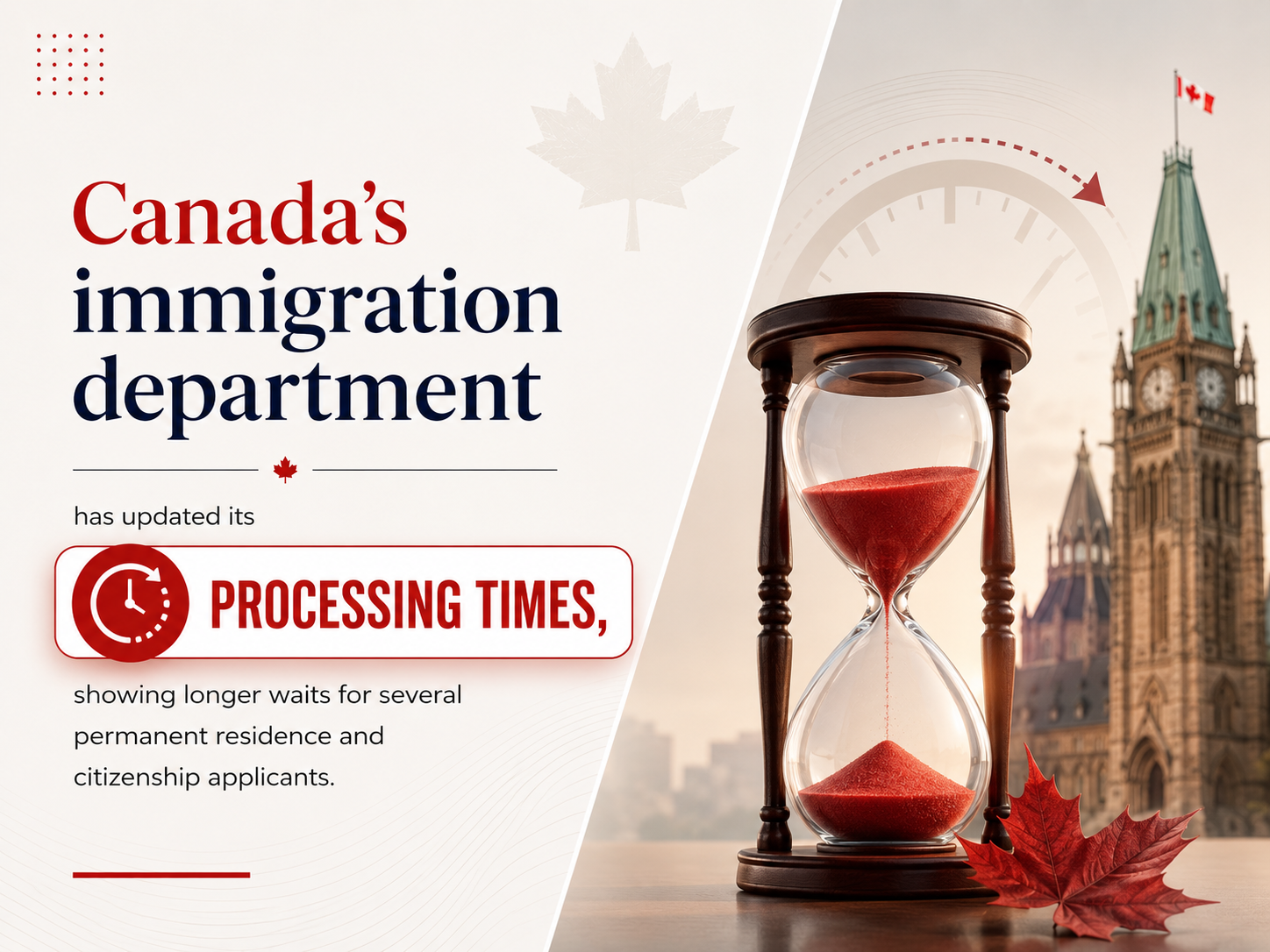


IRCC’s latest update shows longer processing times for Express Entry, base PNP, spousal sponsorship and citizenship grants, while AIP and Parents and Grandparents Program wait times have improved.
Canada’s immigration department has updated its processing times, showing longer waits for several permanent residence and citizenship applicants.
Immigration, Refugees and Citizenship Canada published the new estimates on May 12. The figures show that some Express Entry and Provincial Nominee Program applicants now face longer timelines than they did in the April 7 update.
The Federal Skilled Worker Program processing time rose to seven months, up from six months in April. The Canadian Experience Class stayed for seven months. IRCC does not publish a processing estimate for the Federal Skilled Trades Program because it does not have enough data.
The department’s service standard for Express Entry applications is six months. However, inventories remain high. IRCC reported 60,900 Canadian Experience Class applications waiting for assessment, an increase of 6,300. The Federal Skilled Worker Program inventory reached 52,000, up by 7,900.
Provincial Nominee Program processing times also shifted. Enhanced PNP applications submitted through Express Entry remained at seven months. Base PNP applications, which are not linked to Express Entry, rose to 14 months from 13 months.
IRCC’s service standard is six months for enhanced PNP applications and 11 months for base applications. The enhanced PNP inventory rose slightly to 14,000, while the base PNP inventory increased by 2,100 to 110,200.
Processing times for Quebec programs did not change. The Skilled Worker Selection Program, also known as PSTQ, remained at 11 months. Quebec Business Class applications remained at 78 months.
IRCC’s service standard for PSTQ applications is 11 months. The PSTQ inventory fell by 900 to 24,800 applications. Quebec Business Class inventory also dropped slightly, by 100, to 3,700 applications.
The Atlantic Immigration Program was the only listed economic immigration stream to see a shorter wait. Its processing time fell to 38 months from 40 months, though it remains well above the 11-month service standard. IRCC reported 12,900 AIP applications waiting for assessment, down by 300.
Other economic programs stayed unchanged. Start-Up Visa and Federal Self-Employed Persons Program applications still show waits of more than 10 years. Start-Up Visa inventory stood at 46,000, down by 200, while Federal Self-Employed inventory remained at 8,100.
Spousal sponsorship applicants outside Quebec saw longer waits. Applications for spouses or common-law partners living in Canada and planning to settle outside Quebec rose to 25 months from 24 months. For applicants living outside Canada and settling outside Quebec, the wait rose to 16 months from 15 months.
Quebec spousal sponsorship timelines stayed the same: 31 months for partners in Canada and 32 months for partners outside Canada. Parents and Grandparents Program waits improved by one month, falling to 33 months outside Quebec and 66 months in Quebec.
Citizenship grant processing rose to 13 months from 12 months. Renunciation of citizenship fell to seven months from 10 months, while searches of citizenship records remained at 17 months. IRCC said 321,100 citizenship grant applications were waiting for assessment, up by 7,900.
Processing times estimate how long new applicants may wait for a decision. Service standards are IRCC’s internal goals for completing 80 per cent of applications within a set timeframe.









Having an ‘Identity Verified’ badge or being ‘Identity Verified’ simply indicates that an individual has submitted information to complete our identity verification process or we have conducted internal verification using various authorized websites. While this process includes safeguards, it does not guarantee that the person is who they claim to be.
If you encounter any issues with this profile, please report them here. While all consultants who are verified have RCIC ID, we may not have the latest data in terms of their renewal/cancellation/discontinuation of their RCIC ID.
╳The “Verified Consultants” profiles on Immiperts.com are independently compiled using publicly available information from multiple sources, including the official CICC Public Register, consultants’ own websites, other public directories, and social media.
Immiperts.com is a completely independent platform and is not affiliated with, endorsed by, or connected to the College of Immigration and Citizenship Consultants (CICC), IRCC, or any immigration consultant.
All information is collected manually and is for educational and informational purposes only. Consultants may claim, update, or request removal of their profile by contacting us at hello@immiperts.com.
Users are strongly advised to always verify the latest authorization status directly on the official CICC Public Register at college-ic.ca.