
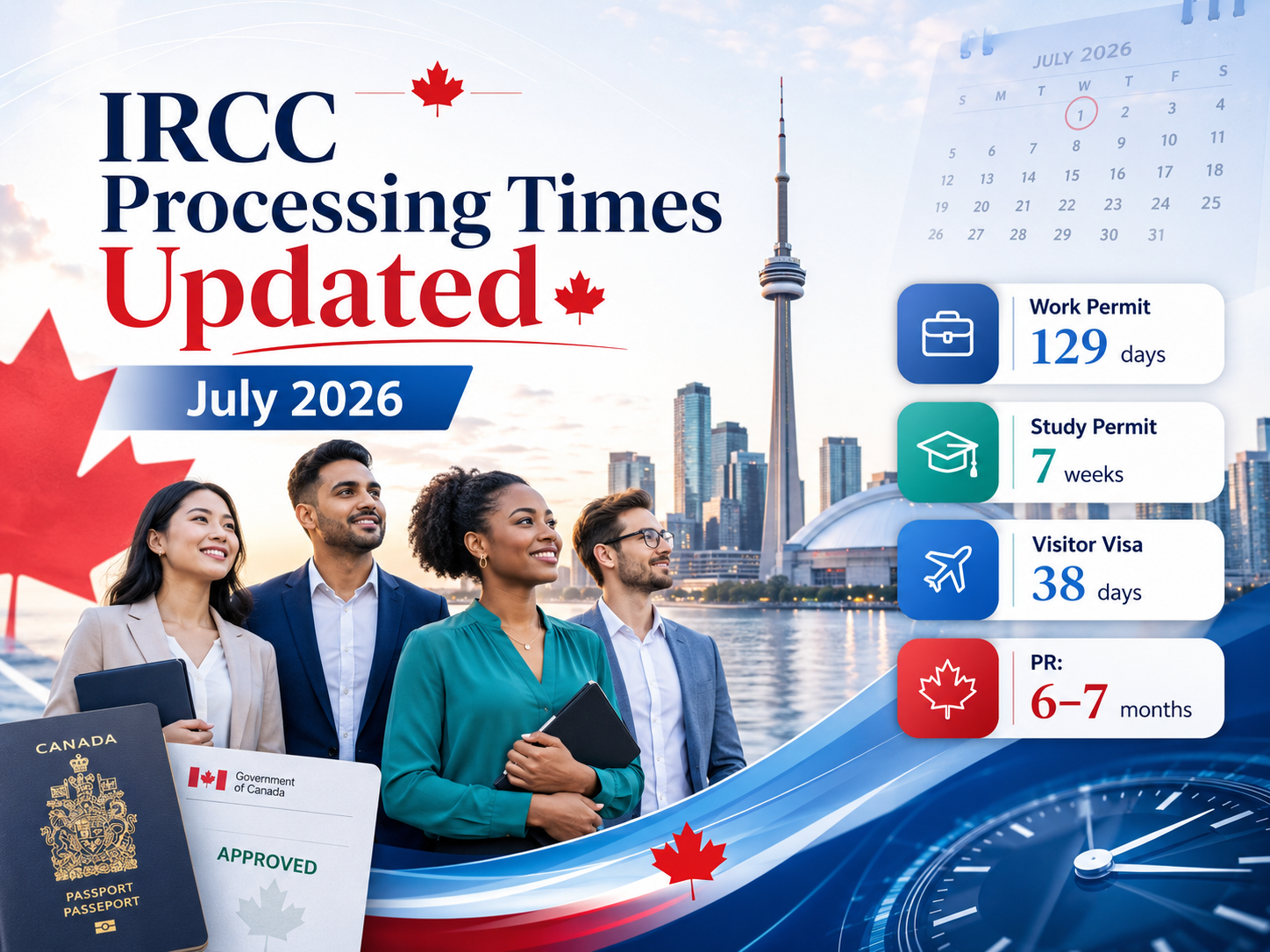


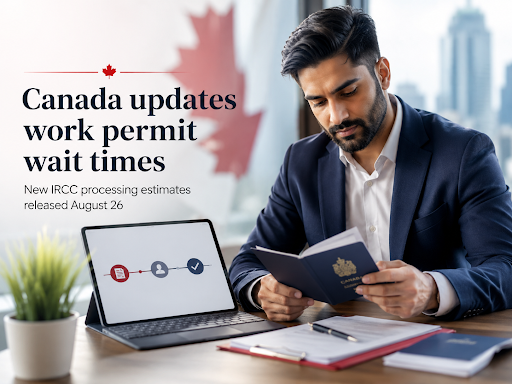
Canada’s latest processing estimates give applicants a clearer view of current wait times.
Canada has released updated immigration processing times for July 2026, giving applicants a better idea of how long different files may take.
The latest update, published on July 2, 2026, covers several immigration categories, including temporary residence, permanent residence, and permanent resident card services. These timelines are estimates, not fixed decision dates, but they help applicants plan work, study, travel, and family decisions more carefully.
Processing times become important after an applicant has already submitted a file. They do not decide who receives an invitation to apply. Instead, they show how long Immigration, Refugees and Citizenship Canada may take to review submitted applications.
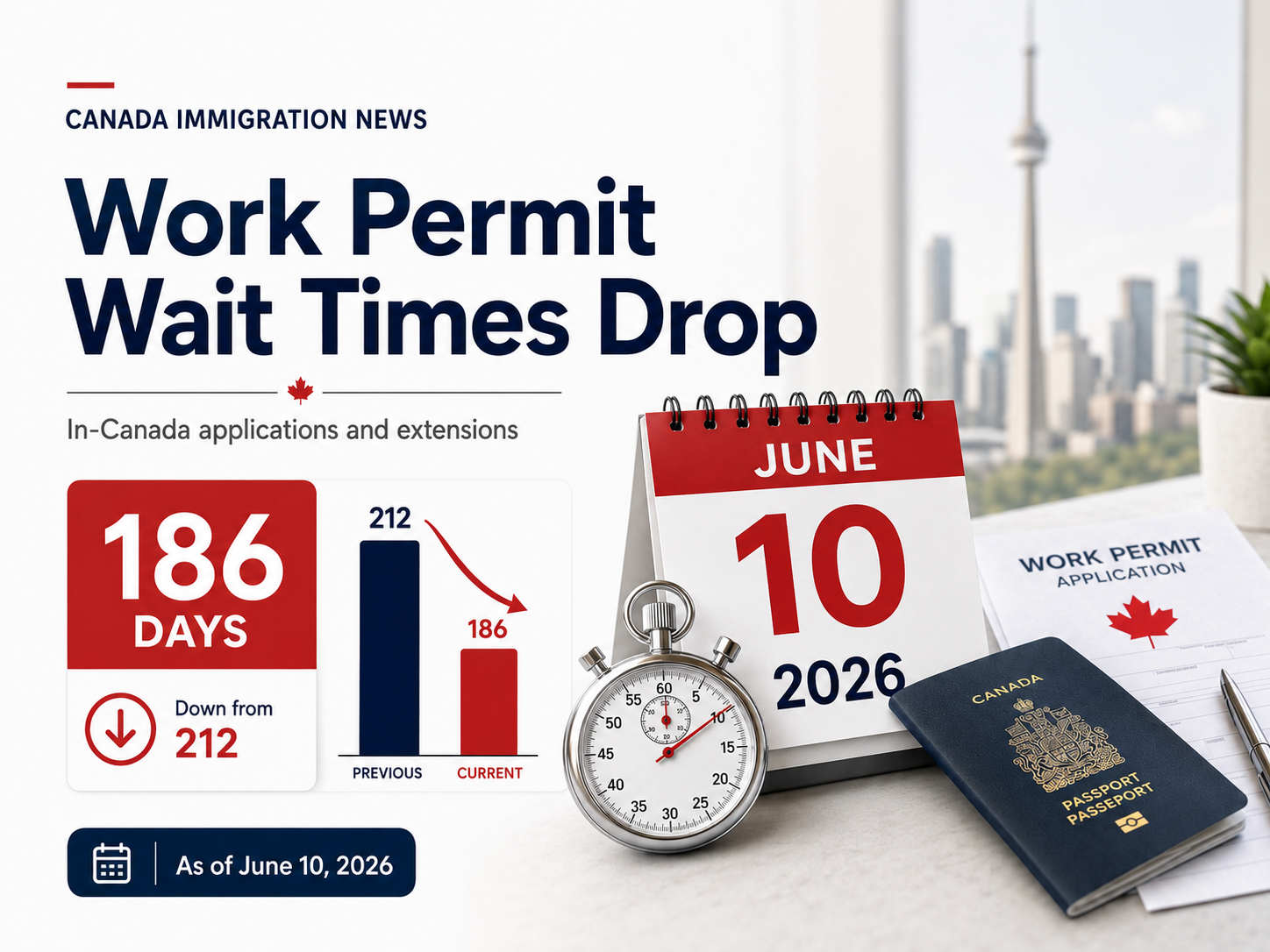
For applications submitted from inside Canada, work permits are currently estimated at 129 days. Study permits are estimated at seven weeks, while visitor visas are listed at 38 days.
Processing times outside Canada continue to vary by country. For work permits, applications from the United States are estimated at about four weeks, while applications from India are estimated at about nine weeks.
For study permits, the estimate is about four weeks for applicants in the Philippines and six weeks for applicants in Pakistan. Visitor visa timelines also vary, with the Philippines listed at around 17 days and Nigeria at about 56 days.
Applicants are advised to check the latest country-specific estimates before booking travel, confirming employment plans, or making major personal decisions.
Permanent residence processing remains relatively steady in several major categories.
The Canadian Experience Class is currently estimated at about seven months. Provincial Nominee Program applications through Express Entry are estimated at about six months.
Spouse or common-law partner sponsorship applications outside Quebec are estimated at about 26 months. Permanent resident card renewal or replacement is listed at about 32 days.
These timelines may still change depending on application numbers, program priorities, and IRCC’s operational capacity.
IRCC processing estimates change because workloads change. A rise in application volume can increase wait times. Some programs may also receive priority based on labour needs, humanitarian commitments, or government goals.
Application quality also plays a major role. Missing documents, expired forms, wrong fees, unclear copies, or extra verification requests can slow down a file.
Security and background checks may also take longer for some applicants, depending on individual circumstances.
IRCC has also noted that foreign nationals whose last country of residence was the Democratic Republic of the Congo, South Sudan, or Uganda may face longer processing times because of temporary operational measures.
Applicants cannot control IRCC’s workload, but they can reduce avoidable delays by submitting complete files.
They should include all required documents, check passport validity, upload clear copies, submit valid language results when needed, respond quickly to IRCC requests, and keep contact details updated.
For people planning to study, work, visit, or settle permanently in Canada, the July 2026 processing update is a useful planning tool. The safest approach remains careful preparation and realistic expectations.







Having an ‘Identity Verified’ badge or being ‘Identity Verified’ simply indicates that an individual has submitted information to complete our identity verification process or we have conducted internal verification using various authorized websites. While this process includes safeguards, it does not guarantee that the person is who they claim to be.
If you encounter any issues with this profile, please report them here. While all consultants who are verified have RCIC ID, we may not have the latest data in terms of their renewal/cancellation/discontinuation of their RCIC ID.
╳The “Verified Consultants” profiles on Immiperts.com are independently compiled using publicly available information from multiple sources, including the official CICC Public Register, consultants’ own websites, other public directories, and social media.
Immiperts.com is a completely independent platform and is not affiliated with, endorsed by, or connected to the College of Immigration and Citizenship Consultants (CICC), IRCC, or any immigration consultant.
All information is collected manually and is for educational and informational purposes only. Consultants may claim, update, or request removal of their profile by contacting us at hello@immiperts.com.
Users are strongly advised to always verify the latest authorization status directly on the official CICC Public Register at college-ic.ca.