
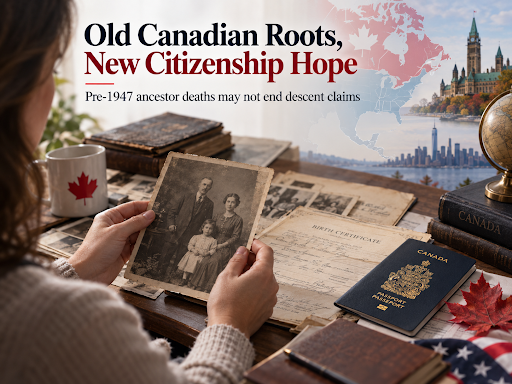


Old Canadian family ties may still support citizenship claims, even when an ancestor died before Canada created formal citizenship.
Canadian citizenship did not become a legal status until January 1, 1947. Before then, people born in Canada were generally British subjects. That history can make citizenship-by-descent cases look impossible when a Canadian ancestor died before the law formally recognized them as a citizen.
But a death before 1947 does not automatically end a family’s claim. Canada’s Citizenship Act includes several provisions that can treat an ancestor as though they had lived long enough to receive the status a later law would have given them. These provisions are sometimes called “death bridges.”
The key rule is narrow: the ancestor’s death must be the only reason the claim would otherwise fail. These provisions do not fix other problems, such as a person who would never have qualified or someone who formally renounced citizenship.
The law includes different bridges for different situations. They cover people born or naturalized in Canada who died before January 1, 1947; people connected to Newfoundland and Labrador who died before April 1, 1949; people affected by older citizenship-loss rules who died before April 17, 2009; certain British subjects who died before June 11, 2015; and people affected by the former first-generation limit who died before December 15, 2025. A separate rule applies to some adoptive-parent cases.
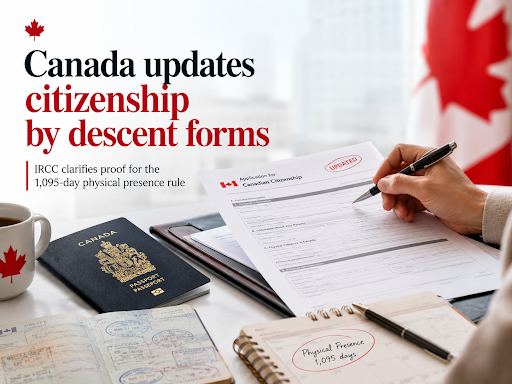
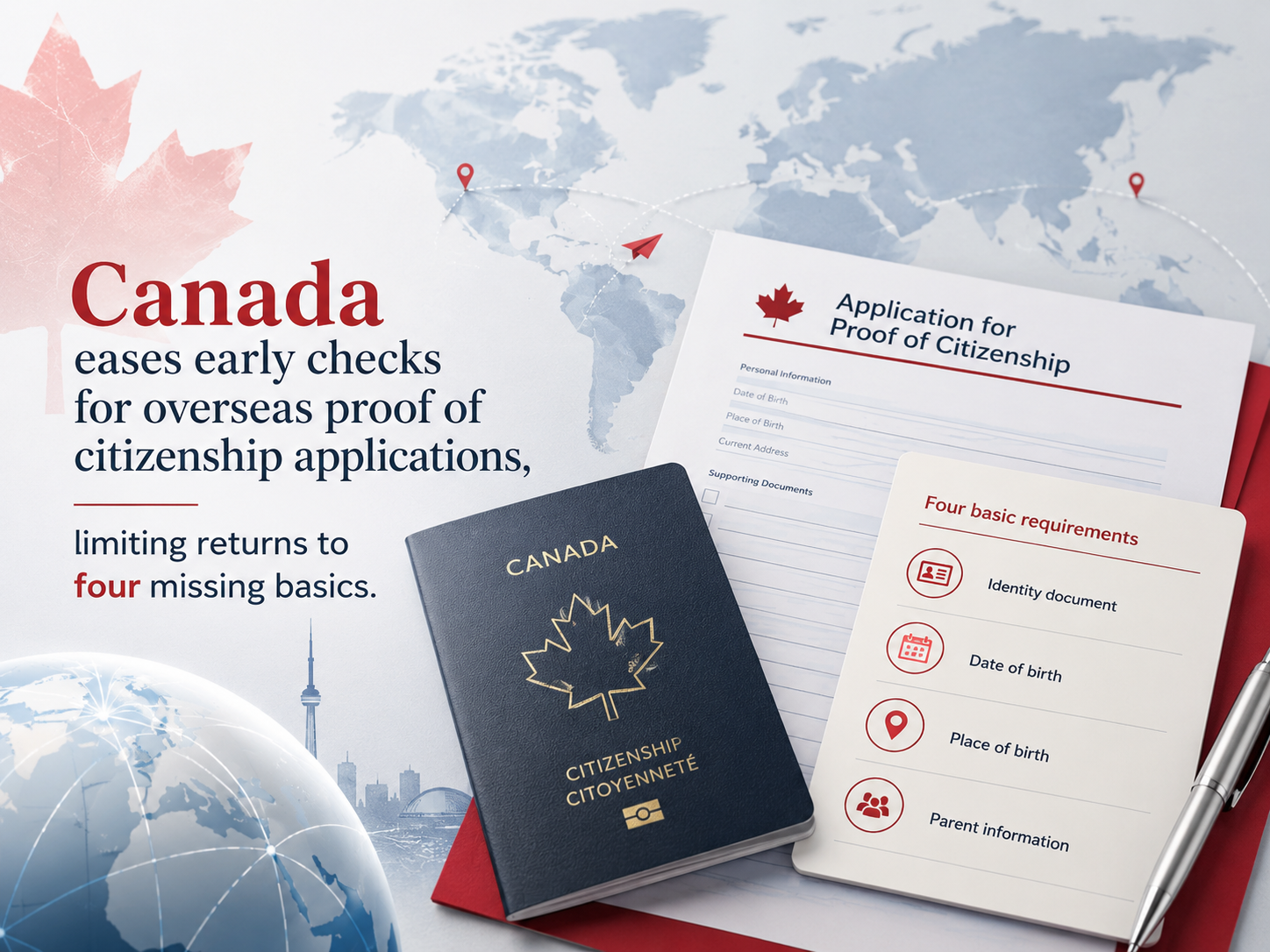
A legal bridge does not solve missing-document problems. Applicants still need evidence linking each generation in the family line.
Useful records can include birth certificates, citizenship documents, naturalization records, death certificates and marriage certificates when surnames changed. For older Quebec cases, baptismal or parish records may be important. Newfoundland and Labrador families may also need older provincial archive records.
The claim must also show an unbroken connection from that ancestor to the applicant today.
The ancestor’s date of death is especially important because it helps determine which section of the Citizenship Act applies.
Bill C-3 took effect on December 15, 2025, and removed the first-generation limit for people born before that date. That change opened a route for some descendants whose family lines had previously been blocked because more than one generation was born outside Canada.
However, the newer provision has limits. It applies when the ancestor would have become a citizen because of Bill C-3. More complicated cases may depend on earlier amendments, and legal interpretation can become less certain.
Proof-of-citizenship applications were listed at a 33-month processing time as of September 3, with about 136,000 applications in the queue.
IRCC may process some files urgently in cases involving serious hardship, a minor child moving to Canada, access to benefits, statelessness, employment or school needs, or urgent travel after a death or serious illness in the family. Urgent treatment is not guaranteed.
For families exploring a citizenship-by-descent claim, the practical starting point is simple: identify the Canadian ancestor and confirm their date of death. Those facts can help determine which legal provision may apply and what records will be needed next.






Having an ‘Identity Verified’ badge or being ‘Identity Verified’ simply indicates that an individual has submitted information to complete our identity verification process or we have conducted internal verification using various authorized websites. While this process includes safeguards, it does not guarantee that the person is who they claim to be.
If you encounter any issues with this profile, please report them here. While all consultants who are verified have RCIC ID, we may not have the latest data in terms of their renewal/cancellation/discontinuation of their RCIC ID.
╳The “Verified Consultants” profiles on Immiperts.com are independently compiled using publicly available information from multiple sources, including the official CICC Public Register, consultants’ own websites, other public directories, and social media.
Immiperts.com is a completely independent platform and is not affiliated with, endorsed by, or connected to the College of Immigration and Citizenship Consultants (CICC), IRCC, or any immigration consultant.
All information is collected manually and is for educational and informational purposes only. Consultants may claim, update, or request removal of their profile by contacting us at hello@immiperts.com.
Users are strongly advised to always verify the latest authorization status directly on the official CICC Public Register at college-ic.ca.