
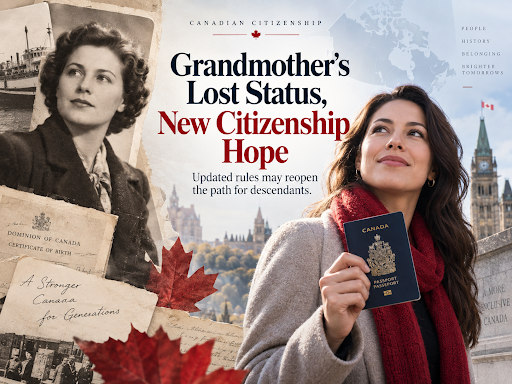


Families affected by historic citizenship rules may now have new ways to prove Canadian status.
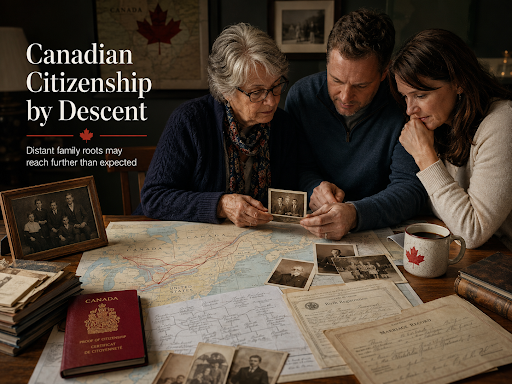
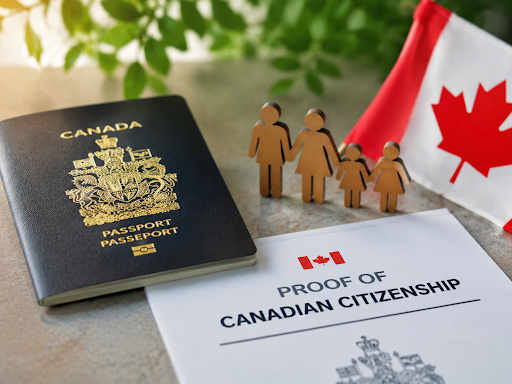
A Canadian-born grandmother who once lost her status because of marriage may now form the basis of a citizenship claim for later generations.
Before Canada created its own citizenship on January 1, 1947, people born or naturalized in Canada were generally British subjects. Under older nationality rules, some married women took their husband’s nationality. A Canadian-born woman who married a man from outside the British Empire before 1947 could therefore lose her British-subject status and be unable to pass that status to her children.
The supplied article explains that this could also happen during a marriage if a husband later became a citizen of another country and his wife was automatically included in his naturalization. Historical records show that married women’s legal nationality was often tied to their husbands, although some could apply to retain British-subject status.
Canada has amended its citizenship laws several times to address people who lost or never received citizenship under older rules. Section 3(1)(k) of the Citizenship Act covers certain people born or naturalized in Canada before 1947 who had ceased to be British subjects and did not become citizens when the first Canadian Citizenship Act took effect.
A related provision, section 3(1)(o), covers some people born abroad before 1947 to a parent whose citizenship was later restored under section 3(1)(k) or another specified provision.
This means a Canadian-born woman who lost status under the old rules may now be recognized as a citizen, which can affect the citizenship status of her descendants.
A major change took effect on December 15, 2025, when Bill C-3 amended the Citizenship Act. The federal government says the law removed the previous first-generation limit in certain situations and extended citizenship to additional “Lost Canadians” and their descendants.
For people born before December 15, 2025, the new rules may recognize citizenship automatically where an earlier generation had been excluded by outdated citizenship rules. People who qualify can apply for proof of citizenship rather than going through the usual citizenship grant process.
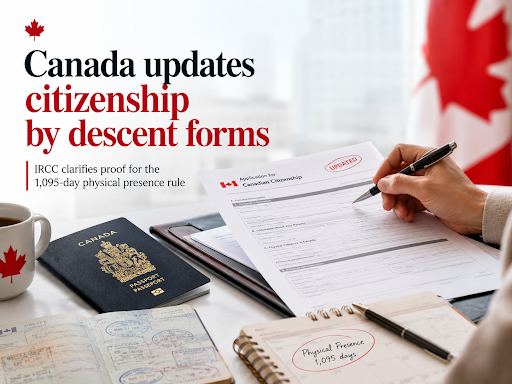
For people born on or after December 15, 2025, different rules apply. If the Canadian parent was also born or adopted outside Canada, that parent generally must show at least 1,095 days of physical presence in Canada before the child’s birth or adoption.
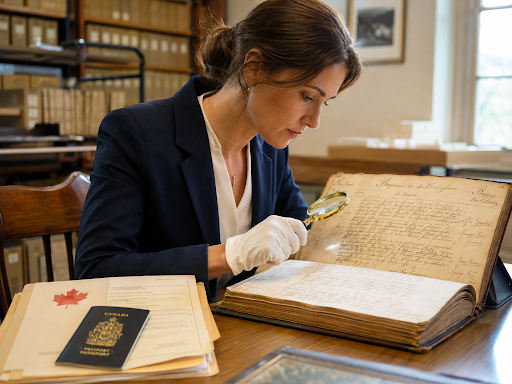
A claim through a grandmother usually requires a clear chain of records. The article highlights three important documents: the grandmother’s Canadian birth record, her marriage certificate, and the foreign birth record of her child.
Other documents may also be needed, including death certificates or records showing whether anyone in the family line formally renounced citizenship or made a declaration affecting nationality.
Eligibility can still depend on the ancestor’s status on January 1, 1947, the child’s place and date of birth, and whether the citizenship chain remained intact.
Families with complicated histories may need to review several generations of documents before they can determine whether a proof-of-citizenship application is appropriate.


Having an ‘Identity Verified’ badge or being ‘Identity Verified’ simply indicates that an individual has submitted information to complete our identity verification process or we have conducted internal verification using various authorized websites. While this process includes safeguards, it does not guarantee that the person is who they claim to be.
If you encounter any issues with this profile, please report them here. While all consultants who are verified have RCIC ID, we may not have the latest data in terms of their renewal/cancellation/discontinuation of their RCIC ID.
╳The “Verified Consultants” profiles on Immiperts.com are independently compiled using publicly available information from multiple sources, including the official CICC Public Register, consultants’ own websites, other public directories, and social media.
Immiperts.com is a completely independent platform and is not affiliated with, endorsed by, or connected to the College of Immigration and Citizenship Consultants (CICC), IRCC, or any immigration consultant.
All information is collected manually and is for educational and informational purposes only. Consultants may claim, update, or request removal of their profile by contacting us at hello@immiperts.com.
Users are strongly advised to always verify the latest authorization status directly on the official CICC Public Register at college-ic.ca.