
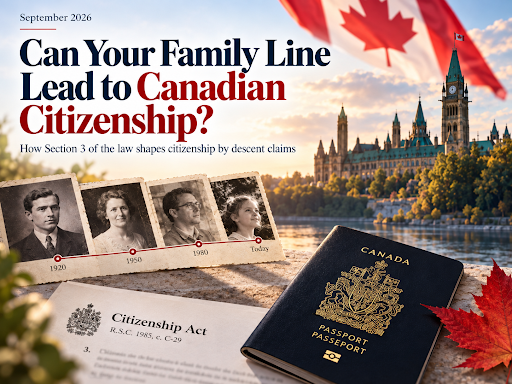


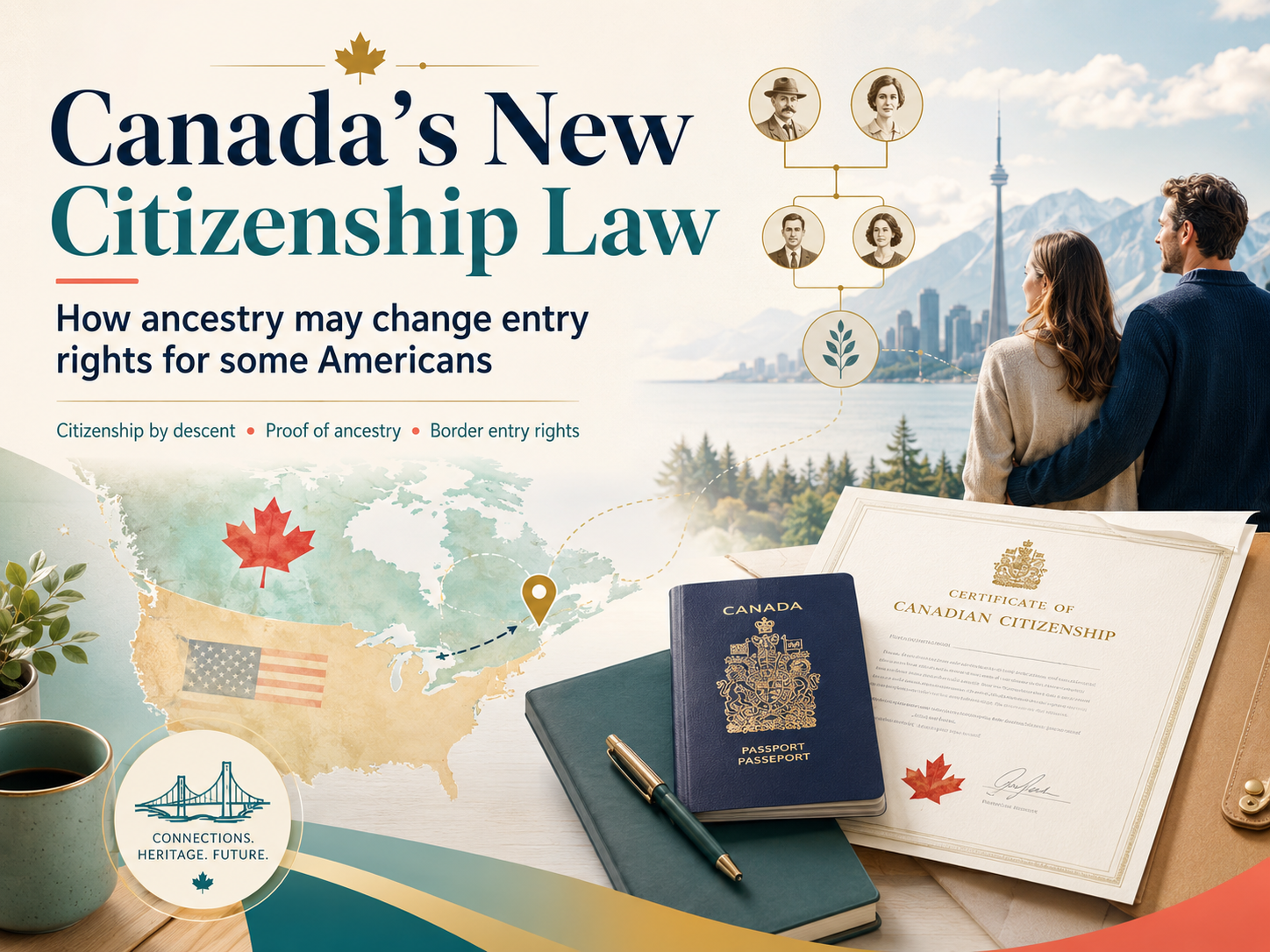
Understanding Section 3 of Canada's Citizenship Act could help families uncover their eligibility for citizenship through Canadian ancestors.
Canadian citizenship can pass from a parent to a child born outside Canada, but proving that right may require tracing several generations through different versions of the law.
Section 3 of the Citizenship Act provides the main framework. A family's claim depends on showing how each ancestor qualified for citizenship, beginning with a Canadian ancestor and continuing through every generation to the applicant.
For each person in the family line, the key questions are where and when they were born, whether their parents had Canadian status at that time, and whether they were alive when the relevant legal provision took effect.
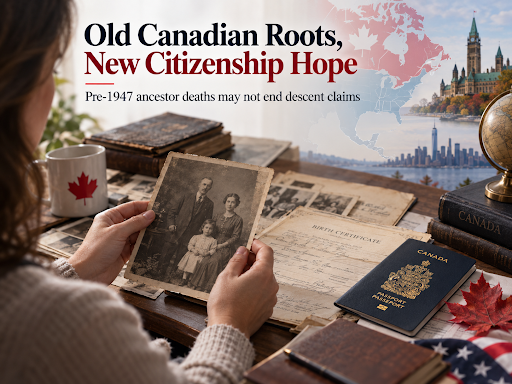
That last detail matters. Some rules restoring citizenship took effect decades after the people they cover had died. Special provisions, sometimes called "death bridges," can allow their children's claims to continue when the statutory conditions are met.
Applicants should not assume a provision fails them simply because its date does not match an ancestor's birth. Each paragraph covers a different historical situation.
Canadian citizenship formally began on January 1, 1947. Before then, Canadian-born people generally held British subject status. Newfoundland joined Canada on April 1, 1949, so some family lines follow different dates.
Paragraph 3(1)(d) addresses people who were already Canadian citizens immediately before February 15, 1977. That includes many people born in Canada between 1947 and 1977.
For people born outside Canada before 1947, paragraphs 3(1)(o) and 3(1)(q) may matter. The applicable provision depends in part on how their parents acquired or later received recognition of Canadian citizenship.
Paragraphs 3(1)(k) and (m) also address certain people whose British subject status or residence left them outside the original citizenship rules.
Other provisions address people born abroad between 1947 and February 14, 1977. Older rules sometimes depended on registration, the Canadian parent's sex or whether the parents were married. Later amendments addressed many people excluded by those requirements.
The relevant rules also include special provisions for people affected by historical loss of British subject status or citizenship.
Bill C-3 took effect on December 15, 2025, changing the first-generation limit for citizenship by descent.
For people born abroad before that date, the amendments opened citizenship to many second-generation and later descendants who had previously been excluded.
For children born abroad on or after that date to a Canadian parent also born abroad, the parent generally must have spent at least 1,095 days physically present in Canada before the child's birth. Specific exceptions may apply.
Birth certificates, marriage records and documents showing name changes help connect each generation. Missing documents may complicate proof without necessarily ending eligibility.
Historical renunciation or loss of status can raise separate legal issues. Applicants who cannot place an ancestor under the relevant provisions may need specialized advice.
People who believe they already qualify can apply to Immigration, Refugees and Citizenship Canada for proof of Canadian citizenship.







Having an ‘Identity Verified’ badge or being ‘Identity Verified’ simply indicates that an individual has submitted information to complete our identity verification process or we have conducted internal verification using various authorized websites. While this process includes safeguards, it does not guarantee that the person is who they claim to be.
If you encounter any issues with this profile, please report them here. While all consultants who are verified have RCIC ID, we may not have the latest data in terms of their renewal/cancellation/discontinuation of their RCIC ID.
╳The “Verified Consultants” profiles on Immiperts.com are independently compiled using publicly available information from multiple sources, including the official CICC Public Register, consultants’ own websites, other public directories, and social media.
Immiperts.com is a completely independent platform and is not affiliated with, endorsed by, or connected to the College of Immigration and Citizenship Consultants (CICC), IRCC, or any immigration consultant.
All information is collected manually and is for educational and informational purposes only. Consultants may claim, update, or request removal of their profile by contacting us at hello@immiperts.com.
Users are strongly advised to always verify the latest authorization status directly on the official CICC Public Register at college-ic.ca.