



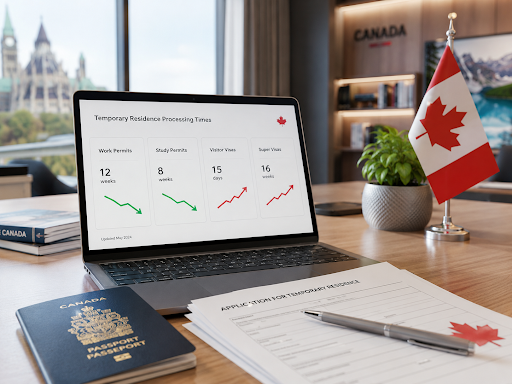
Canada has shortened processing times for several temporary residence applications, such as work permits, study permits, visitor visas, and super visas.
Canada’s immigration department has shared updated timelines for temporary residence applications, showing shorter wait times across several categories. The latest figures highlight improvements for applicants from countries such as India, Pakistan, and the United States.
These changes took place over about one month, offering some relief to those waiting for decisions on work permits, study permits, visitor visas, and super visas.
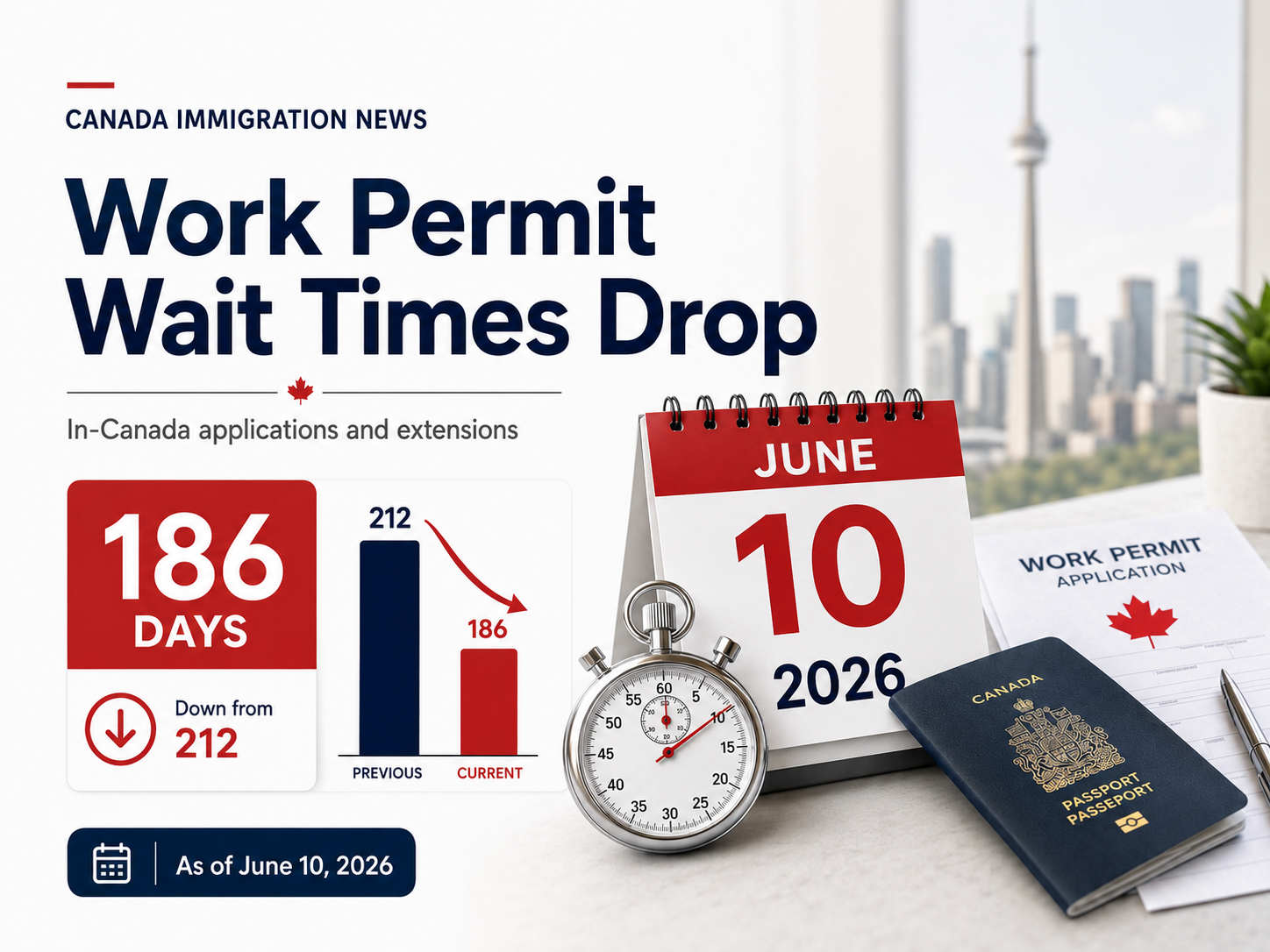
Work permit applications showed the most noticeable progress, especially for people applying from Pakistan. Processing time dropped by 13 weeks, marking the biggest improvement among all categories.
Applicants inside Canada also saw a slight improvement, with wait times reduced by about two weeks. Those applying from the United States experienced a smaller drop of one week.
However, not all countries saw progress. Applicants from India faced a small increase, with processing times rising by one week.
Processing times for study permits improved slightly for several countries. Applicants from India, Nigeria, and the United States saw wait times drop by one week.
At the same time, applications from Pakistan took a bit longer, with processing times increasing by one week. Other countries showed no change during this period.
Overall, the changes remain modest, but they still offer some encouragement for international students planning to study in Canada.
Visitor visa applications moved more quickly for most countries. India saw the largest improvement, with processing times dropping by about two weeks.
Nigeria also experienced a notable decrease of around 10 days. Pakistan and Canada-based applicants saw smaller improvements.
In contrast, applicants from the United States and the Philippines faced slight increases, showing that processing speeds can vary depending on demand.
Super visas, which allow parents and grandparents to stay in Canada for extended periods, continued to show steady improvement across all countries.
Applications from India and the United States saw the biggest drops, with wait times reduced by nearly three weeks. Pakistan, Nigeria, and the Philippines also recorded shorter processing times.
This ongoing trend suggests that the department has focused on clearing backlogs in this category.
Processing times reflect how long applicants can expect to wait after submitting their forms. For online applications, the count starts immediately after submission. For paper applications, the clock begins once officials receive the documents.
There are two ways these timelines get calculated. One looks at past data to estimate how long most applications took to complete. The other uses current workloads and expected output to predict future wait times.
Service standards differ from processing times. They act as internal targets that guide how quickly applications should move. Officials aim to complete most cases within these timelines, while some complex cases may take longer.










Having an ‘Identity Verified’ badge or being ‘Identity Verified’ simply indicates that an individual has submitted information to complete our identity verification process or we have conducted internal verification using various authorized websites. While this process includes safeguards, it does not guarantee that the person is who they claim to be.
If you encounter any issues with this profile, please report them here. While all consultants who are verified have RCIC ID, we may not have the latest data in terms of their renewal/cancellation/discontinuation of their RCIC ID.
╳The “Verified Consultants” profiles on Immiperts.com are independently compiled using publicly available information from multiple sources, including the official CICC Public Register, consultants’ own websites, other public directories, and social media.
Immiperts.com is a completely independent platform and is not affiliated with, endorsed by, or connected to the College of Immigration and Citizenship Consultants (CICC), IRCC, or any immigration consultant.
All information is collected manually and is for educational and informational purposes only. Consultants may claim, update, or request removal of their profile by contacting us at hello@immiperts.com.
Users are strongly advised to always verify the latest authorization status directly on the official CICC Public Register at college-ic.ca.