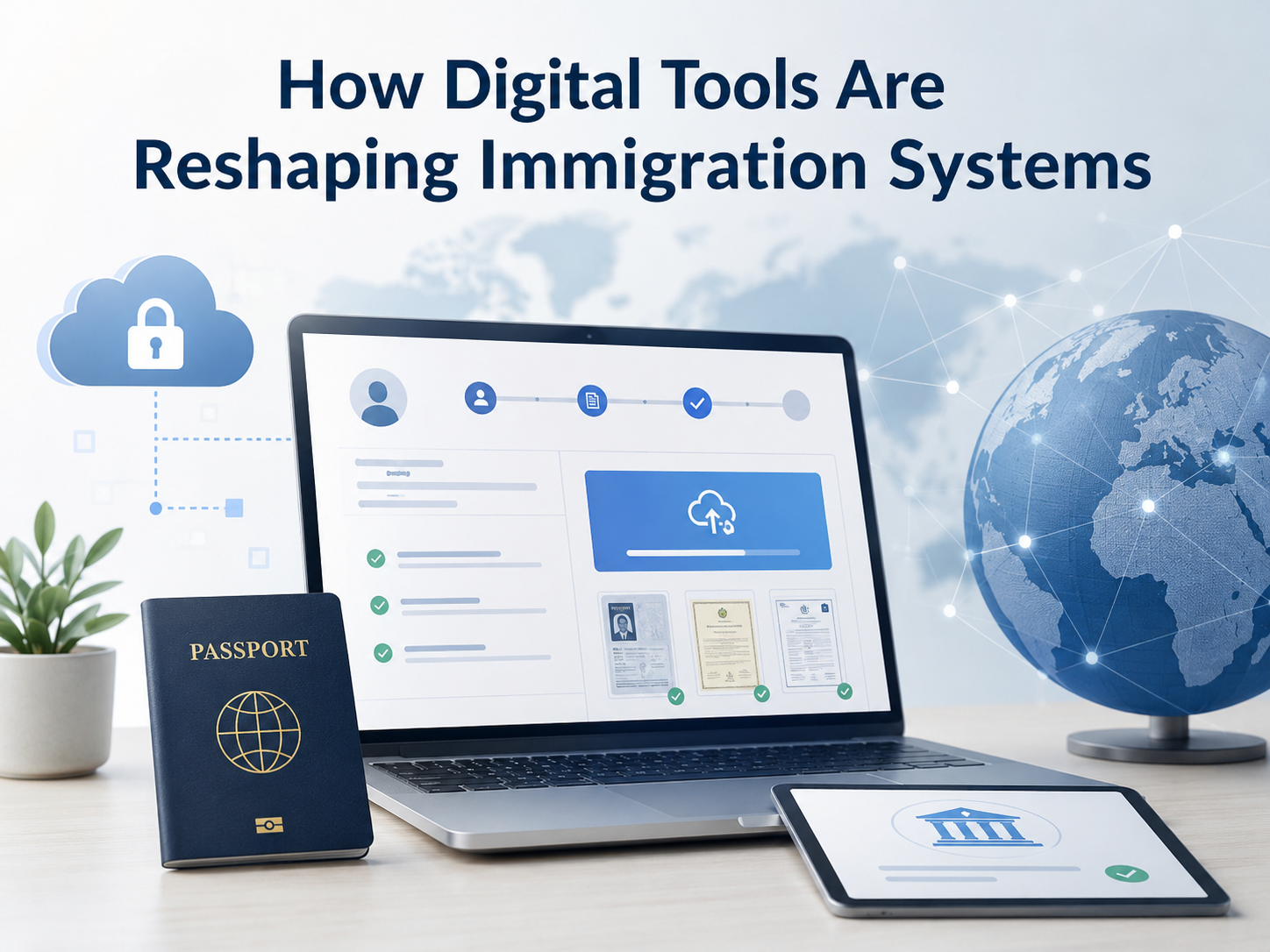


How technology is changing immigration processing has become a key question for many applicants who feel stuck waiting months—or even years—for decisions. Long delays, confusing paperwork, and lack of clear updates create stress and uncertainty. Many people worry about missing opportunities, losing job offers, or staying separated from family while their applications sit in queues.
Immigration systems once relied heavily on paper forms and manual checks. Officers had to review each document by hand, which slowed everything down.
Today, many countries use online portals where applicants can submit forms, upload documents, and track progress. This shift has made the process easier to access from anywhere in the world.
But the change has not solved everything. Some systems still face backlogs, especially when many people apply at the same time.
Faster Processing With Automation
Technology now helps speed up certain parts of immigration processing. Automated systems can sort applications, check for missing documents, and flag simple cases for faster review.
This allows officers to focus on more complex applications that need careful attention.
For many applicants, this means:
However, speed depends on how well these systems work and how many applications are in line.
One major improvement is transparency. Applicants no longer need to wait in the dark.
Many systems now offer:
This helps people plan their next steps, whether it’s preparing for travel, work, or study.
Still, delays can happen, and updates may not always explain the full reason behind them.
Some immigration departments now use artificial intelligence (AI) to assist with processing. AI tools can review large amounts of data quickly and help identify patterns.
For example, AI can:
It’s important to note that human officers still make final decisions. Technology supports the process but does not replace human judgment.
While technology brings benefits, it also creates new challenges.
Some applicants face:
Not everyone feels comfortable using digital tools, especially those without strong internet access or technical skills.
In some cases, automation can also lead to confusion if decisions seem unclear or too quick.
If you plan to apply for immigration, technology will likely shape your experience.
Here’s what you can do:
Being prepared can help you avoid delays and make the most of the system.
Technology will continue to evolve. Governments are working to make systems faster, more reliable, and easier to use.
We may see:
At the same time, managing high demand will remain a challenge.
Technology has changed immigration processing in many ways. It has made applications easier to submit and track, but it has not removed all delays or challenges.
For applicants, understanding how these systems work can reduce stress and improve the chances of a smooth process.
Technology helps speed up certain steps like document checks and application sorting. However, overall processing times still depend on how many people apply and how complex each case is. So while some applicants may see faster updates, delays can still happen.
2. Can I complete my entire immigration application online?
In many cases, you can complete most of your application through an online system, including submitting forms and uploading documents. However, some steps may still require extra actions, such as biometric appointments or physical document verification. It depends on the country and the type of application.
AI is used to support the process by reviewing data and identifying simple issues, such as missing documents. However, it does not make final decisions on applications. Trained immigration officers still review each case and decide the outcome.
If you run into technical problems, you should contact the official support team as soon as possible. It is also helpful to keep screenshots or records of the issue in case you need proof later. Acting quickly can prevent delays in your application.
Processing times may improve as technology continues to develop and systems become more efficient. However, factors like high application volumes and policy
Having an ‘Identity Verified’ badge or being ‘Identity Verified’ simply indicates that an individual has submitted information to complete our identity verification process or we have conducted internal verification using various authorized websites. While this process includes safeguards, it does not guarantee that the person is who they claim to be.
If you encounter any issues with this profile, please report them here. While all consultants who are verified have RCIC ID, we may not have the latest data in terms of their renewal/cancellation/discontinuation of their RCIC ID.
╳The “Verified Consultants” profiles on Immiperts.com are independently compiled using publicly available information from multiple sources, including the official CICC Public Register, consultants’ own websites, other public directories, and social media.
Immiperts.com is a completely independent platform and is not affiliated with, endorsed by, or connected to the College of Immigration and Citizenship Consultants (CICC), IRCC, or any immigration consultant.
All information is collected manually and is for educational and informational purposes only. Consultants may claim, update, or request removal of their profile by contacting us at hello@immiperts.com.
Users are strongly advised to always verify the latest authorization status directly on the official CICC Public Register at college-ic.ca.