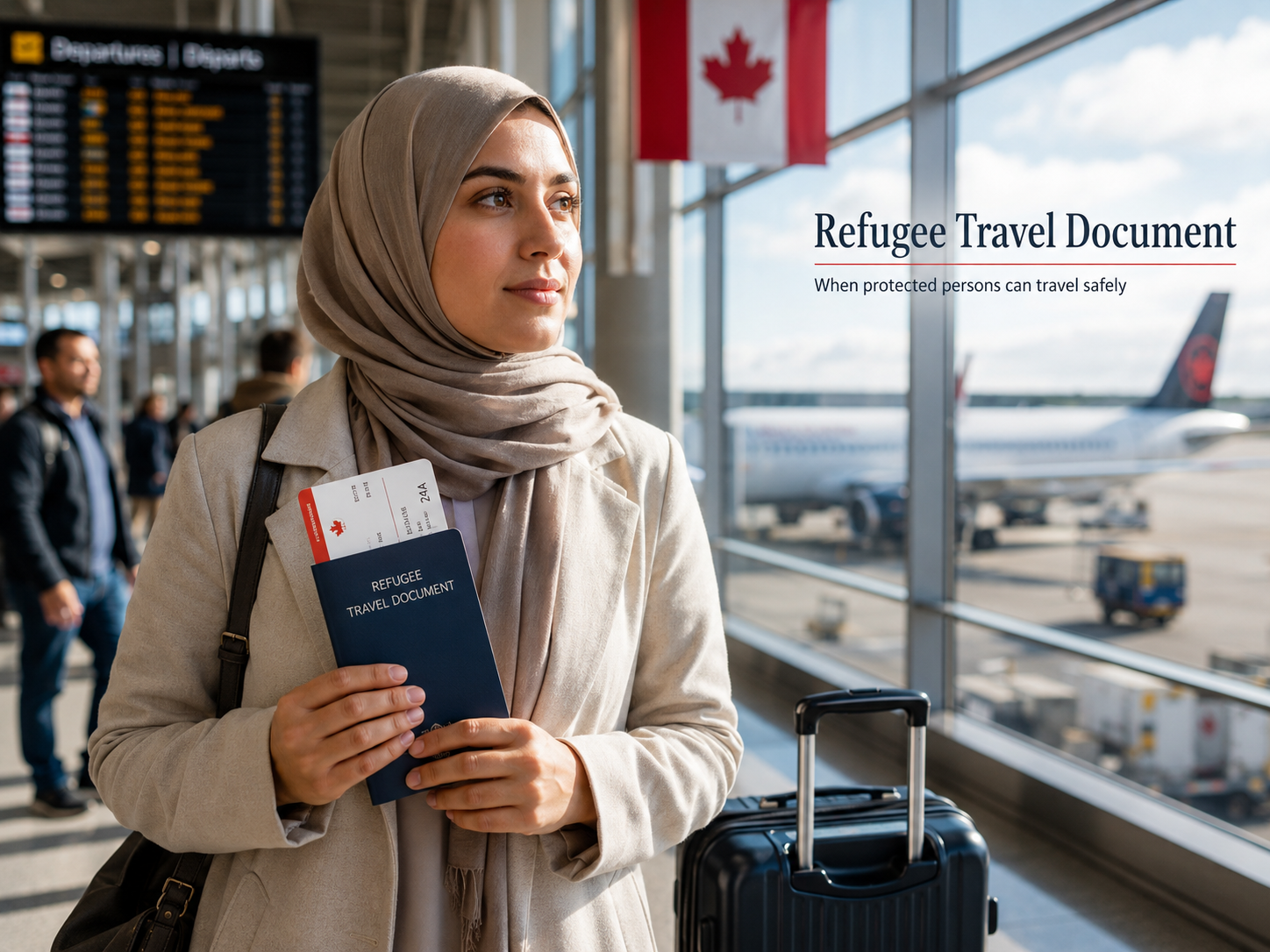


A refugee travel document can make international travel possible for protected persons in Canada, but one wrong assumption may lead to denied boarding, refused entry, or questions about immigration status. It is not a Canadian passport, and it does not guarantee entry to every country. Before booking, travellers should confirm the rules for their destination, transit stops, and return to Canada.
Yes. Protected persons in Canada may be eligible to apply for a refugee travel document and use it to visit countries other than their country of citizenship.
Travel is safer when:
Airlines, transit countries, and border officers may apply separate rules, so the document alone is not enough.
A refugee travel document is a Canadian document issued to eligible protected persons who cannot safely use a passport from their country of citizenship.
It helps the holder travel internationally, but it does not provide the same rights as a Canadian passport or make the holder a Canadian citizen.
A valid document may help you:
It does not automatically provide visa-free entry, permission to enter a transit country, airline approval, or entry to the holder’s country of citizenship.
Each country sets its own rules. Contact the destination country’s embassy or consulate before paying for tickets.
Possibly. Some countries accept Canadian refugee travel documents without a visitor visa, while others require one. A country where you only change planes may also require a transit visa.
Before booking, confirm:
Get the answer in writing when possible and check again before travelling because rules can change.
Returning to the country of citizenship can create serious concerns for a protected person.
Canada granted protection because the person could not safely rely on that country. Returning there may raise questions about whether Canadian protection is still needed.
Officials may review situations involving:
Officials may consider the reason for travel, the length of the visit, the document used, and whether the person intended to rely on the home country’s protection.
Permanent residence does not automatically remove this risk. Speak with a qualified refugee lawyer before planning such travel or contacting home-country authorities.
Applications must generally be made while the applicant is in Canada. Adults and children use different forms.
Documents not in English or French may require an official translation. Check every signature, date, photograph, and supporting document before mailing. Missing information may delay processing or cause the application to be returned.
Processing can take several weeks, and mailing time is extra. Some applications take longer when officials need corrected forms or more documents.
Apply well before the planned trip. Avoid buying non-refundable tickets until the travel document and required visas have been approved.
When it arrives, check all personal details and follow the signing instructions before using it.
A final review can prevent expensive and stressful problems.
Yes, if the destination accepts the document. The traveller must also meet visa, transit, airline, and Canadian return requirements.
Doing so may put your protection status at risk. Get legal advice before making plans.
Applying for, renewing, or using it may suggest that you are relying on your home country again. Speak with a refugee lawyer first.
No. Each country decides whether it accepts the document and whether a visa is required. Check destination and transit rules before booking.
It is safer to wait until the travel document and all required visas are approved. Otherwise, delays could lead to cancellation costs.
Having an ‘Identity Verified’ badge or being ‘Identity Verified’ simply indicates that an individual has submitted information to complete our identity verification process or we have conducted internal verification using various authorized websites. While this process includes safeguards, it does not guarantee that the person is who they claim to be.
If you encounter any issues with this profile, please report them here. While all consultants who are verified have RCIC ID, we may not have the latest data in terms of their renewal/cancellation/discontinuation of their RCIC ID.
╳The “Verified Consultants” profiles on Immiperts.com are independently compiled using publicly available information from multiple sources, including the official CICC Public Register, consultants’ own websites, other public directories, and social media.
Immiperts.com is a completely independent platform and is not affiliated with, endorsed by, or connected to the College of Immigration and Citizenship Consultants (CICC), IRCC, or any immigration consultant.
All information is collected manually and is for educational and informational purposes only. Consultants may claim, update, or request removal of their profile by contacting us at hello@immiperts.com.
Users are strongly advised to always verify the latest authorization status directly on the official CICC Public Register at college-ic.ca.