

Navigating the world of immigration and permanent residency can feel overwhelming, especially when you come across terms like the Expression of Interest (EOI) points system. If you’re planning to apply for immigration or a permanent residency program, your EOI score is a critical factor that could determine whether or not you get an invitation to apply. For many applicants, the frustration lies in understanding exactly what factors affect your score and how to improve it.
With so many factors at play, it’s easy to feel like you're missing out or that the system is just too complicated to crack. But fear not—understanding how the EOI points system works is simpler than it seems, and this guide will break it all down for you.
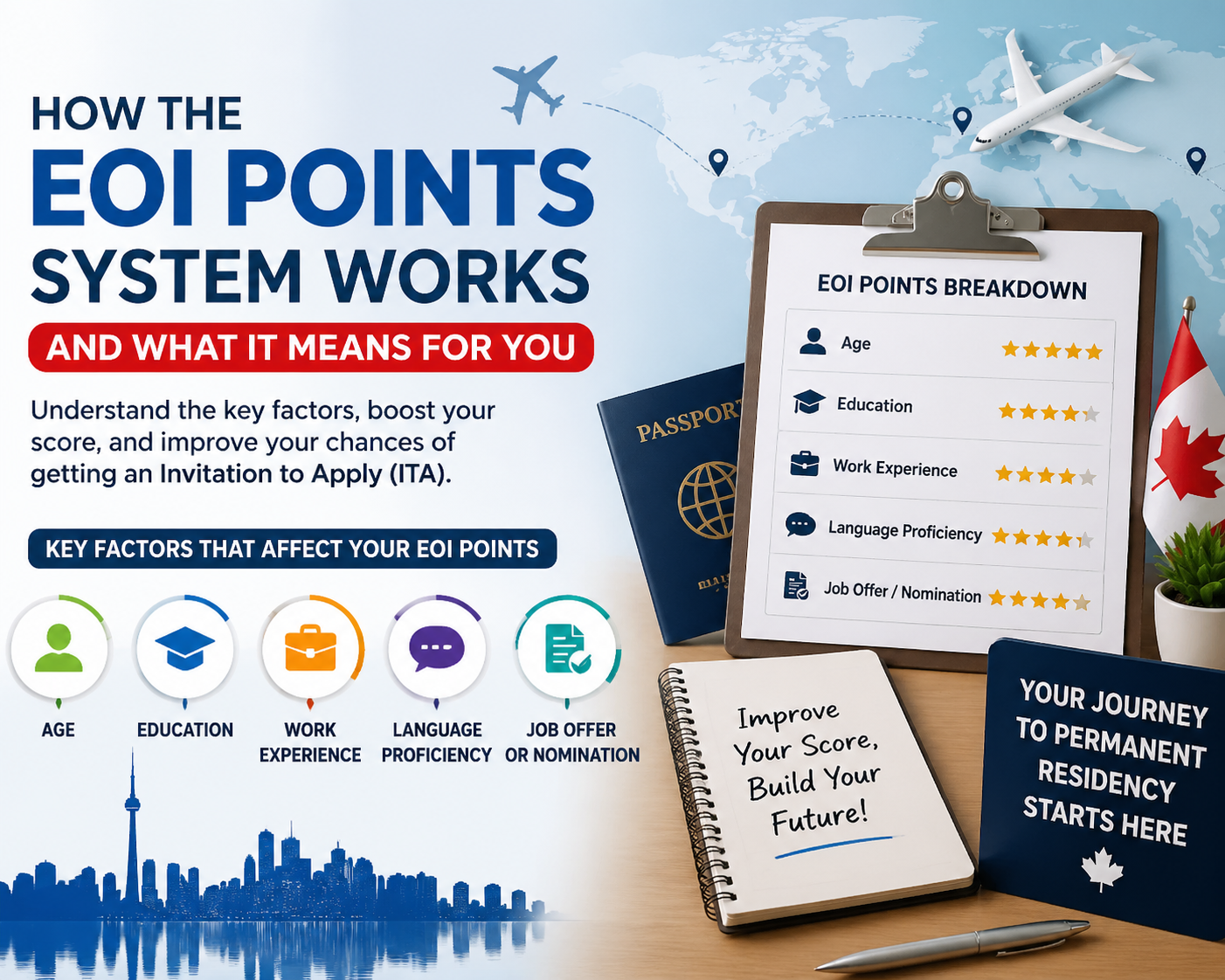
The EOI points system is essentially a way to rank candidates based on their eligibility and suitability for immigration to a specific country. Countries like Canada, Australia, and New Zealand use this system to manage and streamline the immigration process. Rather than having a first-come-first-served approach, they evaluate candidates based on a points-based system that factors in various criteria such as age, education, work experience, and language proficiency.
The higher your score, the better your chances of receiving an invitation to apply for a permanent residency or a skilled worker visa. The goal of this system is to prioritize those applicants who are more likely to succeed and contribute to the country’s economy.
Now, let's dive into the most important factors that influence your EOI points score.
Your age plays a significant role in determining your EOI score. Typically, the younger you are, the more points you can accumulate. This is because younger candidates are seen as having more years to contribute to the workforce and economy. Most systems award maximum points for individuals between the ages of 25 and 32. Once you hit your 40s, your score may begin to drop, reflecting the shorter potential working years ahead.
Education is another crucial factor. The higher your level of education, the more points you’re likely to earn. This includes degrees, diplomas, and certifications that are recognized within the immigration system of the country you’re applying to. For instance, having a master's degree or a Ph.D. can provide you with a significant boost in your score.
Experience in your field, particularly if it aligns with the skills needed in the country you're applying to, can substantially increase your EOI score. The more years of relevant experience you have, the more points you’ll earn. This is especially true for skilled workers or professionals in high-demand industries.
Being fluent in the official languages of the country you’re applying to is one of the most important factors for improving your EOI score. High proficiency in the country’s primary language—be it English or French—can add a significant number of points. Many immigration programs require a specific language test score (e.g., IELTS for English), and higher test scores will directly impact your EOI points.
Some immigration systems offer extra points if you have a valid job offer from a local employer or if you're nominated by a provincial or regional authority. This is particularly common in countries like Canada and Australia, where certain provinces or regions may invite individuals to apply for residency based on their specific labor market needs.
If you’re not happy with your current EOI score, don’t worry. There are several ways you can increase it:
Once you’ve submitted your EOI, immigration authorities will rank all candidates based on their points. The highest-ranking candidates will receive invitations to apply (ITAs) for permanent residency. Your score will determine where you stand in the pool and how competitive your profile is compared to others. If your score doesn’t meet the cut-off, you may not receive an invitation in the current draw, but you can always improve your score and reapply.
One of the biggest concerns for many applicants is what happens if their score doesn’t reach the cut-off for an invitation. Unfortunately, this means you’ll have to wait for the next round of selections or take steps to improve your score. This could mean gaining additional experience, improving your language skills, or finding ways to meet the eligibility requirements more effectively.
While it can be frustrating to have to wait or improve your score, it’s important to understand that the EOI points system is designed to ensure that candidates who are best suited for the country’s labor market and economy are prioritized. It’s a way to ensure both fairness and effectiveness in the immigration process.
1. How long does my EOI remain valid?
Your EOI remains valid for a period of one year. If you don’t receive an invitation to apply during that time, you can resubmit it with any updated information.
2. Can I update my EOI after submitting it?
Yes, you can update your EOI if your circumstances change, such as gaining more work experience or improving your language proficiency.
3. What happens if my score doesn’t meet the cut-off?
If your score doesn’t meet the cut-off for an invitation to apply, you can wait for the next draw or work on improving your score by gaining more experience or enhancing your skills.
4. Is there a minimum score required for EOI to be considered?
Yes, each immigration program has a minimum score required for EOI to be considered. If your score is below this threshold, you won’t be invited to apply.5. Can I apply for immigration without an EOI?
In some cases, you may be able to apply directly to certain programs without an EOI, but many immigration systems, like those in Canada or Australia, require EOI submission as part of their process.
Having an ‘Identity Verified’ badge or being ‘Identity Verified’ simply indicates that an individual has submitted information to complete our identity verification process or we have conducted internal verification using various authorized websites. While this process includes safeguards, it does not guarantee that the person is who they claim to be.
If you encounter any issues with this profile, please report them here. While all consultants who are verified have RCIC ID, we may not have the latest data in terms of their renewal/cancellation/discontinuation of their RCIC ID.
╳The “Verified Consultants” profiles on Immiperts.com are independently compiled using publicly available information from multiple sources, including the official CICC Public Register, consultants’ own websites, other public directories, and social media.
Immiperts.com is a completely independent platform and is not affiliated with, endorsed by, or connected to the College of Immigration and Citizenship Consultants (CICC), IRCC, or any immigration consultant.
All information is collected manually and is for educational and informational purposes only. Consultants may claim, update, or request removal of their profile by contacting us at hello@immiperts.com.
Users are strongly advised to always verify the latest authorization status directly on the official CICC Public Register at college-ic.ca.