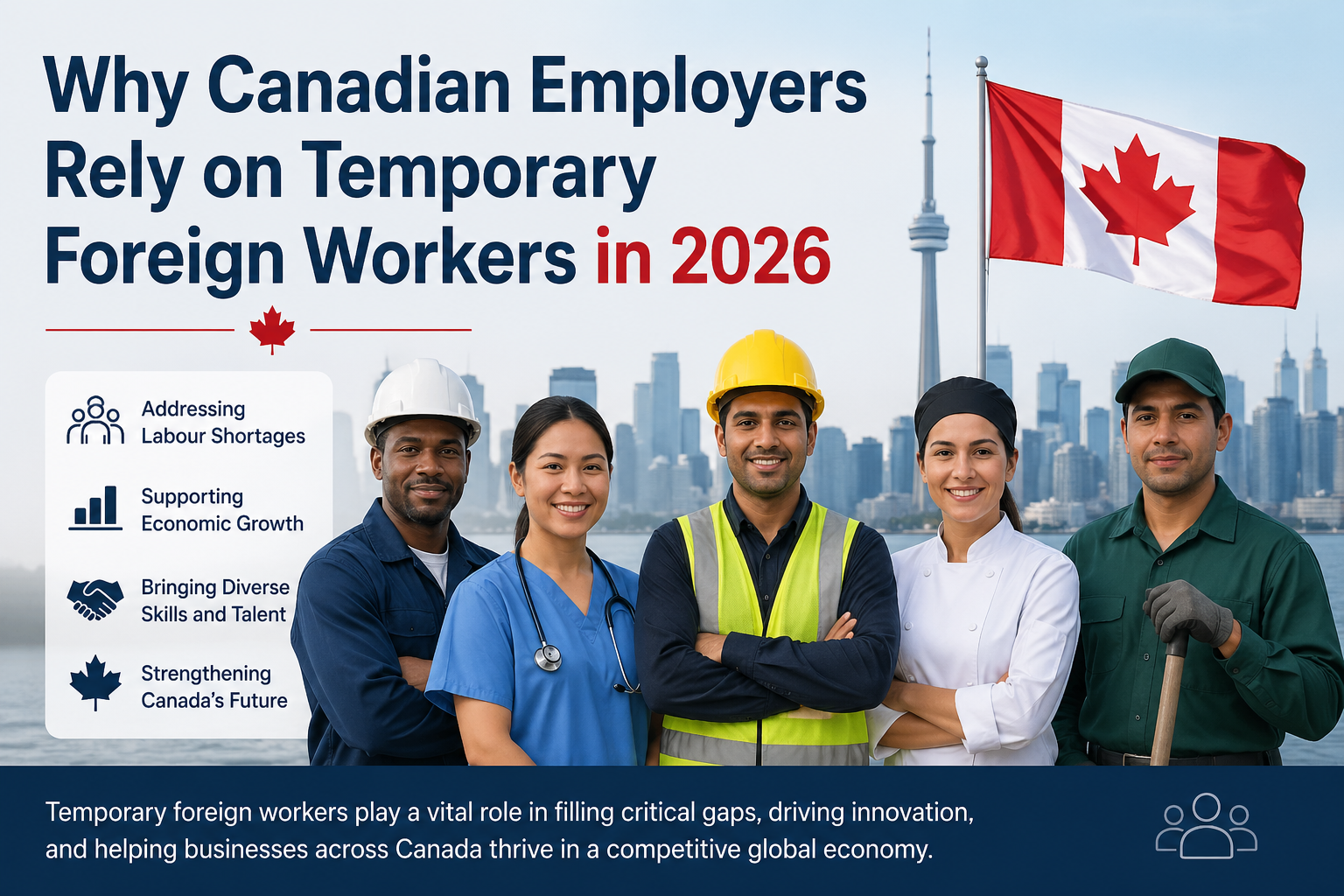


Why Canadian employers rely on temporary foreign workers in 2026 has become a common question as many businesses struggle to find enough local workers. Across industries, employers face ongoing staff shortages, rising costs, and pressure to keep operations running smoothly. Many say they try to hire locally first, but they often receive few applications or cannot find people willing to take certain roles, especially in rural areas or physically demanding jobs.
Canada’s workforce has changed in recent years. An aging population means more people retire, while fewer young workers enter the labour market. This gap has left many positions unfilled.
Employers in sectors like farming, construction, hospitality, and healthcare feel the impact the most. Without enough workers, businesses risk cutting services, losing revenue, or even shutting down. Temporary foreign workers help fill this gap and keep businesses moving.
Some jobs remain hard to fill, even when employers offer fair wages. These roles often involve long hours, physical labour, or seasonal work.
For example, farms need workers during planting and harvest seasons. Hotels and restaurants need steady staff to serve customers. In many cases, local workers prefer more stable or less demanding jobs, leaving employers with limited options.
Temporary foreign workers step in to take these roles, helping businesses stay open and meet demand.
Rural areas face even greater hiring challenges. Smaller populations mean fewer available workers, and it can be difficult to attract people from larger cities.
Temporary foreign workers play an important role in these communities. They help local businesses operate, support essential services, and contribute to the local economy. Without them, many rural employers would struggle to survive.
Hiring temporary foreign workers does not mean employers can skip rules. Businesses must prove they tried to hire Canadian citizens or permanent residents first.
They also need approval through government processes and must meet wage and workplace standards. These steps aim to protect both local workers and foreign employees.
Temporary foreign workers support Canada’s economy in several ways. They help businesses maintain production, avoid delays, and serve customers without interruption.
Their presence also supports supply chains, especially in industries like food production and construction. When businesses run smoothly, it benefits communities and the economy as a whole.
While many employers depend on temporary foreign workers, the system continues to raise questions. Some people worry about fair wages, housing conditions, and worker rights.
There is also ongoing debate about how Canada can balance the need for foreign workers with opportunities for local job seekers. Policymakers continue to review and adjust programs to address these concerns.
The demand for temporary foreign workers is not likely to disappear soon. As labour shortages continue, employers will keep looking for ways to fill gaps.
At the same time, Canada may explore long-term solutions, such as training programs, better job conditions, and pathways for workers to stay permanently.
Many employers say they do not receive enough applications or cannot find people willing to take certain jobs. Some roles involve physical work, long hours, or seasonal demand, which can make them less appealing to local workers.
Employers must try to hire Canadians first before turning to foreign workers. Temporary foreign workers usually fill roles that remain vacant after local hiring efforts.
Industries such as agriculture, construction, hospitality, and healthcare depend heavily on these workers. These sectors often face ongoing labour shortages.
Employers must follow wage rules set by the government. These rules aim to ensure foreign workers receive fair treatment and proper working conditions.
Some workers may qualify for permanent residency through certain programs. However, not all temporary workers have a direct pathway, and eligibility depends on their job and experience.
Having an ‘Identity Verified’ badge or being ‘Identity Verified’ simply indicates that an individual has submitted information to complete our identity verification process or we have conducted internal verification using various authorized websites. While this process includes safeguards, it does not guarantee that the person is who they claim to be.
If you encounter any issues with this profile, please report them here. While all consultants who are verified have RCIC ID, we may not have the latest data in terms of their renewal/cancellation/discontinuation of their RCIC ID.
╳The “Verified Consultants” profiles on Immiperts.com are independently compiled using publicly available information from multiple sources, including the official CICC Public Register, consultants’ own websites, other public directories, and social media.
Immiperts.com is a completely independent platform and is not affiliated with, endorsed by, or connected to the College of Immigration and Citizenship Consultants (CICC), IRCC, or any immigration consultant.
All information is collected manually and is for educational and informational purposes only. Consultants may claim, update, or request removal of their profile by contacting us at hello@immiperts.com.
Users are strongly advised to always verify the latest authorization status directly on the official CICC Public Register at college-ic.ca.