

A remote border crossing that once relied on an RABC permit will soon require travellers to report every applicable entry. For people who live, work, fish, boat or regularly travel through remote parts of northern Ontario and the Northwest Angle route into Manitoba, missing that step could mean delays, penalties or seizure of goods or vehicles.
The Remote Area Border Crossing Program is ending, and telephone or in-person reporting will replace it.
The Canada Border Services Agency will close the Remote Area Border Crossing (RABC) Program on December 1, 2026. Existing permits remain valid until 11:59 p.m. on November 30, 2026.
After that, travellers entering Canada through affected remote areas must report at a staffed port of entry or a designated telephone reporting site.
The affected areas are:
CBSA is no longer accepting new RABC applications. Historically, about 11,000 people used the program each year, and roughly 90% were American.
RABC allowed approved travellers to enter certain remote areas without physically presenting themselves at a port of entry, although they still had to declare goods brought into Canada.
Telephone reporting changes that process.
Travellers will report each applicable entry from a designated site or use a staffed port of entry. CBSA says the new approach is intended to create more consistent reporting and security expectations across the border.
In simple terms, remote crossings will remain possible, but the old “permit and cross” system is ending.
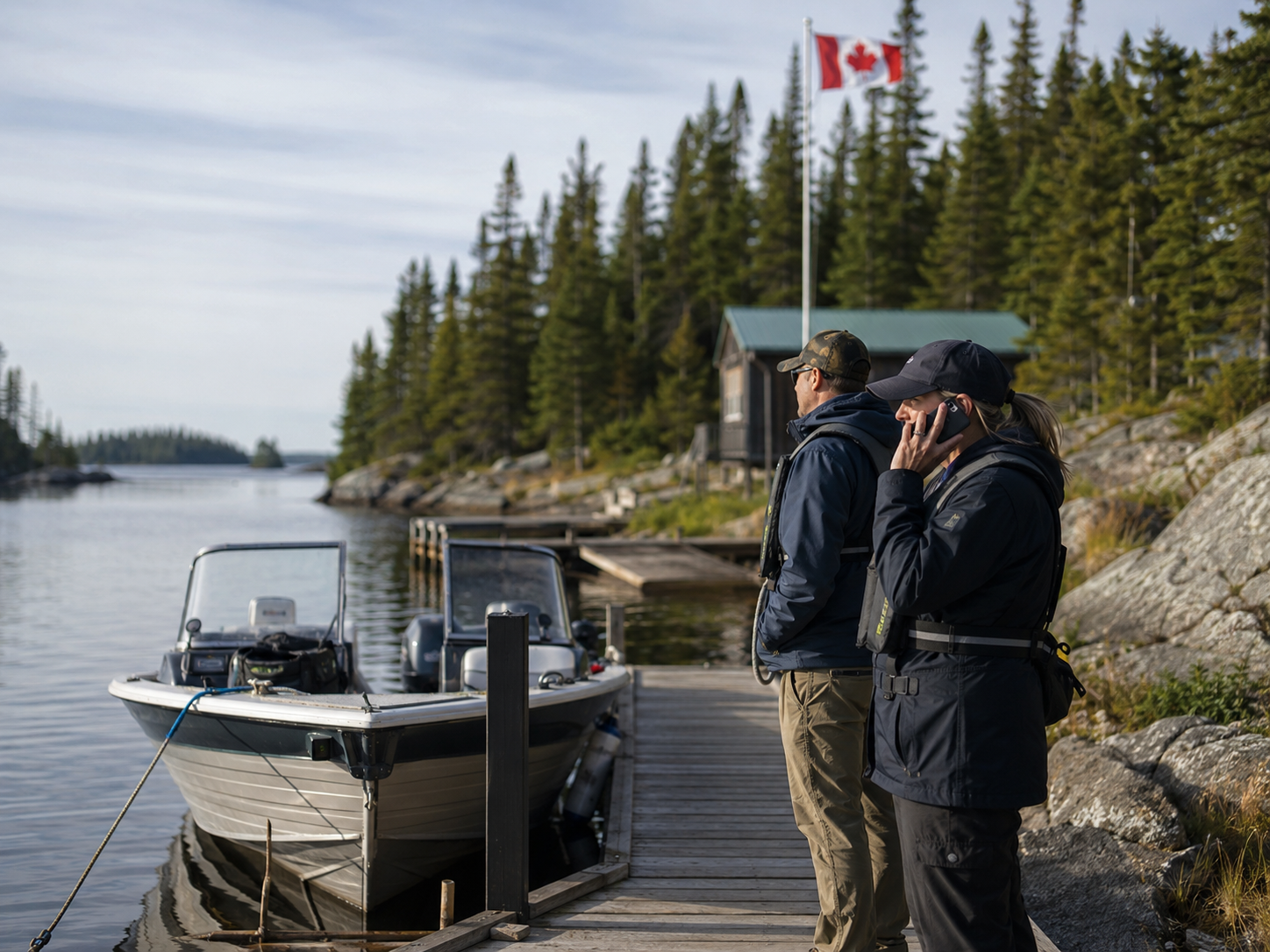
At a designated telephone reporting site, travellers connect with a CBSA border services officer.
They should be ready to provide:
CBSA says an officer may clear the traveller through the reporting process or require them to meet an officer for further examination.
CBSA currently directs private boaters using telephone reporting sites to call its Telephone Reporting Centre at 1-888-226-7277. Travellers should have acceptable identification available and be ready to make their required declarations.
The complete list of new reporting locations is still being finalized. CBSA says it is consulting Indigenous communities, local businesses and law-enforcement partners before confirming the sites.
The new rule applies to travellers using the affected remote crossings, but people who cross frequently are likely to notice the biggest difference.
This may include:
Foreign nationals still have to meet Canada’s normal entry requirements. For boaters, CBSA specifically states that foreign nationals must be admissible to Canada and travellers should carry acceptable identification.
Telephone reporting does not replace a passport, visa, immigration permit or another document that may be required for entry.
This is the part travellers should take seriously.
CBSA says failure to report can lead to monetary penalties, seizure of goods or vehicles, and possible criminal charges under the Customs Act.
For private boaters, CBSA also warns that failing to report can result in detention, seizure or forfeiture of a boat. Current boating guidance lists a minimum $1,000 penalty for failing to report upon entry.
After November 30, simply holding an old RABC permit will no longer satisfy the reporting requirement.
Travellers do not need to wait until the final days of November.
Private boaters should also confirm that their intended reporting location is open before travelling. CBSA advises boaters to check reporting requirements and available locations before entering Canada.
This is an important detail because travellers may find conflicting dates online.
CBSA originally planned to close RABC on September 14, 2026. An older consultation page still reflects that timeline.
However, CBSA issued a newer update on August 10, 2026, extending active permits through November 30 and moving the program closure to December 1, 2026.
For current travel planning, travellers should therefore check the latest CBSA announcement rather than relying on an older page.
The biggest change is not necessarily who can enter Canada. It is how entry through these remote areas must be reported.
From December 1, travellers will need to make CBSA reporting part of every applicable crossing. Occasional visitors may simply need to know where to stop and call. Frequent travellers may need to adjust familiar routes, check reporting locations before leaving and allow additional time.
The good news is that existing RABC holders have until the end of November to prepare. The important part is not assuming that a crossing which worked one way for years will continue working the same way after December 1.
No. Active RABC permits remain valid only until 11:59 p.m. on November 30. From December 1, travellers using the affected areas must report at a port of entry or designated telephone reporting site.
No. CBSA automatically extended active permits through November 30, 2026. The agency is also no longer accepting new RABC applications.
Not necessarily. CBSA is still finalizing the locations of new designated telephone reporting sites. Travellers should check the latest CBSA information before each trip.
Yes. Telephone reporting does not automatically mean remote clearance. CBSA says travellers may be directed to meet a border services officer when further examination is required.
No. The change concerns how travellers report entry through these remote crossings. Foreign nationals must still meet Canada’s usual entry and admissibility requirements and carry the documents required for their travel.
Having an ‘Identity Verified’ badge or being ‘Identity Verified’ simply indicates that an individual has submitted information to complete our identity verification process or we have conducted internal verification using various authorized websites. While this process includes safeguards, it does not guarantee that the person is who they claim to be.
If you encounter any issues with this profile, please report them here. While all consultants who are verified have RCIC ID, we may not have the latest data in terms of their renewal/cancellation/discontinuation of their RCIC ID.
╳The “Verified Consultants” profiles on Immiperts.com are independently compiled using publicly available information from multiple sources, including the official CICC Public Register, consultants’ own websites, other public directories, and social media.
Immiperts.com is a completely independent platform and is not affiliated with, endorsed by, or connected to the College of Immigration and Citizenship Consultants (CICC), IRCC, or any immigration consultant.
All information is collected manually and is for educational and informational purposes only. Consultants may claim, update, or request removal of their profile by contacting us at hello@immiperts.com.
Users are strongly advised to always verify the latest authorization status directly on the official CICC Public Register at college-ic.ca.