
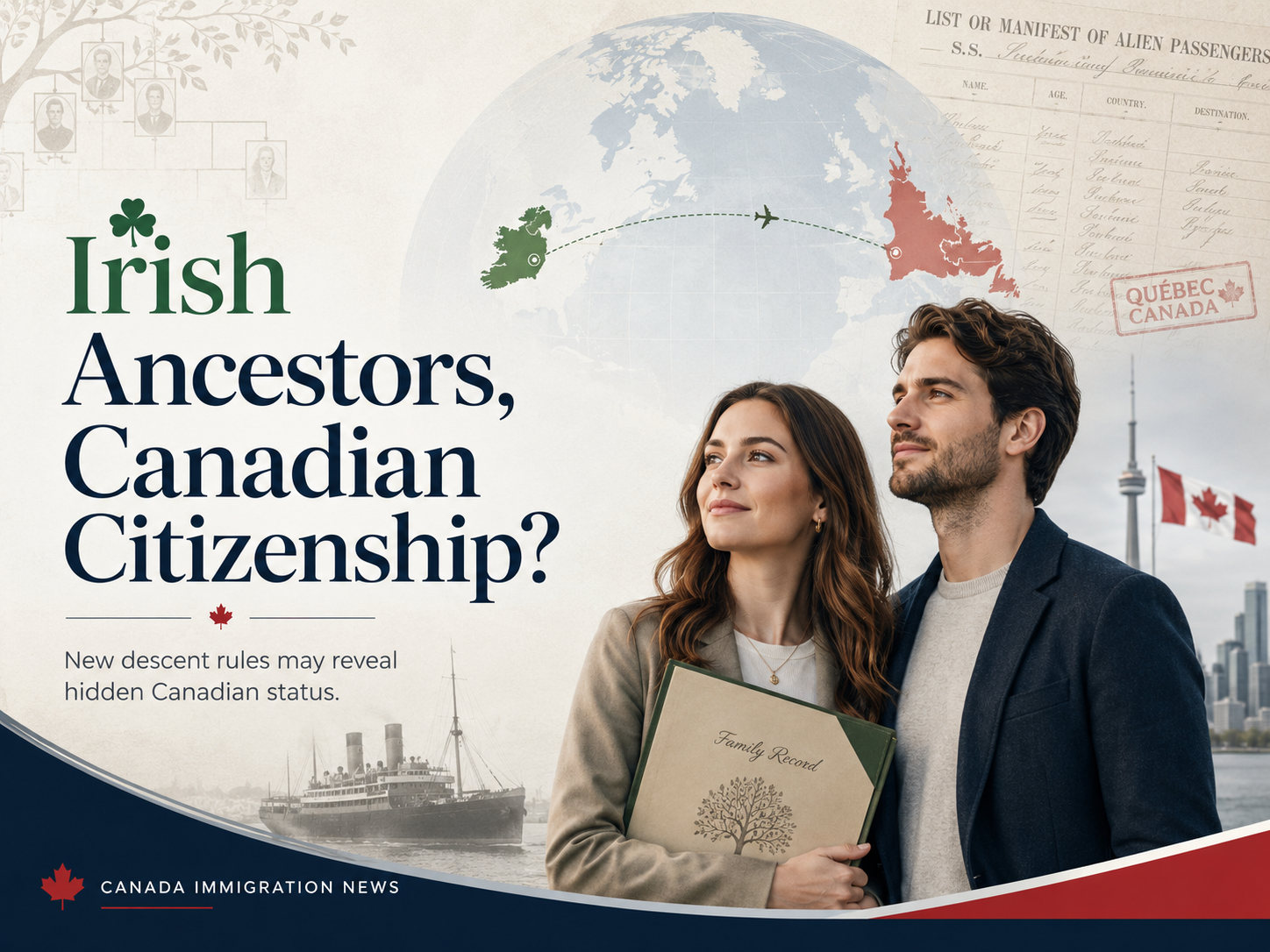


A new citizenship rule may help some Irish descendants prove a Canadian family connection.
Millions of Canadians proudly trace their family history to Ireland. In fact, about 4.4 million people in Canada report Irish roots, making Irish the third-largest ancestry in the country.
That number, however, only tells part of the story. Many Irish families passed through Canada generations ago before moving on to the United States, the Prairies, or other parts of the world. Some carried Canadian birth records with them, even if later generations never realized those documents could matter.
Under a law that took effect in December 2025, some descendants of those families may now discover they have been Canadian citizens all along.
Many people know Irish families settled in the United States, but fewer know how many first arrived in Canada.
In 1847, during the worst year of the Great Famine, about 100,000 Irish emigrants sailed to British North America. They arrived at ports including Quebec City, Saint John, and Halifax. Many also passed through the quarantine station at Grosse Île in the St. Lawrence River, where surviving records include more than 33,000 names.
Irish migration to Canada did not begin with the Famine. Irish migrants were present in New France in the 1600s, while Irish fishermen worked along the Newfoundland coast during the same period. In the 30 years before the Famine, nearly 450,000 Irish people crossed to British North America.
By 1871, the Irish had become the largest ethnic group in many Canadian towns and cities outside Montreal and Quebec City.
Irish families settled in many parts of what is now Ontario, Quebec, New Brunswick, Nova Scotia, and Newfoundland.
In the 1820s, an assisted migration program led by Peter Robinson brought Irish families, mainly from Cork and Tipperary, to Upper Canada. Many settled around Peterborough, Lanark, and Carleton counties. Peterborough itself was named after Robinson.
On the Atlantic coast, Irish families from Wexford and Waterford worked in the Newfoundland cod fishery. St. John’s became an important centre for Irish migration into the Maritimes.
In Ontario, Irish labourers helped build the Rideau and Welland canals. Others worked in lumber camps and farming communities around Kingston, the Ottawa Valley, and Bytown, which later became Ottawa.
These families did not simply pass through. They married, had children, registered births, and became part of Canadian society.
Before December 2025, Canadian citizenship by descent was generally limited to the first generation born outside Canada. That meant a Canadian-born grandparent could pass citizenship to a child born abroad, but not usually to grandchildren or great-grandchildren born outside Canada.
Bill C-3 changed that rule in many situations.
If a person was born outside Canada before December 15, 2025, to a parent who was a Canadian citizen, they may now be automatically Canadian. This can also apply where the parent became Canadian because of the new rule changes.
Irish ancestry alone does not create Canadian citizenship. The key question is whether there is a Canadian citizen in the family line and whether that citizenship continued through each generation.
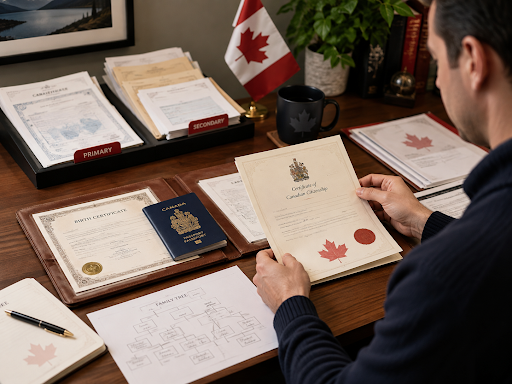
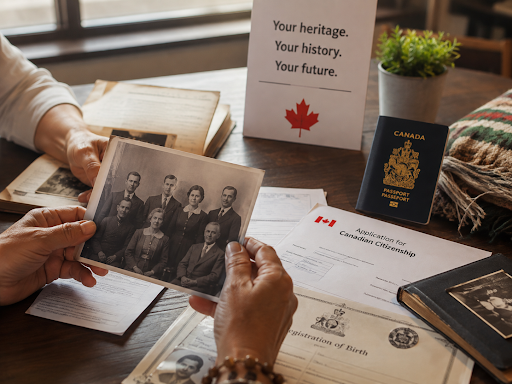
For many families, the first step is finding records. These may include a Canadian birth certificate, a naturalization record, a church marriage record, or a passenger list.
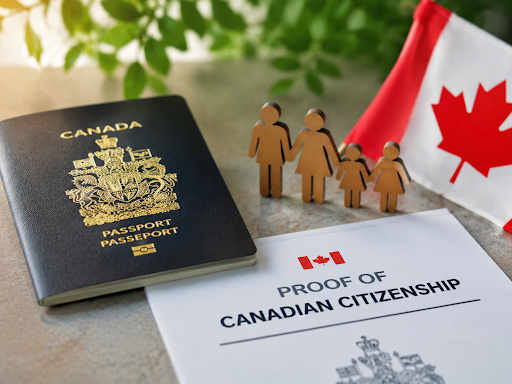
If the family chain can be proven, the person does not apply to become Canadian. Instead, they apply for proof of citizenship.
Successful applicants receive a Canadian citizenship certificate. This official document can then support a Canadian passport application.
There is no language test, residency requirement, citizenship exam, or oath for this process. If one person in a family qualifies, siblings, cousins, and their children may also have a similar claim if the same line of descent can be documented.









Having an ‘Identity Verified’ badge or being ‘Identity Verified’ simply indicates that an individual has submitted information to complete our identity verification process or we have conducted internal verification using various authorized websites. While this process includes safeguards, it does not guarantee that the person is who they claim to be.
If you encounter any issues with this profile, please report them here. While all consultants who are verified have RCIC ID, we may not have the latest data in terms of their renewal/cancellation/discontinuation of their RCIC ID.
╳The “Verified Consultants” profiles on Immiperts.com are independently compiled using publicly available information from multiple sources, including the official CICC Public Register, consultants’ own websites, other public directories, and social media.
Immiperts.com is a completely independent platform and is not affiliated with, endorsed by, or connected to the College of Immigration and Citizenship Consultants (CICC), IRCC, or any immigration consultant.
All information is collected manually and is for educational and informational purposes only. Consultants may claim, update, or request removal of their profile by contacting us at hello@immiperts.com.
Users are strongly advised to always verify the latest authorization status directly on the official CICC Public Register at college-ic.ca.