
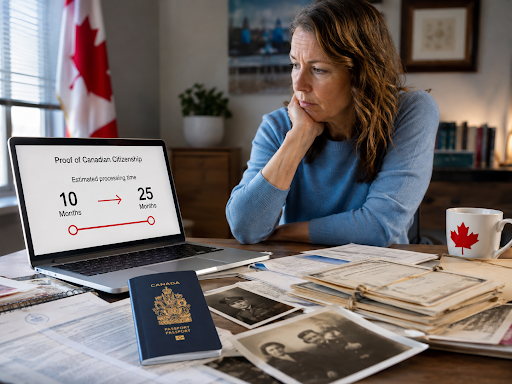


Applicants seeking proof of citizenship by descent are now facing estimated processing times of more than two years as IRCC’s backlog grows.
A growing number of people seeking proof of Canadian citizenship are facing much longer waits than expected, with Immigration, Refugees and Citizenship Canada now listing a 25-month processing time for citizenship certificate applications.
The delay affects many people applying for proof of citizenship by descent. Some began gathering family records when the estimated wait was far shorter, only to see the timeline increase before they submitted.
As of August 10, 2026, IRCC’s online processing tool showed an estimated 25-month wait for proof of citizenship applications. More than 121,000 applications were in the queue, an increase of about 22,300 in one month.
That estimate starts only after an application is submitted. Before filing, applicants may spend months locating birth, marriage and death records from several generations. Some records must come from provincial archives or vital statistics offices that may also face delays.
Applicants must also provide compliant photos, complete the proper forms and pay the required fee.
IRCC’s posted processing time is an estimate, not a guarantee. Cases involving missing records, name changes or documents from several provinces or countries can take longer.
The processing estimate stood at about 10 months in January 2026. It has since climbed to 25 months.
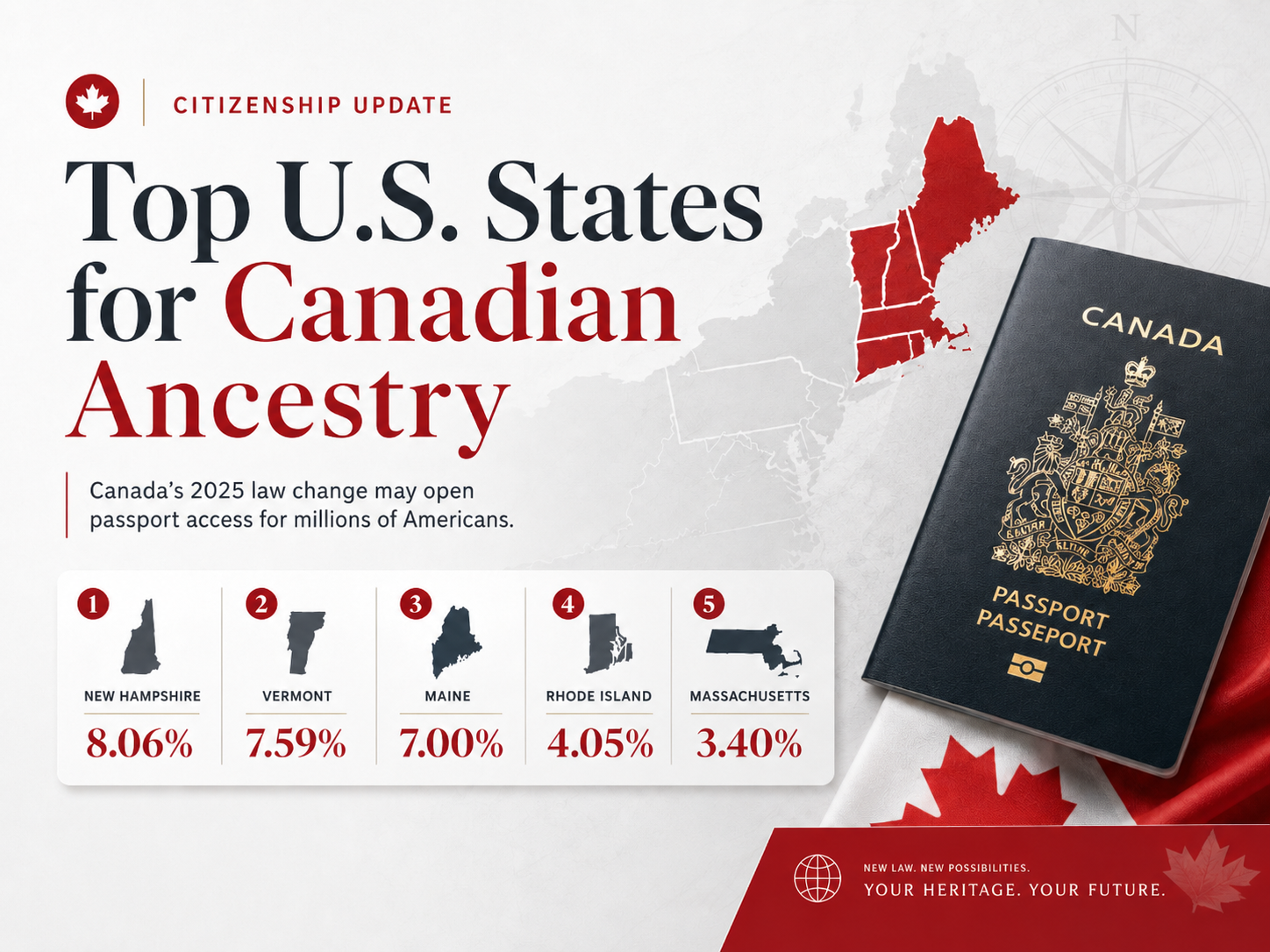
One major factor is the rise in applications after Bill C-3 took effect on December 15, 2025. The law removed the first-generation limit on citizenship by descent for people born before that date, allowing more people with Canadian ancestry to qualify. Tens of thousands of Americans have applied since the change.
A separate IRCC review also added pressure.
In June, the department flagged about 100 citizenship certificates that had already been issued because of documentation concerns. IRCC temporarily paused final decisions on new applications while reviewing the issue.
The review ended by June 30, and processing resumed.
Applicants with complete, straightforward files may choose to submit as soon as they are ready instead of waiting while processing times continue to rise.
In some cases, a person waiting for one official record may apply with secondary evidence, a letter explaining the missing document and proof that the record was formally requested. The original document should be added once it arrives.
However, an incomplete application can still be returned, creating further delays.
IRCC may grant urgent processing for specific situations, including employment or school needs, a family death or serious illness requiring travel, statelessness, bringing a Canadian minor child to Canada, or certain hardship cases.
Applicants can also seek legal advice when documents are difficult to obtain or a file has complications.
People with submitted applications may request their Global Case Management System (GCMS) notes through the Access to Information and Privacy process. A Canadian citizen or permanent resident representative may need to make the request with written consent, using the applicant’s UCI and application number.
For unusually long delays, an applicant may ask the Federal Court for a writ of mandamus directing IRCC to make a decision.
The court considers the length and circumstances of the delay. Such an order can require IRCC to act, but it does not guarantee that the citizenship application will be approved.








Having an ‘Identity Verified’ badge or being ‘Identity Verified’ simply indicates that an individual has submitted information to complete our identity verification process or we have conducted internal verification using various authorized websites. While this process includes safeguards, it does not guarantee that the person is who they claim to be.
If you encounter any issues with this profile, please report them here. While all consultants who are verified have RCIC ID, we may not have the latest data in terms of their renewal/cancellation/discontinuation of their RCIC ID.
╳The “Verified Consultants” profiles on Immiperts.com are independently compiled using publicly available information from multiple sources, including the official CICC Public Register, consultants’ own websites, other public directories, and social media.
Immiperts.com is a completely independent platform and is not affiliated with, endorsed by, or connected to the College of Immigration and Citizenship Consultants (CICC), IRCC, or any immigration consultant.
All information is collected manually and is for educational and informational purposes only. Consultants may claim, update, or request removal of their profile by contacting us at hello@immiperts.com.
Users are strongly advised to always verify the latest authorization status directly on the official CICC Public Register at college-ic.ca.