
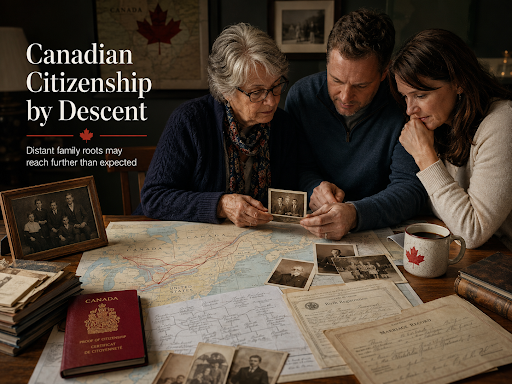


New citizenship rules could give some Americans with distant Canadian ancestry a claim to Canadian status.
A Canadian ancestor several generations back may now matter more than many American families realize. Changes to Canada’s citizenship law have opened a path for some people born outside Canada to be recognized as citizens through deeper family lines.
The change took effect on December 15, 2025, when Bill C-3 changed the first-generation limit on citizenship by descent. Immigration, Refugees and Citizenship Canada says people born before that date who would have been citizens if not for the former limit or other outdated rules may now be Canadian and can apply for proof of citizenship. For people born on or after that date, different rules can apply, including a three-year physical-presence requirement for some Canadian parents born abroad.
For many Americans, the first clue is an ancestor born in Quebec, New Brunswick, Manitoba or elsewhere in Canada. Family trees widen quickly, meaning one Canadian ancestor can connect to dozens of descendants.
Historical migration offers another clue. Nearly 900,000 French Canadians left Quebec for New England textile towns between 1840 and 1930. Canadian families also moved into Michigan, Minnesota and Washington State for work in autos, timber and railways.
Surnames sometimes changed after families moved south. Leblanc could become White, Boisvert could become Greenwood, Roy could become King, and Charpentier could become Carpenter. Family stories about French-speaking relatives or Canadian hometowns can also help identify where to search.
A citizenship certificate provides legal proof of Canadian citizenship. Citizens can live and work in Canada without a visa, work permit or employer sponsorship.
Canadian citizenship can also expand working-holiday options abroad. International Experience Canada offers opportunities in more than 36 countries, including stays of up to three years in the United Kingdom. The article notes that an American passport alone provides access to far fewer comparable programs.
Canada and the United States both permit dual citizenship. Holding Canadian status does not automatically double a person’s tax obligations because Canada generally taxes based on residency, not citizenship.
Applicants must document the family chain from the Canadian ancestor through every generation. Primary records can include provincial birth certificates, citizenship or naturalization certificates, and proof of British subject status before 1947.
Secondary evidence can include baptismal records, census pages, marriage and death records, ship manifests and military files. These can strengthen a claim but may not be enough to establish a missing generation by themselves.
Genealogy-site downloads are not a substitute for official records. Applicants who cannot obtain a document should keep evidence showing they tried.
Name differences, changed birth years or uncertain status may also need explanation. Common errors include treating secondary records as primary evidence, relying on downloads, leaving gaps unexplained and assuming more paperwork automatically means stronger proof.
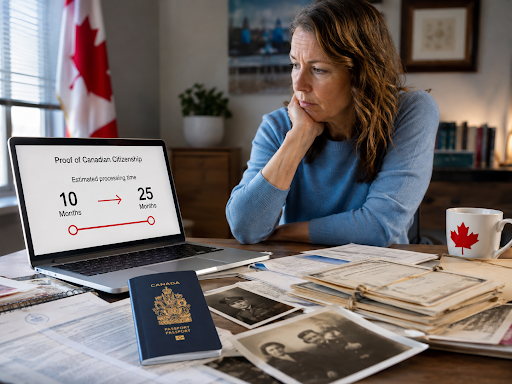
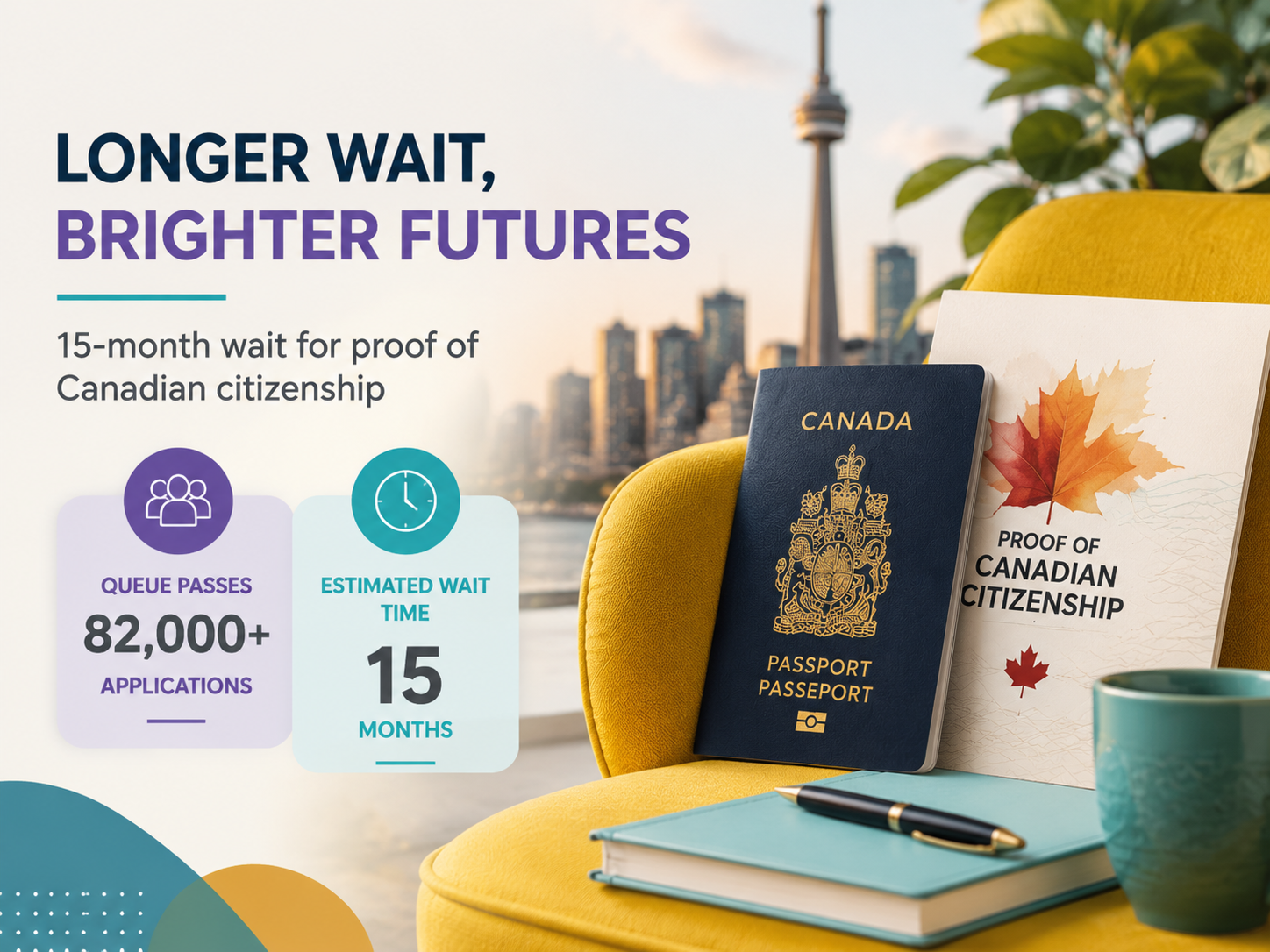
The article reports that proof-of-citizenship applications are taking about 25 months to process, making a complete application especially important.
Applicants should review each generation before filing, especially when family records contain translations, spelling changes or missing certificates.








Having an ‘Identity Verified’ badge or being ‘Identity Verified’ simply indicates that an individual has submitted information to complete our identity verification process or we have conducted internal verification using various authorized websites. While this process includes safeguards, it does not guarantee that the person is who they claim to be.
If you encounter any issues with this profile, please report them here. While all consultants who are verified have RCIC ID, we may not have the latest data in terms of their renewal/cancellation/discontinuation of their RCIC ID.
╳The “Verified Consultants” profiles on Immiperts.com are independently compiled using publicly available information from multiple sources, including the official CICC Public Register, consultants’ own websites, other public directories, and social media.
Immiperts.com is a completely independent platform and is not affiliated with, endorsed by, or connected to the College of Immigration and Citizenship Consultants (CICC), IRCC, or any immigration consultant.
All information is collected manually and is for educational and informational purposes only. Consultants may claim, update, or request removal of their profile by contacting us at hello@immiperts.com.
Users are strongly advised to always verify the latest authorization status directly on the official CICC Public Register at college-ic.ca.