



May 2026 is bringing major updates to Canada’s immigration system, including new consultant rules, Express Entry reform talks, Ontario PNP changes, Nova Scotia EOI limits and Saskatchewan intake caps.
May 2026 is becoming a major month for Canada’s immigration system, with changes affecting federal programs, provincial nominee streams, immigration consultants and temporary residents.
Some updates are already in effect. Others set important deadlines or prepare the way for larger changes later in 2026.
On May 6, Immigration Minister Lena Metlege Diab announced new rules to strengthen oversight of immigration and citizenship consultants.
The changes are meant to support the College of Immigration and Citizenship Consultants and better protect applicants. They include stronger complaint and discipline processes, higher penalties for rule-breaking consultants and wider reporting duties.
The rules also set guidelines for a compensation fund to help people who lose money because of dishonest consultant behaviour. Most regulations take effect on July 15, 2026. More public register details are expected in April 2027.
Applicants should check whether any representative they use is licensed and listed on the College’s public register.
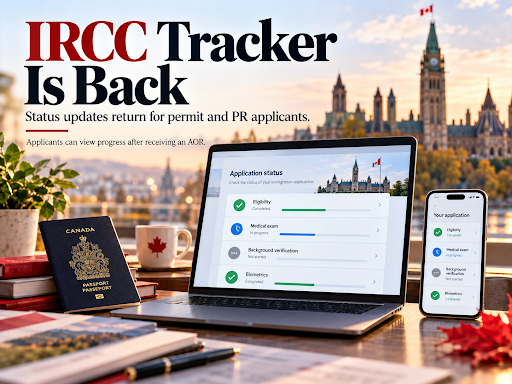
IRCC issued two program delivery updates in early May. The May 1 update deals with restoring temporary resident status for people who lost legal status in Canada. In some cases, they may apply for restoration within 90 days, but approval is not automatic.
A May 5 update covers travel arrangements for refugees and related resettlement cases. It explains logistics for approved arrivals, rather than changing who can qualify.
A major Express Entry consultation also closes on May 24. IRCC is seeking feedback on possible reforms after 2026. Ideas include replacing the three current Express Entry programs with one pathway, adding a high-wage occupation factor, setting a minimum CLB 6 language requirement and requiring one year of skilled work in TEER 0, 1, 2 or 3 jobs.
These are proposals, not final rules.
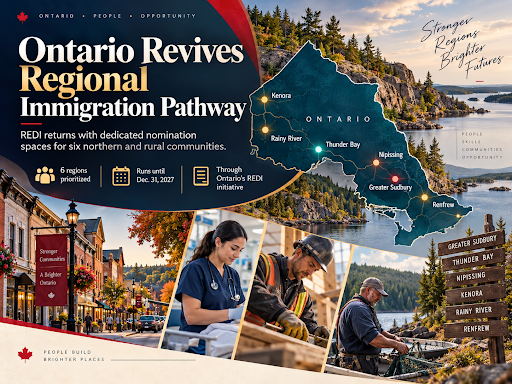
Ontario will make one of the biggest provincial changes on May 30 under O. Reg. 47/26. The regulation revokes all nine current Ontario Immigrant Nominee Program categories, including Foreign Worker, International Student with Job Offer, In-Demand Skills, Master’s Graduate, PhD Graduate, Human Capital Priorities, French-Speaking Skilled Worker, Skilled Trades and Entrepreneur.
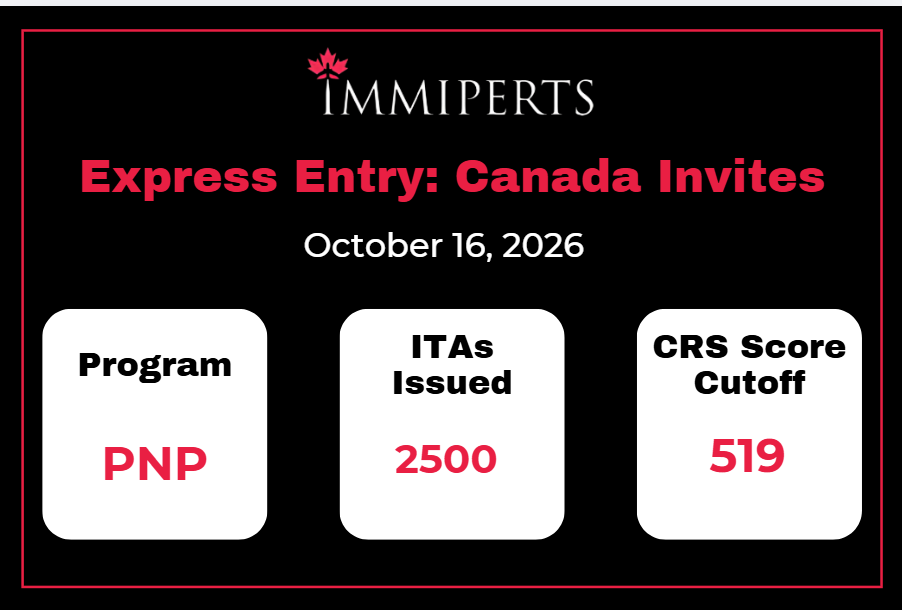
Ontario has been issuing invitations quickly to use its 14,119 nomination allocation before the change. New streams are expected to be more targeted and employer-focused.
Manitoba has started targeted MPNP Expression of Interest draws for people who received support letters under a federal temporary public policy and later secured work permits. Invitations begin with candidates approved between April 22 and June 30, 2025.
Nova Scotia introduced a 12-month validity period for EOIs on May 1. Profiles submitted before May 1, 2024, were closed. Profiles submitted from May 1, 2024, to April 30, 2026, stay active until April 30, 2027, unless selected earlier.
Saskatchewan opened Employer Position Assessment submissions for capped sectors on May 4. Retail Trade reached its 80-position limit that morning, while Accommodation and Food Services filled its 240 spots that afternoon. Trucking had about 28 of 80 spaces left. The next intake dates are July 6, Sept. 14 and Nov. 2.
IRCC also confirmed details of the In-Canada Workers Initiative. It may help up to 33,000 work permit holders gain permanent residence in 2026 and 2027, but it is not a new public application stream.
IRCC also confirmed that some Formula 1 Grand Prix staff coming to Montreal in May may be work-permit exempt if they meet strict conditions and carry proper documents.









Having an ‘Identity Verified’ badge or being ‘Identity Verified’ simply indicates that an individual has submitted information to complete our identity verification process or we have conducted internal verification using various authorized websites. While this process includes safeguards, it does not guarantee that the person is who they claim to be.
If you encounter any issues with this profile, please report them here. While all consultants who are verified have RCIC ID, we may not have the latest data in terms of their renewal/cancellation/discontinuation of their RCIC ID.
╳The “Verified Consultants” profiles on Immiperts.com are independently compiled using publicly available information from multiple sources, including the official CICC Public Register, consultants’ own websites, other public directories, and social media.
Immiperts.com is a completely independent platform and is not affiliated with, endorsed by, or connected to the College of Immigration and Citizenship Consultants (CICC), IRCC, or any immigration consultant.
All information is collected manually and is for educational and informational purposes only. Consultants may claim, update, or request removal of their profile by contacting us at hello@immiperts.com.
Users are strongly advised to always verify the latest authorization status directly on the official CICC Public Register at college-ic.ca.