



Changes to citizenship rules on both sides of the border are leading more Americans to examine their Canadian ancestry.
US President Donald Trump signed two executive orders on August 6 aimed at narrowing birthright citizenship, renewing a legal and political fight that has continued since his return to office.
One order broadens the groups the administration says should not receive automatic US citizenship at birth, including some children linked to foreign governments or designated terrorist organizations. The second targets so-called birth tourism by seeking to block entry for people believed to be travelling to the United States mainly to give birth there.
The measures are expected to face legal challenges. Trump’s earlier, broader attempt to restrict birthright citizenship, signed in January 2025, was blocked by the courts before taking effect.
While the United States is debating tighter rules, Canada moved in a different direction last year.
Bill C-3 took effect on December 15, 2025, changing Canada’s Citizenship Act. For people born before that date, Canadian citizenship can now pass through multiple generations, including grandchildren, great-grandchildren and more distant descendants.
A person born before December 15, 2025 may already be Canadian if they can show an unbroken family line to a Canadian ancestor.
Rules differ for people born after that date. In those cases, a Canadian parent generally must have spent at least 1,095 days physically present in Canada before the child’s birth for citizenship to pass down.
Since the law changed, thousands of Americans have applied for proof of Canadian citizenship.
Many are not planning an immediate move. Instead, they see Canadian citizenship as a second option that could provide another passport and more flexibility for the future.
Some LGBTQ+ and transgender Americans have also looked to Canadian citizenship as a way to keep more choices open amid changing US policies. In cases involving harm or hardship, applicants may ask Immigration, Refugees and Citizenship Canada for urgent processing, although approval is discretionary.
Parents are also applying for children who may qualify through the same Canadian family line.
Canadian citizenship can provide the right to live and work in Canada, obtain Canadian travel documents and, for those who later study there, potentially pay domestic rather than international tuition. Citizens who settle in Canada may also qualify for publicly funded healthcare and other services, depending on provincial or territorial rules.
Bill C-3 does not work like a traditional immigration program.
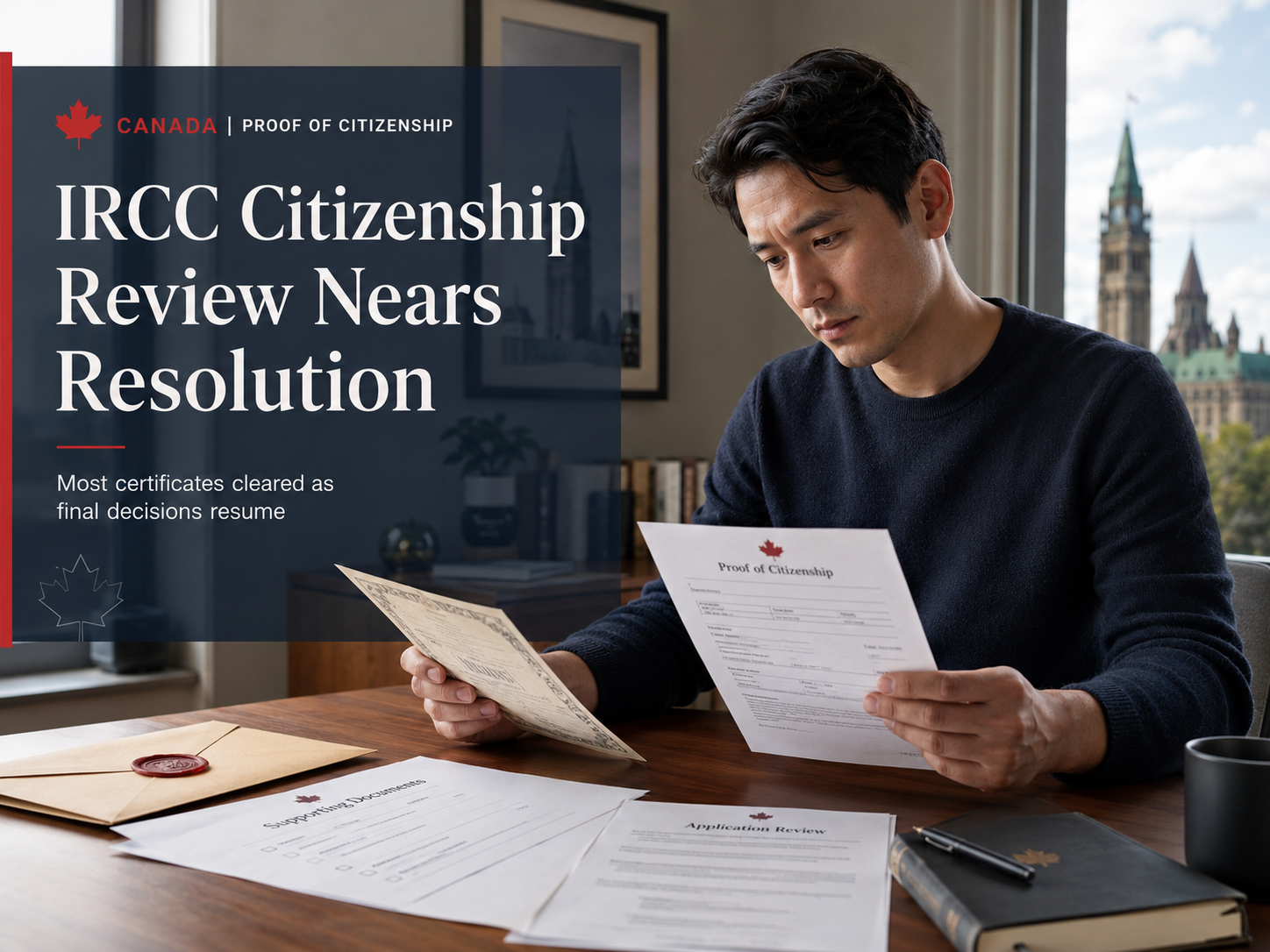
Eligible people do not apply to become citizens. If the law already recognizes them as Canadian, they apply for a citizenship certificate to prove that status.
Applicants generally need documents connecting each generation to the Canadian ancestor. These may include birth certificates, marriage certificates and legal records showing name changes.
The records must establish an unbroken family connection from the Canadian ancestor to the applicant. Once the documents are collected, the applicant completes the required forms and submits the package to Canada’s citizenship department.
The source article cited processing times of about 19 months for proof-of-citizenship applications, meaning applicants should be prepared for a lengthy wait.













Having an ‘Identity Verified’ badge or being ‘Identity Verified’ simply indicates that an individual has submitted information to complete our identity verification process or we have conducted internal verification using various authorized websites. While this process includes safeguards, it does not guarantee that the person is who they claim to be.
If you encounter any issues with this profile, please report them here. While all consultants who are verified have RCIC ID, we may not have the latest data in terms of their renewal/cancellation/discontinuation of their RCIC ID.
╳The “Verified Consultants” profiles on Immiperts.com are independently compiled using publicly available information from multiple sources, including the official CICC Public Register, consultants’ own websites, other public directories, and social media.
Immiperts.com is a completely independent platform and is not affiliated with, endorsed by, or connected to the College of Immigration and Citizenship Consultants (CICC), IRCC, or any immigration consultant.
All information is collected manually and is for educational and informational purposes only. Consultants may claim, update, or request removal of their profile by contacting us at hello@immiperts.com.
Users are strongly advised to always verify the latest authorization status directly on the official CICC Public Register at college-ic.ca.