
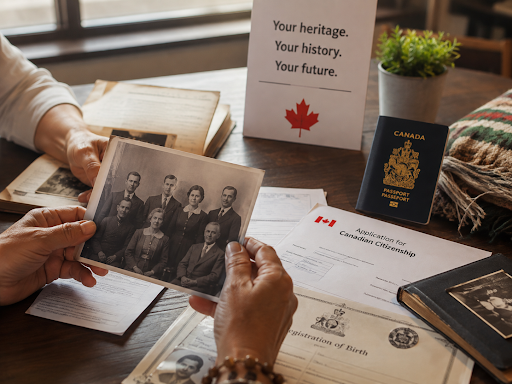


A change to Canadian citizenship law could benefit generations of Mexican families with Canadian ancestry.
Generations of Mexican families with Canadian roots may already hold Canadian citizenship under changes that took effect in December 2025.
The change is especially relevant to descendants of Mennonite families who moved from Canada to Mexico nearly a century ago. However, the possible claims extend beyond that community to other families with Canadian ancestors.
On March 1, 1922, a chartered train left Plum Coulee, Manitoba, carrying families, furniture, horses and farm equipment. Six days later, it reached San Antonio de los Arenales in Chihuahua.
About 400 Mennonites arrived on that first journey. Over the following decade, another 35 chartered trains brought more families south.
The migrants were Low German-speaking farmers who had left Canada because of concerns over schools, military service and religious independence. By 1919, several communities had decided to seek a new home.
Mexico offered guarantees covering religious freedom, schools and exemption from military service. The communities eventually established colonies in Chihuahua and Durango.
The Canadian citizenship rules changed on December 15, 2025, when amendments under Bill C-3 removed the first-generation limit for people born abroad before that date.
Canadian citizenship can pass from a parent to a child born outside Canada. Under the revised rules, a person may also establish citizenship through earlier generations if they can document a direct qualifying connection to a Canadian ancestor.
The changes also address people born in Canada before 1947, when residents were legally British subjects rather than Canadian citizens. A person born in Canada, or naturalized there, before 1947 may provide the basis for a citizenship claim through later generations.
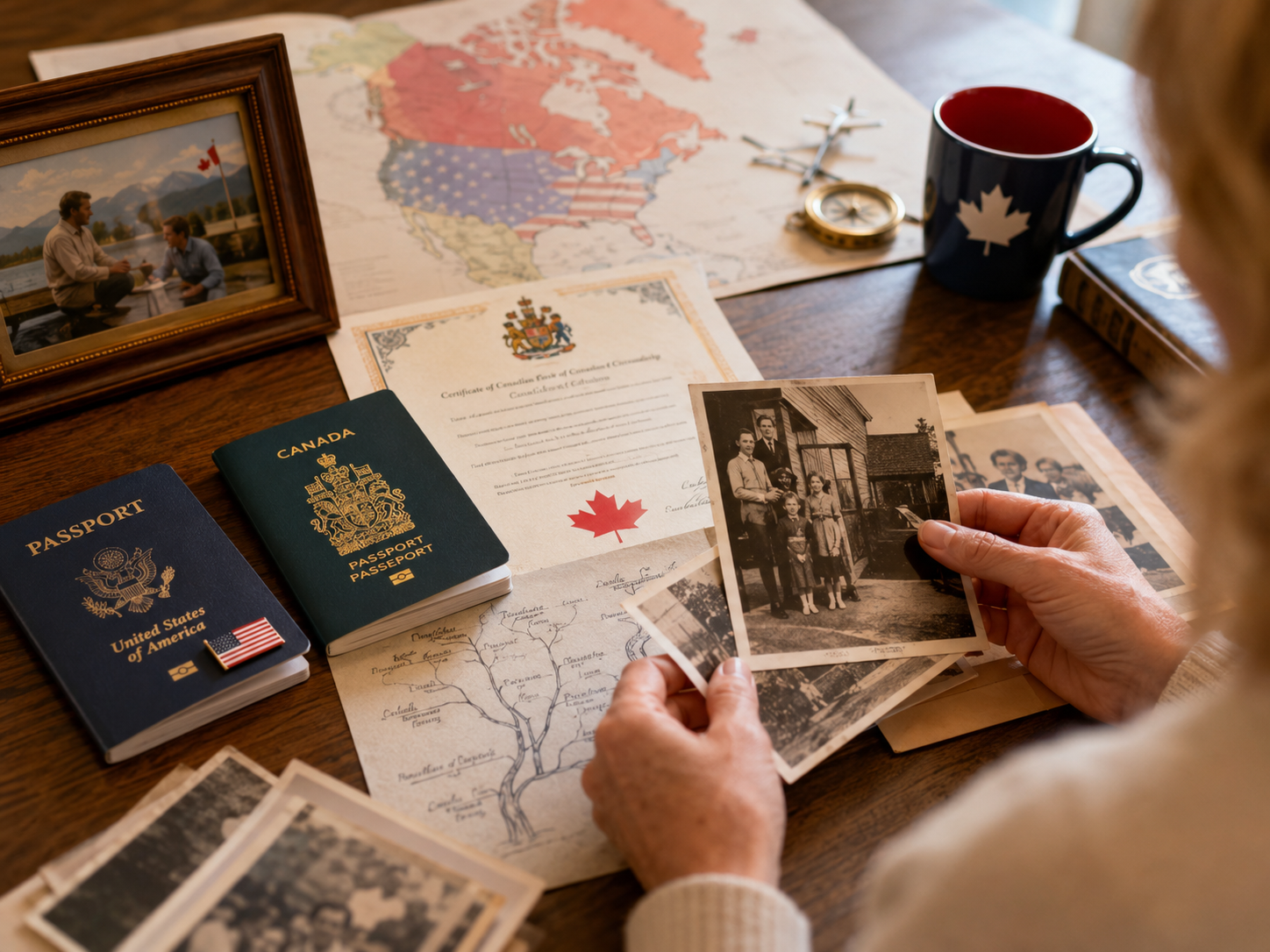
Families looking for a possible connection can start with birth records, family documents and historical records.
The article identifies Canadian Mennonite surnames such as Sawatzky, Fehr, Friesen, Penner, Wiebe and others as possible clues, although a surname alone does not establish citizenship.
Records showing an ancestor was born in Manitoba or Saskatchewan provide stronger evidence. Connections to former Mennonite settlements in Chihuahua and Durango can also help guide research.
The 1930 Mexican census and indexes published by the Mennonite Historical Society of Alberta can provide information about family birthplaces.
Manitoba makes older birth records available after 100 years, while Saskatchewan provides a free online index for births more than 100 years old and deaths more than 70 years old. Library and Archives Canada also provides access to records of Canadian naturalizations from 1915 to 1951.
Applicants must prove that their ancestor was Canadian and establish the family connection through each generation.
Important documents can include a Canadian birth certificate, a pre-1947 Canadian naturalization certificate and birth certificates connecting each generation.
An index can help locate a record, but it does not replace the official certificate. IRCC assesses citizenship claims based on the available evidence and, according to the article, uses a balance-of-probabilities standard.
If the claim is confirmed, IRCC issues a citizenship certificate. That certificate can then be used to apply for a Canadian passport.
Mexicans can retain their Mexican citizenship while holding Canadian citizenship. Canadian citizens can live and work in Canada without a work permit and can enter Canada at any time.
Canadian citizenship does not depend on living in Canada. The article also notes that Canada generally taxes residents rather than citizens, while provincial health coverage depends on living in a province.
Citizenship can also pass to eligible children, making one confirmed family connection potentially significant for future generations.








Having an ‘Identity Verified’ badge or being ‘Identity Verified’ simply indicates that an individual has submitted information to complete our identity verification process or we have conducted internal verification using various authorized websites. While this process includes safeguards, it does not guarantee that the person is who they claim to be.
If you encounter any issues with this profile, please report them here. While all consultants who are verified have RCIC ID, we may not have the latest data in terms of their renewal/cancellation/discontinuation of their RCIC ID.
╳The “Verified Consultants” profiles on Immiperts.com are independently compiled using publicly available information from multiple sources, including the official CICC Public Register, consultants’ own websites, other public directories, and social media.
Immiperts.com is a completely independent platform and is not affiliated with, endorsed by, or connected to the College of Immigration and Citizenship Consultants (CICC), IRCC, or any immigration consultant.
All information is collected manually and is for educational and informational purposes only. Consultants may claim, update, or request removal of their profile by contacting us at hello@immiperts.com.
Users are strongly advised to always verify the latest authorization status directly on the official CICC Public Register at college-ic.ca.