



Americans with Canadian ancestry may qualify for citizenship without moving north.
A major change to Canada’s citizenship law has opened a simpler route for some Americans with Canadian parents, grandparents or earlier ancestors.
Bill C-3 took effect on December 15, 2025, after receiving royal assent on November 20. It changed the first-generation limit on citizenship by descent.
For many eligible people born outside Canada before the new rules took effect, citizenship may now exist automatically under the law. They are not applying to immigrate or become citizens through naturalization.
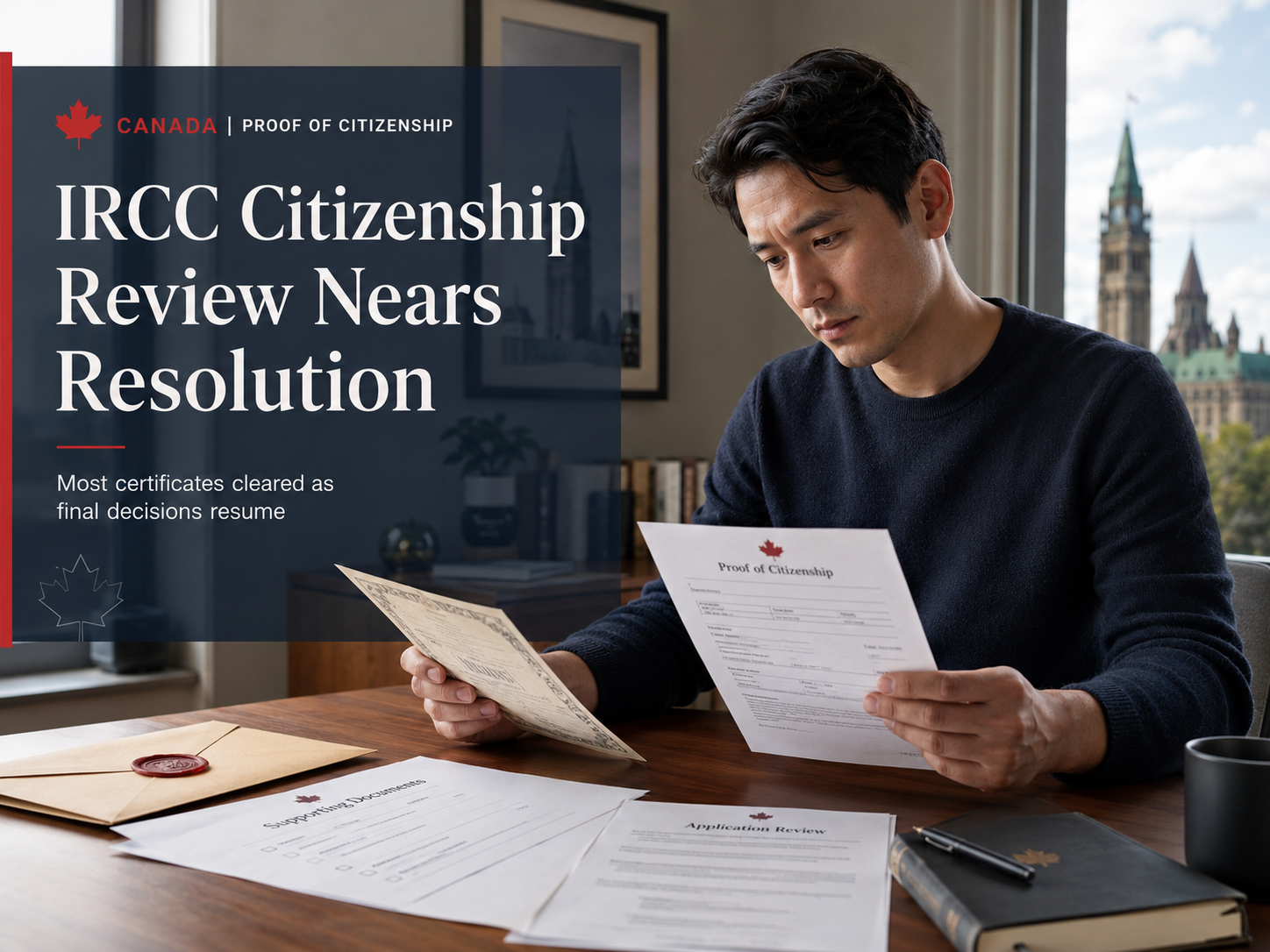
Instead, they apply for a citizenship certificate so Immigration, Refugees and Citizenship Canada can confirm their status.
Naturalization generally requires permanent resident status and at least 1,095 days of physical presence in Canada during the five years before applying. Applicants may also need to meet tax, language and citizenship-test requirements.
The descent route may therefore save eligible applicants years spent obtaining permanent residence and meeting residency rules.
A proof-of-citizenship application does not require the applicant to live in Canada, take a language test, write a citizenship exam or attend an oath ceremony.
Applicants must, however, provide reliable official records connecting every generation in the family line. IRCC lists a $75 application fee, while processing times vary.
Canada introduced the first-generation limit in 2009. It generally stopped a Canadian born abroad from automatically passing citizenship to a child who was also born abroad.
An Ontario court ruled in December 2023 that parts of the limit were unconstitutional, leading to the federal changes.
The new law may cover people born before December 15, 2025, whose parent is Canadian under the amended rules. A Canadian ancestor alone does not guarantee approval. Applicants must prove an unbroken legal family connection and meet the Citizenship Act’s requirements.
Family history can offer clues. The source article says nearly 900,000 French-speaking Canadians moved to New England between 1840 and 1930.
Maritimers moved to what some Nova Scotians called “the Boston States,” while families from Ontario and the Prairies settled in Michigan, Minnesota, Wisconsin and nearby states.
The report estimates that roughly one in four New Englanders may qualify. It also says Americans named Tremblay are about 114 times more likely than average to have Canadian roots, while the figure for Ouellet reaches 368 times.
Anglicized surnames such as White, King, Wood and Greenwood may also hide older Canadian connections.
A confirmed Canadian citizen may live and work anywhere in Canada and apply for a Canadian passport. Public health coverage depends on provincial or territorial residency rules.
Canadian-American dual citizens may fly to Canada using a valid Canadian or U.S. passport, though proof of citizenship can help prevent delays.
Canadian citizenship alone does not create a Canadian tax-filing duty. Canada generally bases income-tax obligations on residency, while the United States usually taxes citizens on worldwide income even when they live abroad.
Tax treaties and foreign tax credits can reduce the risk of paying tax twice on the same income.
For children born or adopted on or after December 15, 2025, a Canadian parent who was also born or adopted abroad must have spent at least 1,095 days in Canada before the child’s birth or adoption to pass on citizenship.












Having an ‘Identity Verified’ badge or being ‘Identity Verified’ simply indicates that an individual has submitted information to complete our identity verification process or we have conducted internal verification using various authorized websites. While this process includes safeguards, it does not guarantee that the person is who they claim to be.
If you encounter any issues with this profile, please report them here. While all consultants who are verified have RCIC ID, we may not have the latest data in terms of their renewal/cancellation/discontinuation of their RCIC ID.
╳The “Verified Consultants” profiles on Immiperts.com are independently compiled using publicly available information from multiple sources, including the official CICC Public Register, consultants’ own websites, other public directories, and social media.
Immiperts.com is a completely independent platform and is not affiliated with, endorsed by, or connected to the College of Immigration and Citizenship Consultants (CICC), IRCC, or any immigration consultant.
All information is collected manually and is for educational and informational purposes only. Consultants may claim, update, or request removal of their profile by contacting us at hello@immiperts.com.
Users are strongly advised to always verify the latest authorization status directly on the official CICC Public Register at college-ic.ca.