



Five immigration questions on Alberta’s October 19 referendum ballot are drawing competing views over provincial control, public services and temporary residents.
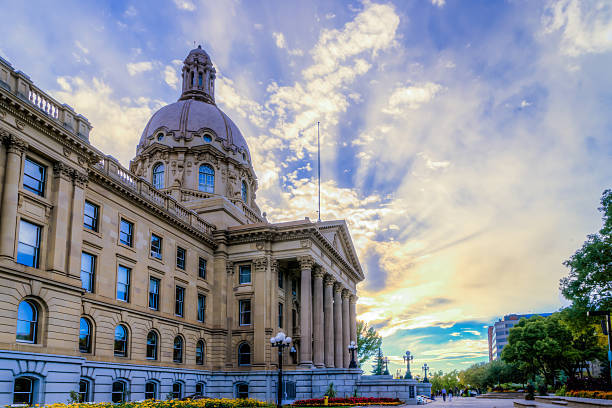
Alberta’s October 19, 2026, referendum will ask voters nine yes-or-no questions and one choice question, including five questions focused directly on immigration. The questions cover provincial control over immigration, eligibility for provincially funded programs, residency requirements, fees for health care and education, and proof of citizenship for voting.
The immigration questions have prompted different interpretations from the Alberta government and the Parkland Institute, a policy research organization. While the government has linked the questions to immigration levels, population growth and pressure on public services, Parkland Institute has argued that the questions place too much attention on immigrants and migrant workers.
The first question asks whether Alberta should seek greater control over immigration to reduce immigration to what it calls more sustainable levels, prioritize economic migration and give Albertans first priority for new employment opportunities.
The second proposes limiting eligibility for provincially funded programs, including health care, education and other social services, to Canadian citizens, permanent residents and people with an Alberta-approved immigration status.
The third asks whether people with non-permanent legal immigration status should have to live in Alberta for at least 12 months before qualifying for provincially funded social support programs.
The fourth asks whether Alberta should charge a reasonable fee or premium to people with non-permanent immigration status and their families for using health care and education.
The fifth asks whether people should have to provide proof of Canadian citizenship, such as a passport, birth certificate or citizenship card, to vote in provincial elections.
Premier Danielle Smith has described the referendum as a way for Albertans to provide direction on significant changes to immigration policy.
In a February 2026 address, Smith said the proposed changes represented a significant departure from the existing approach and that the government was seeking a referendum mandate. She connected the questions to immigration levels, employment, public programs and pressure on health care and education.
These statements represent the Alberta government’s stated reasons for putting the questions before voters.
A September 16 report by Parkland Institute takes a different view. The report, Scapegoating and Separatists: Why Immigration Is on the Ballot in October, was written by Bronwyn Bragg, an assistant professor at the University of Lethbridge whose research includes migration and immigration policy.
The report argues that the immigration questions shift public frustration over affordability and strained public services towards immigrants and migrant workers. Parkland Institute also says the wording reflects rhetoric associated with far-right and separatist movements. These are the institute’s interpretations, rather than findings issued by Elections Alberta.
The questions are particularly relevant to temporary workers, international students and other people with non-permanent immigration status in Alberta.
However, voting on the questions would not automatically change immigration status, work permits, study permits, permanent residence or existing eligibility for provincial programs. Elections Alberta states that the results of Questions 1 through 9 are not binding.
Any policy changes would therefore require subsequent government action, such as legislation, regulations or administrative measures, depending on the proposal and the division of federal and provincial responsibilities.
The referendum will take place on October 19, 2026, with advance voting scheduled from October 13 to October 17. Elections Alberta says voters must be Canadian citizens, at least 18 years old on Election Day and ordinarily resident in Alberta to vote.
For immigrants and temporary residents, the key distinction is between a referendum question and an actual change in law. Until new measures are introduced and take effect, existing federal and provincial rules continue to apply.




Having an ‘Identity Verified’ badge or being ‘Identity Verified’ simply indicates that an individual has submitted information to complete our identity verification process or we have conducted internal verification using various authorized websites. While this process includes safeguards, it does not guarantee that the person is who they claim to be.
If you encounter any issues with this profile, please report them here. While all consultants who are verified have RCIC ID, we may not have the latest data in terms of their renewal/cancellation/discontinuation of their RCIC ID.
╳The “Verified Consultants” profiles on Immiperts.com are independently compiled using publicly available information from multiple sources, including the official CICC Public Register, consultants’ own websites, other public directories, and social media.
Immiperts.com is a completely independent platform and is not affiliated with, endorsed by, or connected to the College of Immigration and Citizenship Consultants (CICC), IRCC, or any immigration consultant.
All information is collected manually and is for educational and informational purposes only. Consultants may claim, update, or request removal of their profile by contacting us at hello@immiperts.com.
Users are strongly advised to always verify the latest authorization status directly on the official CICC Public Register at college-ic.ca.