



Bill C-3 Citizenship Act Amendment Canada
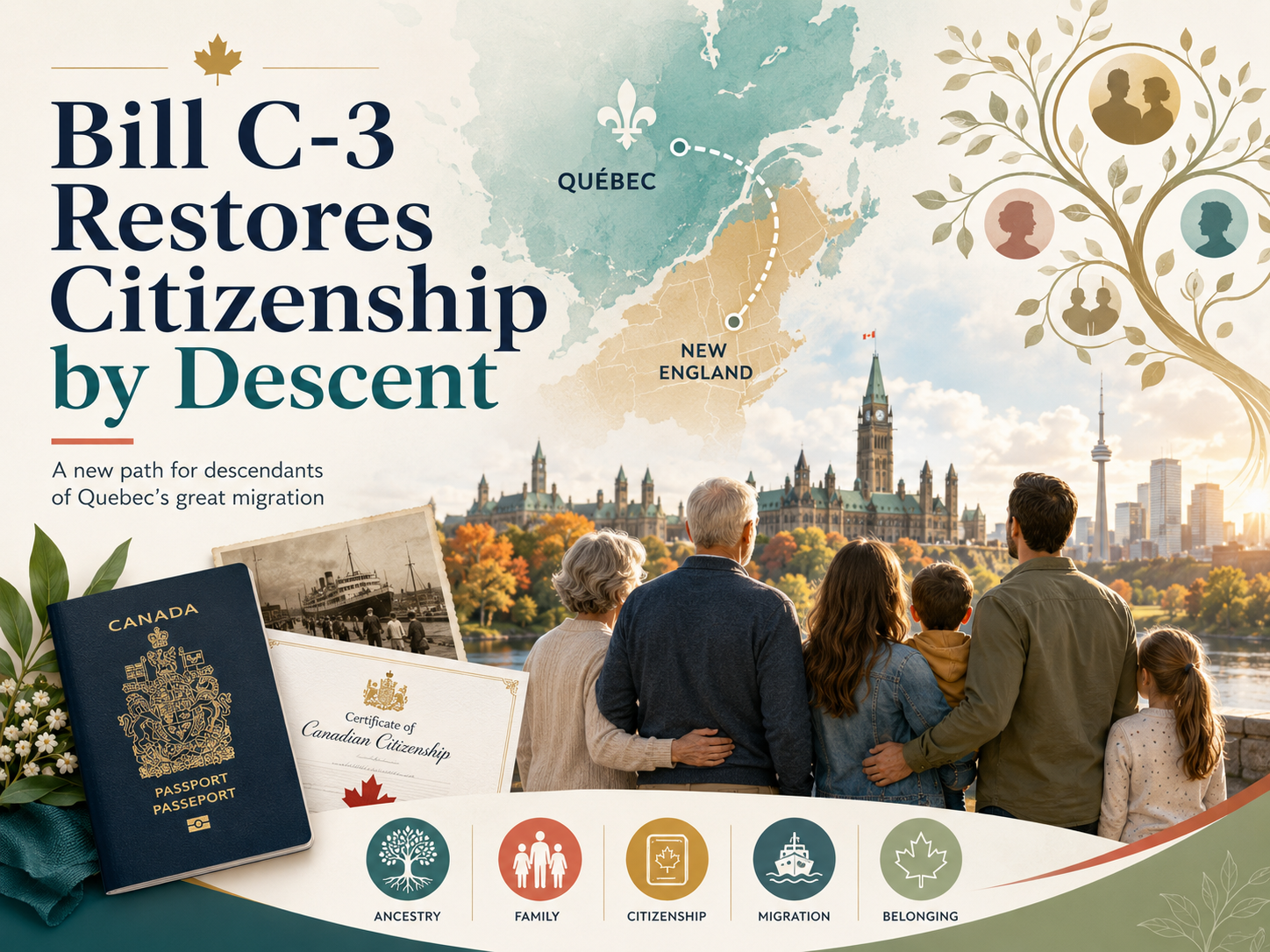
On November 5, Bill C-3 passed its third reading in the House of Commons, marking an important step toward changing how Canadian citizenship is passed down. The proposed law would amend the Citizenship Act to remove the First-Generation Limit (FGL) rule.
If passed, it will allow Canadians born abroad to pass citizenship to their children also born outside Canada. This change could help many families who have long been affected by the FGL restriction.
Bill C-3 has completed its review in the House of Commons and now moves to the Senate for further debate and approval.
To become law, the Bill must go through three readings in both the House and the Senate. It can only receive Royal Assent—the final step—once both chambers approve the same version.
If the Senate makes any changes, the Bill will return to the House of Commons for another review. Only when both chambers agree on identical wording can the Bill officially become law.
Some people affected by the First-Generation Limit rule may not need to wait for Bill C-3 to pass. Earlier this year, the government introduced interim measures that allow affected individuals to apply for proof of Canadian citizenship while the Bill is still being reviewed.
These temporary measures offer a legal pathway for those who have a legitimate claim but cannot yet apply under the new law.
Bill C-3 aims to restore citizenship by descent to many second-generation Canadians who were born or adopted outside the country. It also seeks to fix past cases where people lost citizenship because of outdated laws.
Those who could benefit include:
This means many families separated by citizenship limits may soon have a chance to reconnect legally with their Canadian roots.
The new Bill follows a major court decision. In December 2023, the Ontario Superior Court of Justice ruled that the second-generation cut-off in the Citizenship Act was unconstitutional. The court instructed the government to fix the law and initially gave six months to act, later extending the deadline to March 19, 2025.
The government first proposed Bill C-71 to address the issue, allowing citizenship for children if their Canadian parents had lived in Canada for at least 1,095 days before their birth or adoption.
However, Prime Minister Justin Trudeau’s resignation in January 2025 and the temporary suspension of Parliament ended that Bill’s progress. The government then introduced Bill C-3 to meet the court’s demands and create a long-term solution.
If the Senate approves the Bill without changes, it could receive Royal Assent in the coming months. Once that happens, thousands of Canadians abroad may gain the right to pass on their citizenship to their children—something long out of reach under the current law.









Having an ‘Identity Verified’ badge or being ‘Identity Verified’ simply indicates that an individual has submitted information to complete our identity verification process or we have conducted internal verification using various authorized websites. While this process includes safeguards, it does not guarantee that the person is who they claim to be.
If you encounter any issues with this profile, please report them here. While all consultants who are verified have RCIC ID, we may not have the latest data in terms of their renewal/cancellation/discontinuation of their RCIC ID.
╳The “Verified Consultants” profiles on Immiperts.com are independently compiled using publicly available information from multiple sources, including the official CICC Public Register, consultants’ own websites, other public directories, and social media.
Immiperts.com is a completely independent platform and is not affiliated with, endorsed by, or connected to the College of Immigration and Citizenship Consultants (CICC), IRCC, or any immigration consultant.
All information is collected manually and is for educational and informational purposes only. Consultants may claim, update, or request removal of their profile by contacting us at hello@immiperts.com.
Users are strongly advised to always verify the latest authorization status directly on the official CICC Public Register at college-ic.ca.