



A 2025 law change may extend citizenship through generations of Canadian ancestry.
Michigan’s close connection with Canada may now carry an unexpected legal benefit for thousands of residents. Changes to Canadian citizenship law mean some Michiganders with Canadian ancestors could already be citizens, even if they have never lived in Canada.
Bill C-3 took effect on December 15, 2025, removing the previous first-generation limit on citizenship by descent for many people born before that date.
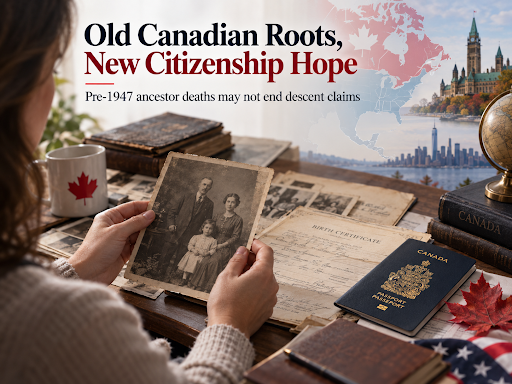
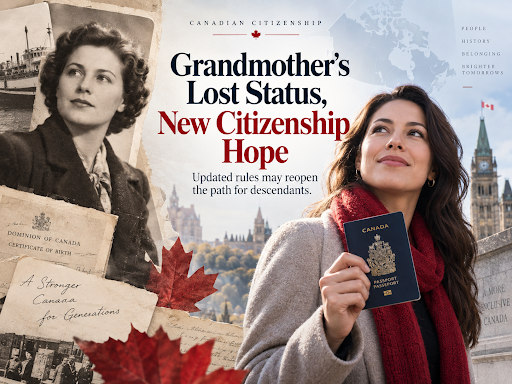
Under the former rules, Canadian citizenship generally stopped passing down after the first generation born outside Canada. The new law may allow a person born abroad before December 15, 2025, to qualify through an unbroken family line to a Canadian grandparent, great-grandparent, or earlier ancestor.
U.S. Census Bureau estimates underline the potential scale. The 2024 American Community Survey found that about 32,000 Michigan residents reported Canadian ancestry, while another 114,000 reported French-Canadian ancestry. Because the figures are self-reported, the number of people with a possible qualifying link may be higher.
Michigan became one of the five leading U.S. destinations for Canadian immigrants by 1900. Its proximity to Ontario, expanding industrial jobs and established family connections encouraged people to cross the border and settle.
For much of the 19th century, the border was lightly enforced. U.S. arrival records from Canada generally began in 1895, making earlier movements difficult to trace.
Michigan’s automobile industry accelerated migration. Ford Motor Company began in Detroit in 1903, followed by General Motors in Flint in 1908. Factory work attracted immigrants from Canada and Europe, many of whom remained permanently.
The Detroit-Windsor route has carried cross-border traffic for generations. Port Huron, Bay City and Sault Ste. Marie also received steady arrivals.
French-Canadian roots stretch back further. Detroit was founded in 1701 by Antoine de la Mothe Cadillac’s expedition from Montreal. Although British forces took the city in 1760, many French families stayed. Michigan recognized that legacy in 2016 by creating French-Canadian Heritage Week.
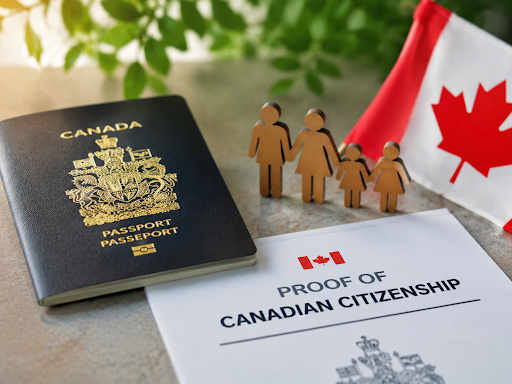
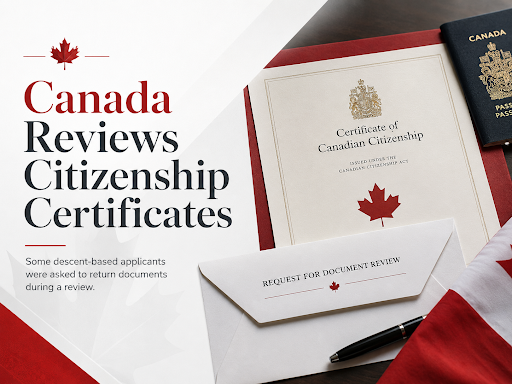
Eligible residents may apply for a Canadian citizenship certificate, which confirms their legal status and can support a passport application.
Dual citizens may enter, live and work in Canada, vote in Canadian elections, and seek political office. Citizens under 30, or sometimes 35, may also qualify for Canada’s youth mobility arrangements with more than 35 countries.
Holding Canadian citizenship alone does not normally create Canadian tax obligations. Canada generally taxes people based on residency and Canadian-source income rather than citizenship.
The process usually begins with family discussions and genealogical research. Border records known as the St. Albans Lists cover Canadian arrivals from 1895 to 1954 and may confirm birthplace, age and entry date.
Applicants must obtain official documents, such as birth and marriage records, from the authorities that created or maintain them. They may apply independently or use an authorized Canadian representative.
As of July 2026, Immigration, Refugees and Citizenship Canada listed proof-of-citizenship processing at about 19 months, although timelines vary by case and individual application circumstances.







Having an ‘Identity Verified’ badge or being ‘Identity Verified’ simply indicates that an individual has submitted information to complete our identity verification process or we have conducted internal verification using various authorized websites. While this process includes safeguards, it does not guarantee that the person is who they claim to be.
If you encounter any issues with this profile, please report them here. While all consultants who are verified have RCIC ID, we may not have the latest data in terms of their renewal/cancellation/discontinuation of their RCIC ID.
╳The “Verified Consultants” profiles on Immiperts.com are independently compiled using publicly available information from multiple sources, including the official CICC Public Register, consultants’ own websites, other public directories, and social media.
Immiperts.com is a completely independent platform and is not affiliated with, endorsed by, or connected to the College of Immigration and Citizenship Consultants (CICC), IRCC, or any immigration consultant.
All information is collected manually and is for educational and informational purposes only. Consultants may claim, update, or request removal of their profile by contacting us at hello@immiperts.com.
Users are strongly advised to always verify the latest authorization status directly on the official CICC Public Register at college-ic.ca.